
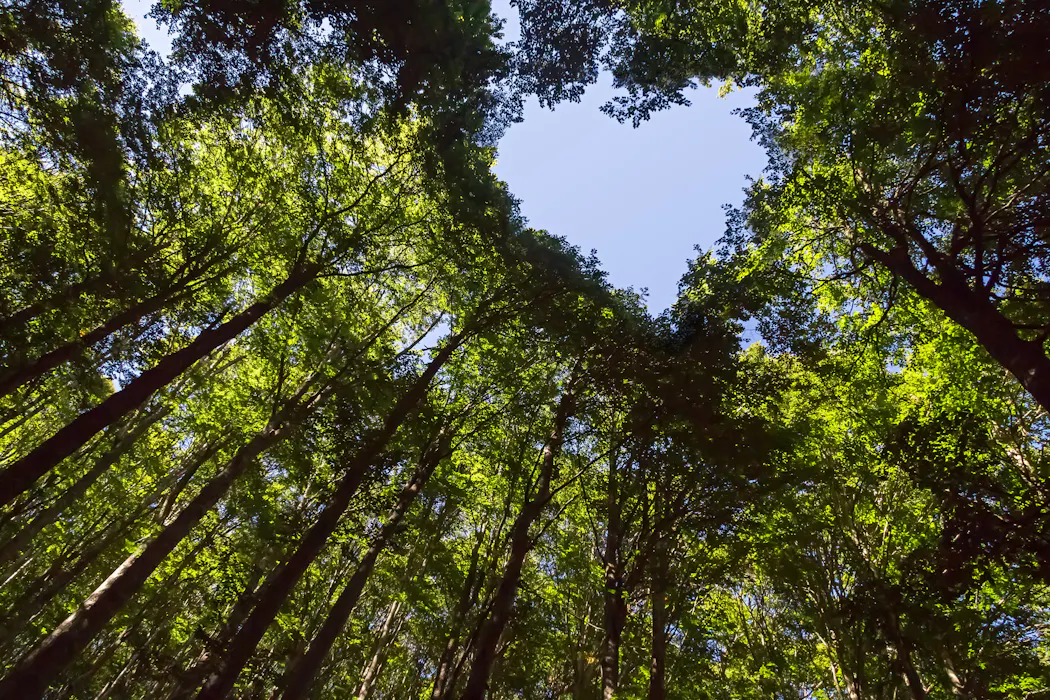
We rely on nature for everything from food and clean water to medicines, housing and human health. Yet the natural world is in decline, threatening the ecosystems on which we depend.
The economic consequences could be enormous. The World Bank estimates the partial collapse of key ecosystem services, including pollination and fisheries, could reduce global GDP by US$2.7 trillion annually by 2030.
The biodiversity crisis has also featured at this month’s COP31 climate summit, where protecting and restoring ecosystems has been discussed as part of the response to climate change.
In 2022, governments adopted the Kunming-Montreal Global Biodiversity Framework, committing to halt and reverse nature loss by 2030, with a longer-term goal of living in harmony with nature by 2050.
The idea of becoming “nature positive” has since gained traction, much as “net zero” has in efforts to tackle climate change.
But, as we argue in a new commentary published in the scientific journal Nature, the world needs reliable ways to measure progress towards this goal.
If governments, businesses and investors claim their activities are nature positive, how can we tell whether nature is actually recovering?
A common language for natureThe Nature Positive Initiative – a global coalition of conservation organisations, businesses and other groups working to halt and reverse nature loss – has proposed a set of “state of nature” metrics to track changes in ecosystems and species.
The framework considers ecosystem extent, condition and connectivity, as well as species’ extinction risk and population trends. It can be applied at both site and landscape or seascape scales.
This marks an important step. The metrics shift attention away from simply reporting actions, such as money spent or trees planted, towards measuring outcomes for nature. A tiered approach allows organisations to begin with basic assessments and progress towards more detailed measurement.
The metrics are intended to connect with reporting systems such as the Taskforce on Nature-related Financial Disclosures, an international framework helping businesses assess and report their impacts on nature and the financial risks they face.
Embedding nature in corporate risk, investment and disclosure systems could make it harder for decision-makers to ignore environmental damage. Still, disclosure doesn’t guarantee improvement.
Climate-risk reporting has increased awareness, yet evidence that disclosure alone reduces emissions remains limited. Nature reporting could encounter the same problem: organisations may become better at describing damage without changing the activities causing it.
Nature doesn’t fit neatly into a spreadsheetThe proposed metrics are better understood as a broad framework than as a finished set of standardised measurements. Organisations still have freedom to decide what to measure and how.
That flexibility creates risks. A company could select ecosystems or species that are easy to monitor, while overlooking other losses. An increase in vegetation cover might look positive on paper but say little about ecological function, habitat quality or whether culturally important species are recovering.
Nature is dynamic. Ecosystems change over time. Recovery is rarely linear, and endless improvement is neither realistic nor always desirable. In a healthy or mature ecosystem, maintaining its condition may be a better outcome than showing continual gains.
Global consistency also has limits. Nature loss is a global problem, but it occurs in local places. Global datasets can miss local ecological change, especially in data-poor regions. They can also override local knowledge and priorities if used without on-ground assessment.
Importantly, nature-positive claims cannot be credible if Indigenous rights, cultural authority and data sovereignty are bypassed. Metrics influence where money flows, which species and landscapes receive attention, and who bears the costs. They are not socially or politically neutral.
Testing the system while putting it to workThese shortcomings are not reasons to abandon the state-of-nature framework. Waiting for a perfect system while nature continues to decline would be damaging.
The framework needs to be put into practice and independently evaluated at the same time. Its credibility will depend on what it delivers in the real world.
The metrics should now be tested across protected areas, farms, restoration sites, community-managed landscapes and places affected by mining, forestry and other industries. Testing must span different ecosystems, legal, financial and governance arrangements.
Researchers should work with Indigenous peoples, local communities, land managers, governments, businesses and investors to co-develop monitoring approaches.
Combining field data, long-term monitoring and local ecological knowledge can all help reveal where the framework works, where it fails and what needs to change.
Academic, government and industry partnerships could help provide this independent scrutiny, while turning research findings into practical guidance for those using the framework. Such evaluations also need to consider the wider consequences of nature-positive projects.
Nature positive could become a powerful force for change. But success should be judged by recovering ecosystems and thriving communities – not by the number of reports produced.
The task now is to test, improve and use the metrics in the real world, before nature loses what no framework can restore.
The authors acknowledge the contributions of Chris Elphick, Jacqueline Beggs, Catherine Price, Eleanor Bruce, Bruce Burns, John Finch, Rodrigo Arriagada, Maria Santos, Britta Sjöstedt, Nicholas Ngepah and Rob Ogden; and other colleagues participating in this work from the University of Sydney, University of Glasgow, University of Auckland, University of Zurich, Lund University, University of Johannesburg, Universitas Gadjah Mada, UC Chile, University of Connecticut, Korea University and the University of Edinburgh.
Carolyn Hogg receives funding from the Australian Research Council and NSW Environmental Trust. She is affiliated with the Biodiversity Council (Australia) and is co-lead for the Universitas21 Nature Positive Coalition.
Jill Robbie receives funding from UKRI and the Norwegian Research Council. She is Deputy Chair of NatureScot and co-lead for the Universitas21 Nature Positive Coalition.
Maria Armoudian does not work for, consult, own shares in or receive funding from any company or organisation that would benefit from this article, and has disclosed no relevant affiliations beyond their academic appointment.