
Washington’s growing alarm over artificial intelligence is beginning to echo Y2K, experts say, when dire warnings of technological catastrophe prompted a massive scramble to avert failures that ultimately proved far less severe than feared.
"You could draw all sorts of scary scenarios with Y2K as well. The financial system was just going to collapse because people had not written their programs for the year 2000. I had been writing programs in the 1980s for the government, so I'm well aware of the program," Junk Science publisher and founder Steven Milloy told Fox News Digital.
"But of course, the tech industry knew about the problem, and to the extent that was a real problem, took action to fix it. The same can happen with AI," Milloy added.
RESEARCHER WHO DEPARTED AI ROLE OVER FEARS OF RACING INTO EXTINCTION SAYS PEOPLE ARE 'BEGGING' FOR REGULATION
Y2K was a computer bug that raised fears systems could fail when the calendar changed from 1999 to 2000. The U.S. spent an estimated $100 billion, $200 billion adjusted for today's inflation, in preparing for the problem, according to a 2000 Senate report.
When the new millennium arrived, there were few major disruptions.
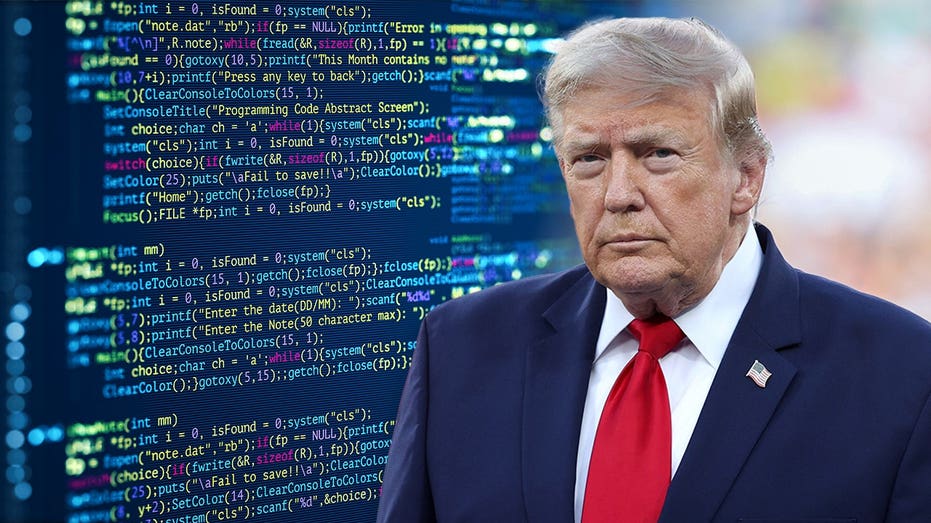
President Donald Trump has made rapid AI development and the data centers needed to power it a priority, while the administration promotes the technology’s potential economic benefits and Democrats cry foul before midterm elections.
DEMOCRATS EMBRACED AI’S GROWTH BEFORE TRUMP CAME ALONG — NOW THEY WANT TO SLOW IT DOWN
"Democrats are capitalizing on the fears of Americans that angst over AI," Heritage Foundation technology analyst Annie Chestnut Tutor told Fox News Digital.
Democrats are increasingly calling for government guardrails on AI, citing potential threats ranging from job losses and inequality to risks to democracy and humanity. Vermont Sen. Bernie Sanders, for instance, wrote in April that AI "kills jobs, equality, connection, democracy and maybe the human race."
But the apocalyptic warnings are not coming only from Washington.
Former Anthropic researcher Jacob Coxon quit the company over concerns about the race toward self-improving AI, warning that its developers are "gambling with our lives" and that such systems could potentially "kill us all by the end of the decade."
SEVEN-FIGURE BLITZ AS GOP EMBRACES PUSH TO COMPETE WITH CHINA IN BOOMING NEW TECH SPACE
Y2K sparked similar fears, as warnings spread of potential power-grid failures, disruptions to air travel and air-traffic control, and even predictions that planes could fall from the sky.
The Trump administration has backed targeted safeguards, including AI-powered cyber defenses for critical infrastructure, criminal enforcement against AI-enabled hacking and proposed measures to limit AI-driven child exploitation.
Tutor offered a nuanced Y2K comparison, arguing that the episode showed how technological risks can be addressed before they become potentially catastrophic.
"The reason now, like, we all laugh about Y2K is because actually software engineers and, like, financial analysts, they've worked really hard to ensure that the catastrophic incidents [didn’t] happen," Tutor said.
AI 'DOOMERS' RISK KNEECAPPING US VS CHINA, BUT EX-PENTAGON VET SAYS BOTH EXTREMES MISS THE MARK
"I think the same thing could happen with AI," she added. "If AI is built right, it can be more beneficial to Americans than the doomsday scenario."
Milloy said the Y2K comparison also fits a pattern he sees with climate change, with dire warnings of an existential threat followed by calls for sweeping government intervention.
Climate warnings have likewise been framed in apocalyptic terms, including predictions that entire nations could be wiped out by global warming, Arctic summer ice could disappear within years and Glacier National Park’s glaciers would vanish by 2020.
FOX NEWS POLL: VOTERS SEE AI REGULATION AS URGENT, RANK SAFEGUARDS AHEAD OF INNOVATION
"There are a lot of parallels between climate hysteria and AI hysteria," Milloy said. "Climate was existential. It was going to destroy the planet, and by implication, humanity. As we learned last week, AI is going to destroy humanity also on a very short time frame."
Milloy argued that while lawmakers are crying foul, they have not established enough specific evidence of catastrophic AI scenarios to justify sweeping restrictions.
Trump has responded to AI warnings by calling them a "hoax," reviving the language he has used for years to dismiss climate change concerns.
"Give me a real-life practical scenario of how this can happen," he said. "And then if you know what the scenario is, then you can stop it."
DAVID MARCUS: BIG TECH INVENTED AI DOOMSDAY TO DUCK REAL LIFE PROBLEMS
SIGN UP TO GET THE POLITICS NEWSLETTER
Milloy warned that overly broad regulation could carry its own cost by slowing technological advances before their benefits are fully understood.
"The opportunity costs are potentially huge," Milloy said, pointing to potential AI-assisted advances in medicine and productivity while acknowledging that their ultimate scale remains unknown.