
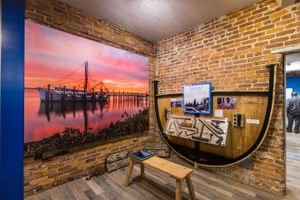
The Amelia Island Museum of History invites guests to step back in time and experience 4,000 years of rich regional history. From the Indigenous Timucua people to Spanish and French explorers to Victorian aristocrats, the museum takes great care to show the unique phases of this area’s past and highlight the different groups that have called it home. The museum is based in the old Nassau County Jail — built in 1938 in the Art Moderne style — so even the building itself is steeped in period details.
The idea for a museum first arose in the mid-1970s with the formation of the Duncan Lamont Clinch Historical Society, a preservation group focused on Amelia Island’s history. When the City of Fernandina Beach gifted the group a collection of historical documents, artifacts, and books in 1977, the museum became a reality (though it was first called the Fernandina Historical Museum).
Later donations from the Smithsonian, Fort Clinch, and the George Davis Collection fleshed out the museum’s exhibits, and a 2003 renovation included the addition of a designated archive and research area. In 2018, stories presented throughout the space were edited to create a more balanced and nuanced presentation of the island’s complex history. Today, the museum houses more than 11,000 distinct artifacts and archival materials.
The museum is also notable for its focus on oral history and was the first spoken history museum established in the state of Florida. This storytelling model began with volunteer Deon Jaccard, who recruited and trained other volunteers to become tour guides for an “Eight Flags” journey, which highlighted the influence of eight different nations on Amelia Island’s legacy.
Jaccard’s influence is still felt today in the museum’s storytelling tours that cater to various ages and interests, from a Friday night ghost tour that explores the town’s many haunted structures to a pub crawl that makes learning history fun. Folks can even explore the museum through a virtual tour of its extensive Victorian Artifacts Collection or online video lectures by historians, authors, and other local experts.