
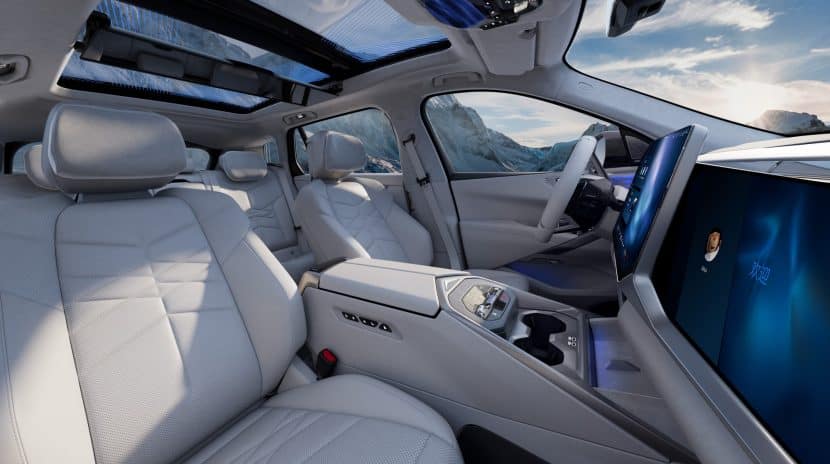
BMW is preparing a major product offensive in China, with 20 new and updated models planned by the end of next year. The announcement came during the company’s 2026 China Innovation Day, where it also confirmed that production of sixth-generation high-voltage batteries had officially started at its Shenyang plant.
The timing is hardly coincidental. BMW faces mounting pressure from domestic automakers that have become increasingly competitive in the electric-vehicle market. The German luxury brand is responding by accelerating its product rollout and bringing more of its latest technology to China, its largest single market.
The Neue Klasse is at the center of this strategy, but BMW isn’t simply betting on a handful of electric vehicles to turn things around. The company wants to apply its next-generation technologies across a broader range of products, many of them developed specifically for Chinese customers.
BMW Preparing Facelifts And Next-Gen CarsIntroducing 20 new and updated models in roughly 14 months is an ambitious target, even for a company with BMW’s resources. However, the figure shouldn’t be interpreted as 20 completely new nameplates. The rollout includes updated vehicles alongside new models incorporating Neue Klasse technologies. In other words, both facelifts and next-generation cars are on the way.
BMW has already given us a few clues about what’s coming. A product roadmap revealed earlier this month points to many upcoming vehicles. The camouflaged models could include the next-generation iX1 Long Wheelbase, the next 3 Series Long Wheelbase, and facelifted versions of the 5 Series and i5 in their stretched configurations. These identifications remain educated guesses rather than confirmed additions to the lineup.
The new BMW iX3 and i3 will also play important roles in the company’s plans, with long-wheelbase versions tailored to local preferences. China remains a market where rear-seat space matters most, making extended-wheelbase derivatives a natural fit for BMW’s strategy. The same applies to the larger SUV featured here: the stretched X5 and its electric iX5 counterpart.
The upcoming models will need to offer more than familiar styling and a premium badge, though. Chinese buyers have become accustomed to rapid advances in infotainment, driver-assistance systems, and electric powertrains. BMW’s challenge is to deliver those features without losing the driving characteristics that have traditionally set its cars apart.
Up next
-
BMW Starts Building Gen6 Batteries In China For Neue Klasse EVs
An i3 covering 754 miles (1,213 kilometers) on a single charge isn’t the only BMW news from China this week. The other announcemen... -
BMW’s Europe, US Q3 Sales Growth Can’t Offset China Collapse
BMW Group’s sales are heading in the wrong direction as a prolonged sharp downturn in China outweighs growth in Europe and the Uni...
During the same event, BMW also highlighted the capabilities of its long-wheelbase electric i3. As we reported this week, the prototype completed a 1,213-kilometer (754-mile) trip without recharging. That’s even farther than the stretched iX3, which covered 1,030 kilometers (640 miles) on a single charge a few months ago.
These tests underscore the potential benefits of combining a more energy-dense battery with efficiency improvements and better vehicle integration. The battery alone doesn’t tell the whole story; the electric drivetrain, aerodynamics, thermal management, and software all contribute to how far an EV can travel.
BMW Wants To Build Almost Everything LocallyBMW’s ambitions extend beyond flooding the Chinese market with new models. The company wants to manufacture more than 95% of the vehicles it sells in China locally by the end of the decade. It’s also exploring exporting China-built vehicles to other Southeast Asian markets.
The strategy makes sense in a market where local brands have gained ground with products designed around Chinese customers’ expectations. Developing vehicles closer to those customers can help BMW respond faster to changing tastes while making greater use of the country’s established supplier network.
However, a bigger lineup and more local manufacturing won’t automatically guarantee success. BMW still needs to convince buyers that its vehicles offer something worth paying a premium for, particularly as domestic competitors continue to improve their technology and expand their model ranges.
The next wave of launches will therefore be crucial. With 20 new and updated models planned by the end of 2027, BMW is committing substantial resources to its Chinese business. It needs every success it can get after years of falling sales, with 2026 shaping up to be one of its worst years in about a decade.
First published by https://www.bmwblog.com