
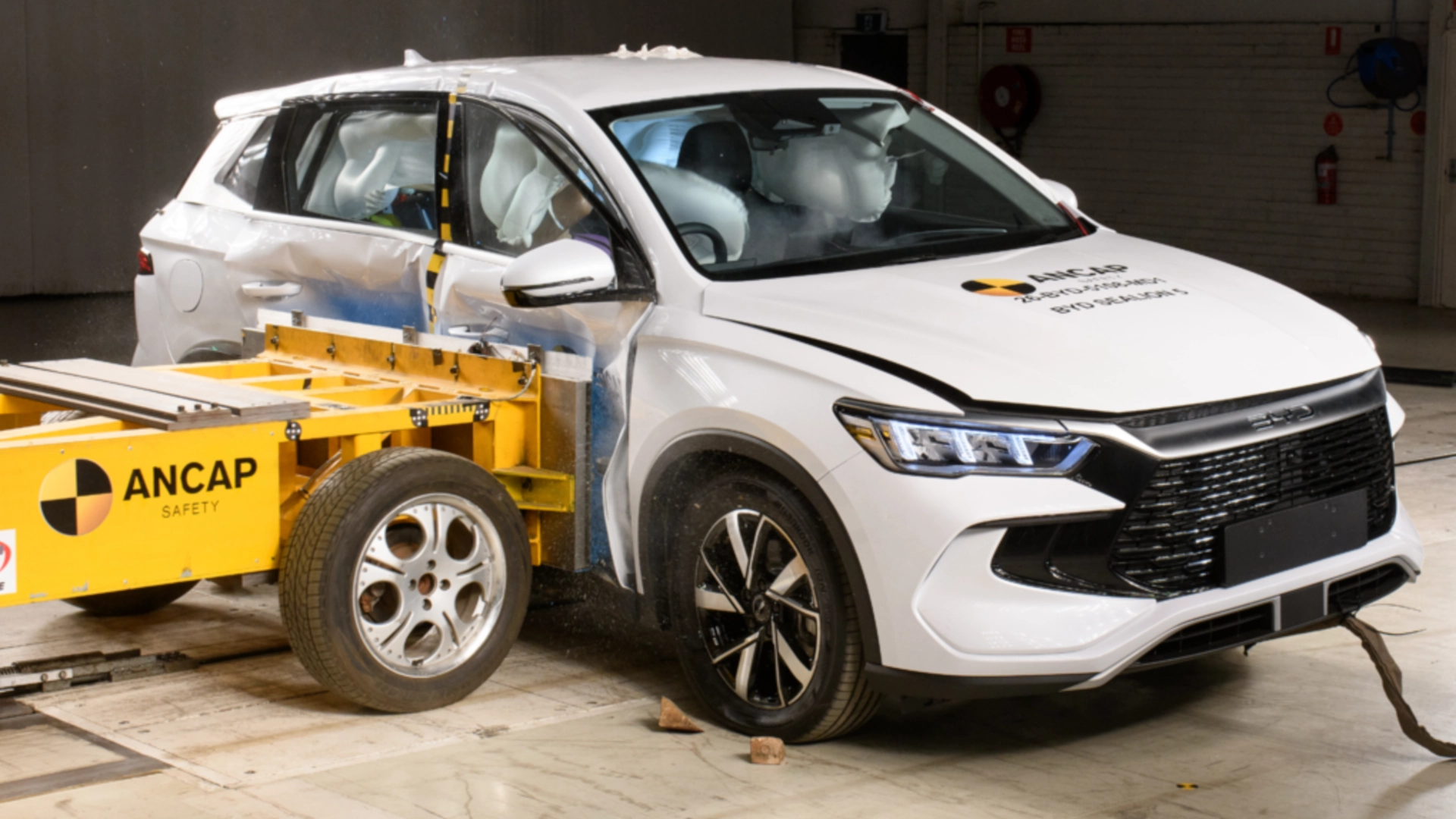
We’ve gotten so used to seeing five-star safety ratings from the Australasian New Car Assessment Program (ANCAP) that anything less seems to be subpar. In the case of the BYD Sealion 5, which recently got three stars, it’s even more apparent, especially since other models like the Shark 6, Sealion 6, and eMax 9 have all gotten five-star ratings.
But how exactly did the Sealion 5 score only three out of five stars? Let’s take a look.
PHOTO BY ANCAP
The parameters have changed since the other BYDs were assessed, so the scores for the Sealion 5 look different from those of its stablemates. The plug-in hybrid crossover scored 48% in the Safe Driving, 51% in the Crash Avoidance, 79% in the Crash Protection, and 74% in the Post-Crash categories.
OTHER STORIES YOU MIGHT HAVE MISSED:
DOTr proposed 2027 budget gets House approval, includes P1.7-B allocation for EDSA Busway
This hawk is employed by a Ford assembly plant to deal with pigeon problems
Under Safe Driving, the BYD Sealion 5 got 23% in occupant monitoring, 66% in driver engagement, and 55% in vehicle assistance. ANCAP notes that the vehicle is “not able to detect and classify the stature of occupants in front seating positions, monitor seatbelt misuse, or detect a front-seat passenger sitting ‘out-of-position,’ for example, with their feet on the dashboard.”
As for Crash Avoidance, the BYD scored 68% in frontal collisions, 37% in lane-departure collisions, and 17% in low-speed collisions. According to ANCAP, while the Sealion 5 is equipped with collision-mitigation features, some did not activate in low-speed situations.
PHOTO BY ANCAP
PHOTO BY ANCAP
The BYD Sealion 5 still earned a solid score in Crash Protection, getting 71% in the frontal-impact, 93% in the side-impact, and 87% in the whiplash tests. It was able to provide decent protection for all passengers regardless of the type of collision.
As far as Post-Crash assessment goes, the BYD Sealion 5 scored 100% for rescue information, 20% for post-crash intervention, and 83% for extrication. The vehicle provided information to emergency responders, and seatbelt buckles, interior and exterior door releases, and the tailgate all remained operational following a crash. The windows, however, become inoperable once the vehicle is submerged in water.
If you want to read the full report, you can check out the official ANCAP website. Your thoughts on this one, readers?