
See more Toronto Sun on Google — save as a Preferred Source
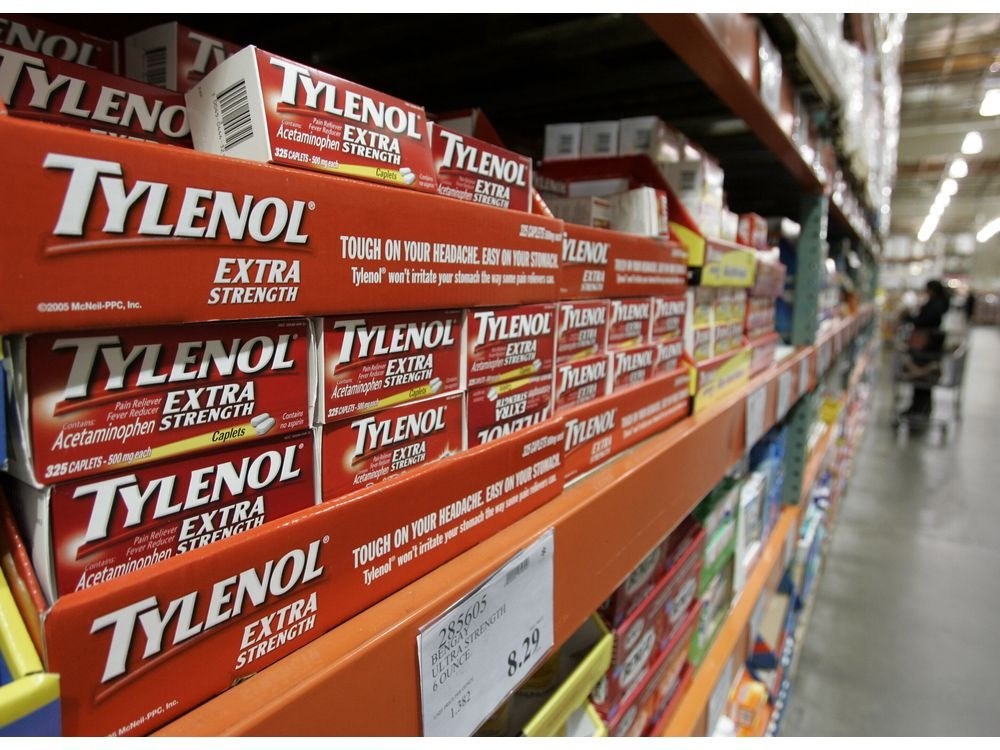
A California chemist found dead from suicide in a Boise, Idaho, church 44 years ago has been linked to the unsolved Chicago Tylenol murders in September 1982 that saw seven people fatally poisoned in a 24-hour-period, said the U.S. Sun .
The chemist, identified as Dr. Mathew Francis Betkouski, used cyanide to kill himself in December 1982 and was carrying $1,900 but no ID. He left behind a suicide note signed “William Toomey,” although that was determined to be a fictitious name.
Ada County police announced at a Wednesday news conference that they started looking to connect Betkouski to the Tylenol cold case during which the victims, ranging from 12 to 35 years old, died after taking cyanide-laced Extra Strength Tylenol capsules.
While cops stressed “we are not naming him as a suspect” and will continue to investigate all leads, forensic psychiatrist Dr. Park Dietz, who initially worked on the case with the FBI, said: “I tried to show he was a viable suspect and a large audience of forensic psychologists agreed.
“Some were skeptical, but believed he was a viable suspect; a few thought he was the killer,” he said. “Criminal profilers at FBI academy agreed he was a suspect. They thought we had solved the most important unsolved crime of my lifetime.”
RECOMMENDED VIDEO
Possessions found in L.A. area
The path to Betkouski, believed to be between 35 and 45 years old with homes in five states, started after some keys were found on his body for an apartment in Jacksonville, Fla., where he was working. That led to a brother living in the L.A. area who still had Betkouski’s possessions, including a map of Chicago and a small bottle of cyanide.
While the formula was not the same as what was used in the Tylenol, his writings suggested he was interested in the area. Photos showed he visited Chicago in December 1981, but it was unclear if he returned or not.
Cold-case Det. Tim Cooper told a news conference that Betkouski had been discovered taking home materials from a lab and was fired.
“He was conducting experiments in his garden,” Cooper said.
The detective also said a head injury requiring surgery left Betkouski paranoid about a tracking device being inserted into his brain.
Case examined in upcoming documentary
The cold case is also the subject of Unmasking the Tylenol Killer , which debuts Oct. 9 on the Roku Channel, according to People .
The Tylenol poisonings in Chicago led to major changes to over-the-counter medications and Johnson & Johnson introduced tamper-resistant packaging.
Investigators concluded the poison had not originated there with one theory suggesting someone had removed, refilled and resealed individual capsules before returning them to store shelves.
Johnson & Johnson recalled an estimated 25 million to 30 million bottles of Tylenol, while investigators examined its manufacturing facilities.
James Lewis, whose handwriting appeared to match a letter to Johnson & Johnson demanding $1 million, was convicted of extortion in 1983 and served 10 years. But Lewis, who died in 2023 without being charged with the murders, always denied involvement in the poisonings and cops were never able to place him in Chicago around the time of the deaths.
“This is not over,” said Cooper, who said all files would be shared with Chicago Police.
- Elizabeth Holmes set to move to halfway house in 2027
- Missouri mom sentenced to 13 years after baby dies in oven