
A college endowment is supposed to last forever, supporting students, professors and research in perpetuity.
Instead, many cash-strapped schools are draining their nest eggs just to stay alive.
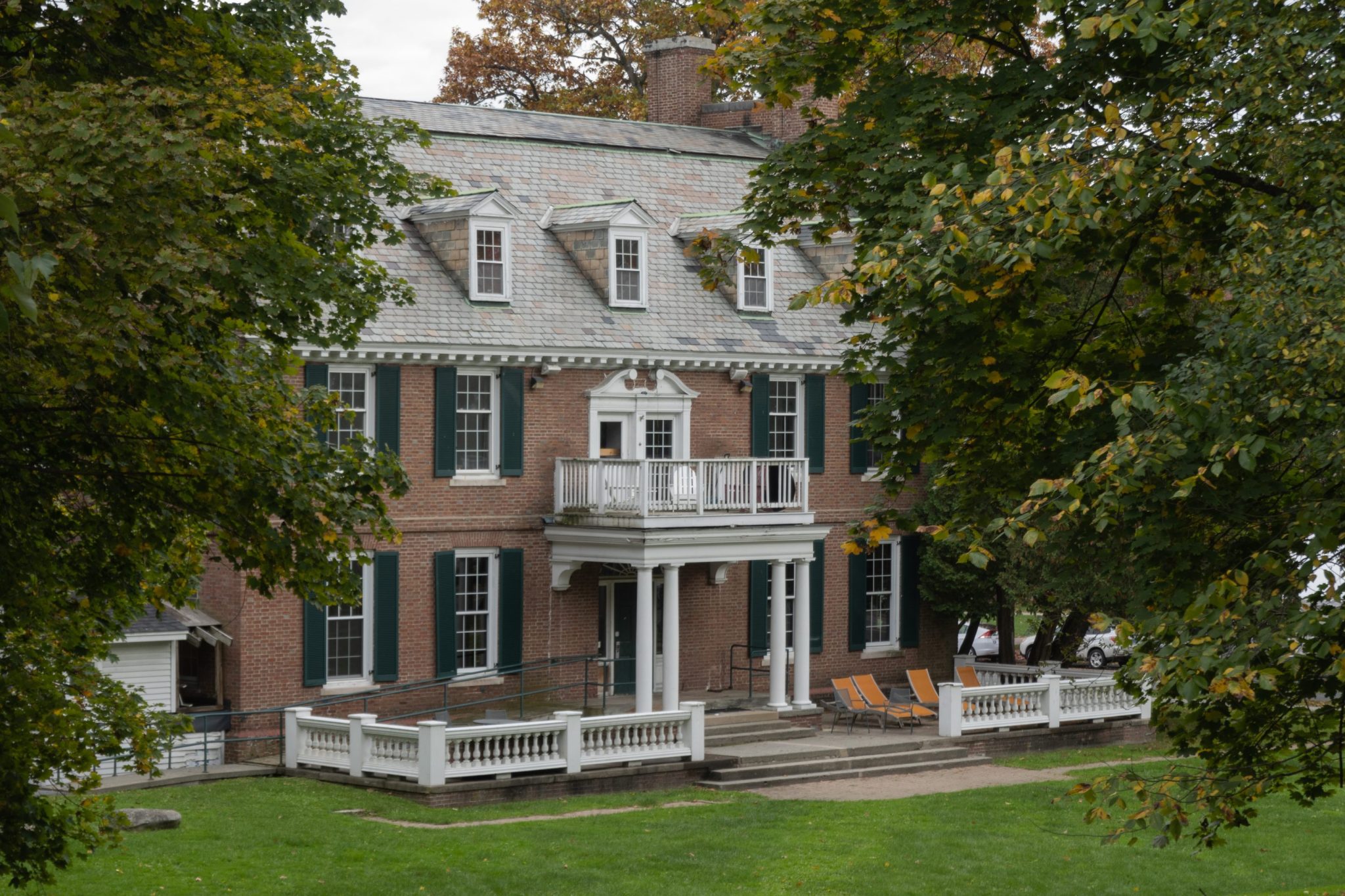
Faced with multi-million dollar deficits, Hiram College in rural Ohio borrowed from its $56 million endowment. The 1,000-student liberal arts school — which boasts a statue of US President James Garfield, who worked as a janitor there to pay his tuition — eventually pulled more than $47 million from the fund. It even tapped money that donors had explicitly set aside for specific purposes, not for balancing the budget.
Hiram is now working with the state attorney general’s office and is hashing out a repayment plan, a spokesperson said. The school is also notifying its donors about the draw from the endowment, both in writing and through in-person conversations.
David Haney, Hiram’s president from 2020 to 2023, said he was surprised to learn about the loans when he took office. He considers them a risky bet that many smaller schools feel forced to take in an era when US student enrollment has started to decline. Colleges need to focus on cutting expenses instead, he said.
“What a lot of these small colleges do is they think that things are going to turn around,” Haney said. “‘If we just invest in new athletic facilities, everything is going to be fine.’ In most cases, that doesn’t happen. To me, that’s why borrowing from the endowment and taking out debt is not the way to go about it.”
Hiram is far from alone. Nearly 200 private colleges borrowed from restricted endowment funds in 2025, up from about 130 in 2021, according to estimates from higher-ed consulting firm Perspective Data Science. Other colleges have avoided loans but are drawing more from their endowments each year than advisors consider sustainable. Analysts liken both strategies to borrowing from a 401(k) — it may help in the short-term but carries long-term risks, such as downgrading a school’s credit rating.
For some institutions, “there’s just nowhere else to turn,” said Tracy Filosa with investment firm Cambridge Associates, which works with endowments. “It’s not a rainy day fund — we know that. But in one way, it is there for an institution to get through a rainy day.”
Dipping into the endowment can sometimes work, which is one reason schools keep trying it.
Avila University in Kansas City received court approval in 2023 to loosen the restrictions covering 97 different endowment funds totaling $6.4 million. The school is now on better financial footing, said Andy Jett, its chief operating officer. The school aims to replenish the endowment as it recovers financially. Avila has boosted enrollment through recruiting more international pupils, though that strategy has faced a blow from the Trump administration’s efforts to limit student visas. Even so, Jett says dipping into the endowment isn’t a step to be taken lightly.
“I don’t think any school wants to — or should, probably — do this unless they don’t have any other options,” Jett said. “This wasn’t our first choice. This was pretty far down the list of things that we tried.”
Most colleges resorting to this tactic face the same underlying pressure.
The dismal US birth rate has left schools fighting over a dwindling pool of potential students. Larger, more prestigious universities — many with endowments north of $5 billion — still draw far more applicants than they can admit, keeping their finances healthy. But smaller, lesser-known institutions have endured years of declining enrollments and shrinking income, with no obvious solution in sight. Many have already succumbed, shutting their doors for good.
Indeed, some of the schools that have drawn down their endowments — including Indiana’s Martin University and Notre Dame College in Ohio — ended up closing anyway.
“When schools take that action, it’s meaningful — it can be a real red flag for those of us on the outside looking in,” said Emily Wadhwani, a higher education analyst for Fitch Ratings.
College endowments can be complicated, with the money held across hundreds or even thousands of separate funds.
The cash is essentially divided into two pots: one reserved for specific uses chosen by donors — like English scholarships or medical research — and the other unrestricted, with few conditions on how it’s spent. Hiram, for example, had 325 restricted endowment funds, according to a recent audit. State laws that govern funds given to charitable organizations apply to schools as well, so if a college wants to use restricted donations for other purposes, it generally has to get approval from the state attorney general’s office, according to law firm Taft Stettinius & Hollister LLP.
Schools generally assume their endowments’ value will grow 7% to 8% per year on average over the long-term, according to the American Council on Education. They budget accordingly, trying to draw no more than 5% of the value in a given year.
But as the financial pressure on them increases, many schools with relatively small endowments have been pulling more from their funds, data from the National Association of College and University Business Officers show. Colleges with endowments of $51 million to $100 million have increased their spending rate by more than a third since 2016, reaching 5.5% in 2025 compared to 4.1% in 2016.
Others have gone higher. Manhattan University, located in the Bronx, drew about 7% of its endowment in fiscal 2024 after facing deficits and withdrew another 7% in fiscal 2025, according to S&P Global Ratings. In response, S&P downgraded the school to one level above junk, or a BBB- credit rating.
“Once you get much over a spending rate of 7%, consistently, you are an at-risk endowment,” said Kristin Reynolds, who advises endowment administrators on their investment strategies at consulting firm NEPC. She was speaking generally, not about a specific college.
Manhattan University’s chief financial officer, James Perrino, said the school’s investment returns were significantly higher than 7%, so the draws did not erode the endowment’s principal. The money, he said, was used to provide additional student scholarships, enhance campus facilities and develop new master’s degree programs.
Tapping an endowment can help a school navigate tough times, or make a strategic investment in its future.
For 10 years, Webster University in a St. Louis suburb relied on cash infusions from its endowment to balance its budget and meet loan obligations. The school also reclassified some restricted funds to satisfy bond covenants. Now, leaders say they’ve made it through the rough patch. They’ve boosted enrollment, invested in international campuses and removed a “financially distressed” designation from the university’s accreditor.
Webster broke even for the past two years without help from its nest egg. But the stronger footing came at the cost of donor trust, said chief financial officer Bill Donovan. The school’s administration now must repair the relationship.
“No donor wants to think you’re taking their funds just to cover operating losses,” Donovan said. “The promise we’ve made with the new leadership team is that we’re not going to do that.”
Hiram is hoping for a similar rebound.
Endowment money has helped Hiram deal with persistent deficits. In a report in April, the college’s auditors noted that some of the borrowed money had come from restricted funds. But the cash infusion hasn’t fixed Hiram’s finances. Auditors wrote that the school faces “substantial doubt” that it can continue as a going concern for another year.
Hiram is working to turn its finances around. Earlier this year, James Malz, a former JPMorgan Chase & Co. banking executive, was appointed interim president. The school is dropping eight of its least-popular majors, including biochemistry and creative writing.
It’s also developing a plan to repay the loans, a college spokesperson said in an emailed statement. The school has done so before — in 2022, Hiram repaid over $6 million of loans from its endowment.
“The College’s financial strategy, including the use of endowment-backed financing, was implemented to help manage ongoing operational pressures while the institution developed and advanced a long-term sustainability plan,” the statement said. The school has now increased its fundraising — with an emphasis on unrestricted gifts — and has no plans to close, according to the spokesperson.
Founded in 1850, Hiram always admitted women and Black scholars due to the egalitarian ideology of its Disciples of Christ founders. Many of Hiram’s current students are the first in their families to attend college. Federal data shows 57% of first-time students there in 2019 received Pell Grants.
“We helped a lot of great students,” said Brad Goodner, a professor emeritus of biology and biomedical humanities.
Closing would hurt not just students and faculty, he said. The college is the center of the town — also named Hiram — about 40 miles southeast of Cleveland. As with many small, rural colleges across the country, the school provides jobs and forms the core of community life.
“The campus is the village,” Goodner said. In a potential closure, “those things would be lost.”
To contact the authors of this story:
Amanda Albright in Overland Park at aalbright4@bloomberg.net
Elizabeth Rembert in New York at erembert@bloomberg.net
This story was originally featured on Fortune.com