
- In today’s CEO Daily: How AI is changing the nature of leadership
- The big leadership story: Uber CEO says layoffs will equal rider savings.
- The markets: In the red as Treasury yields and the price of oil rise
- Plus: All the news and watercooler chat from Fortune.
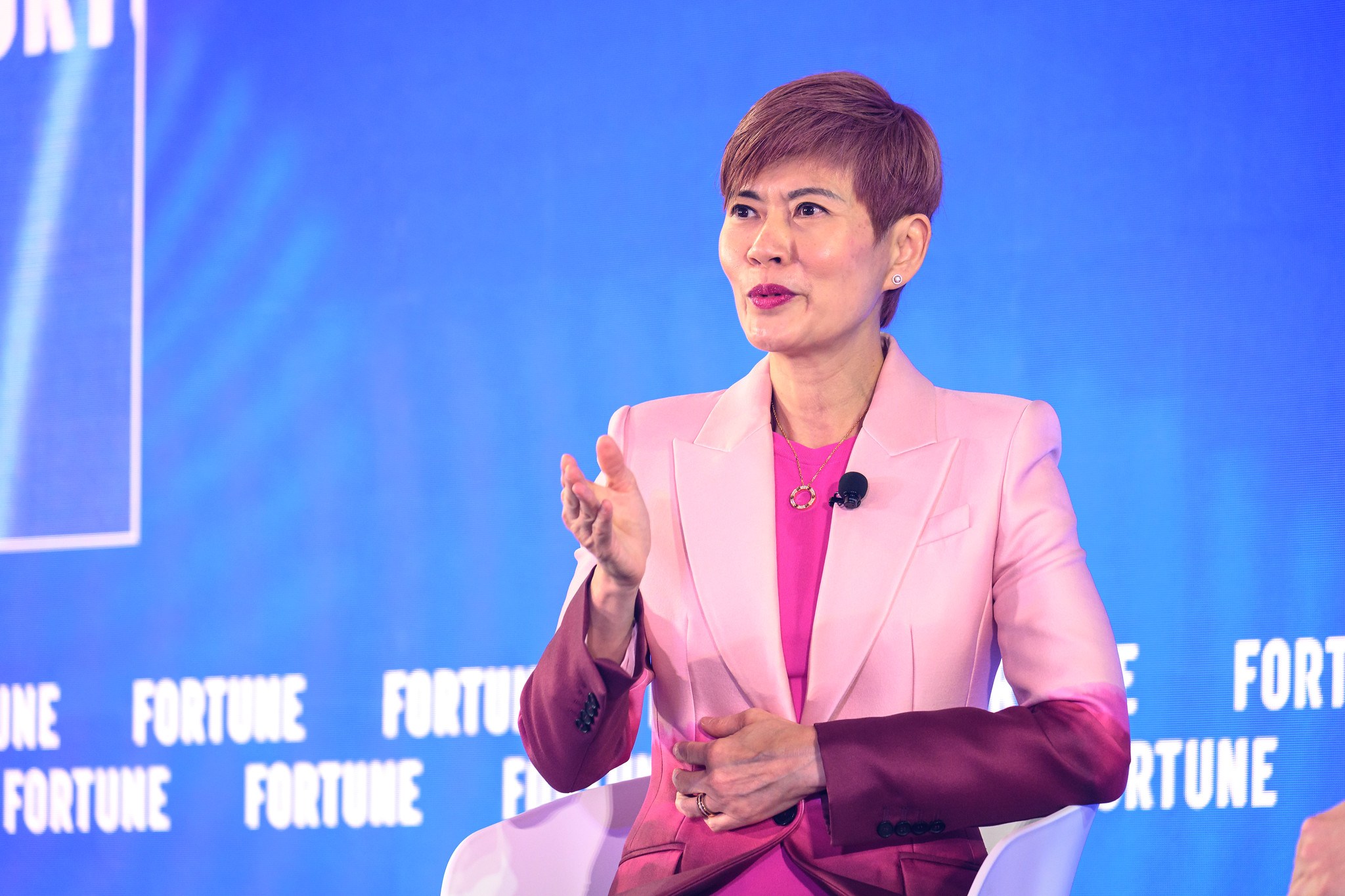
Good morning. Lee Williamson, Fortune’s Asia editorial director, writing from Macau, where we recently wrapped the inaugural Fortune Leaders Forum. We convened Fortune Global 500 executives, founders, experts, and policymakers to discuss how the convergence of multiple headwinds—AI breakthroughs, rising geopolitical tensions, changing demographics—is reshaping the global business landscape. In this era of volatility, we asked CEOs how they are building strategies for an unproven future, and how they make decisions before the path is clear. A recurring theme throughout the day was not just how AI is transforming companies, but how technology is changing the nature of leadership itself. Here are my three takeaways:
From efficiency to reinvention. ServiceNow’s Asia managing director Melissa Ries set the scene: the company’s research shows that while “about 60% [of companies] have AI agents; only 5% have redesigned their workflows.” Several leaders discussed the need to move away from thinking of AI as an efficiency tool to be bolted on to existing workflows, to a technology that mandates an enterprise redesign. “The biggest risk is [using] AI to improve today’s processes, so basically you get a better version of yesterday,” said Malina Ngai, Group CEO of 185-year-old health and beauty retailer AS Watson. “That loses sight of how we can use AI… to help us to reinvent how we serve our customers.” The company’s key metric to define success? A “customer love score,” which AS Watson sees improving as AI tools give staff more time to spend serving customers. Elsewhere, Feroz Sheikh, Syngenta Group’s chief information officer and chief digital officer, described how the agritech giant is evolving from monolithic systems and workflows to “modular pieces” so that supply chains and technology stacks can be realigned to adapt to fast-moving changes.
The talent equation. Walmart China’s president and CEO Christina Zhu built on Ngai’s comments, saying that “with AI, humans actually become more important, not less so,” highlighting how AI is helping the company’s merchandisers decide which products to stock. “The data only tells you what customers have chosen… it doesn’t tell you the unmet needs. That [only] comes with a deep human insight.” Zhu credited Walmart’s robust growth (its China business grew 20.7% last quarter, compared with Walmart U.S.’s 2.6% growth in the same period) to a combination of data, AI, and human decision-making that delivers customer satisfaction. “My boss is the Chinese consumer,” said Zhu. HP’s Asia head Michael Boyle also stressed the need to build systems that combine human talent with machine automation and not simply “re-engineering the same thing with AI.”
The evolving role of leadership in the intelligent age. When knowledge and experience are commoditized, and high-quality analysis is available at the cost of a few tokens, what is the role of a leader—and what leadership quality is most valuable? IMD professor Tim Quigley argued it’s a CEO’s judgment, a sentiment shared by BCG’s Greater China chair Carol Liao, who described a new “premium” on high-quality decisions. ServiceNow’s Ries said that with intelligence automated, judgment is the new “scarce resource.” Becca Carroll, chief strategy officer of design agency IDEO, known for traditionally seeking “T-shaped” people who have deep expertise in one specific discipline, described how AI is creating the rise of the “comb-shaped person,” who has “a depth of expertise across a series of disciplines and can fluidly move between them.” Yuxiang Zhou, founder and CEO of Chinese tech company Black Lake Technologies, which builds AI agents for the manufacturing sector, said he is using agents to train his sales teams—and getting better results than human managers in blind testing. “How you define the relationship between you and AI is what will distinguish great leadership from good leadership,” he said.
These conversations will continue at Fortune’s next Asia event, the Fortune Southeast Asia 500 Summit in Ho Chi Minh City on Nov. 3, where we will convene leaders of ASEAN’s largest companies to tackle the critical forces reshaping the region’s business landscape. Since I’m in Macau, the Las Vegas of Asia, I’d say it’s a safe bet that Southeast Asia’s AI transformation will be a key talking point. Apply to attend.
Contact CEO Daily via Diane Brady at diane.brady@fortune.com
This story was originally featured on Fortune.com