
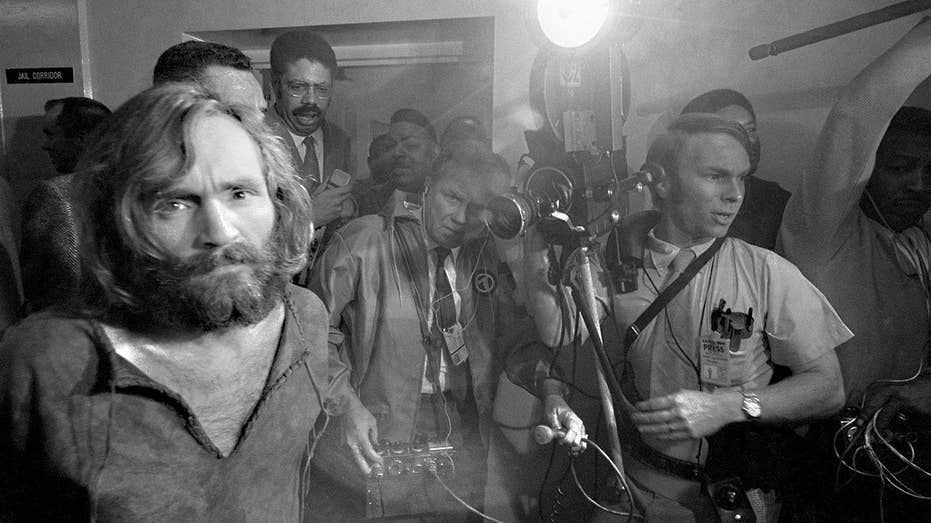
For decades, the prevailing story of the Manson murders held that Charles Manson masterminded a murderous plot to ignite a race war inspired by the Beatles. But Joe Berlinger argues the infamous story never added up.
The true crime filmmaker directed a three-part Netflix docuseries titled "Conversations with a Killer: The Charles Manson Tapes." It features previously unreleased prison audio from the cult leader and some of his "Manson Family" members.
In 1969, the career criminal who surrounded himself with runaways and other lost souls directed his followers to commit a series of murders in and around Los Angeles. Prosecutors argued the killings were part of Manson's "Helter Skelter" plan to ignite a race war.
CHARLES MANSON'S GRANDDAUGHTER REVEALS MOMENT SHE DISCOVERED DARK FAMILY SECRET: 'IT WAS DEVASTATING'
But after studying the previously unreleased recordings, Berlinger argues the murders were instead a desperate attempt to cover up "a series of blunders."
"This whole idea of starting a race war was a false idea," Berlinger told Fox News Digital. "He certainly believed a race war was coming, or at least that's what he told his followers to control them. But the murders, in particular the Tate and LaBianca murders, were an attempt to get associate Bobby Beausoleil out of prison. He told his followers, 'He's my friend. You guys owe me a favor. Let's get him out of prison.'"
"The truth is I believe, and others believe, that if they had succeeded in this crazy idea of getting Bobby Beausoleil out of prison, I think Manson would’ve killed him because he was a liability," said Berlinger. "But listening to those tapes made the story come alive, not these crazy conspiracy theories and myths that turned Charles Manson into the most mythologized figure in the history of true crime."
Berlinger traces the chain of events that led to the murders to a botched drug deal.
According to the documentary, Manson invited members of the Straight Satans motorcycle club to Spahn Ranch to protect him from the Black Panthers, whom he feared, offering them access to his female followers in exchange.
"[Follower] Tex Watson tried to steal money from a drug dealer named Bernard ‘Lotsapoppa’ Crowe, who wants his money back," Berlinger explained. "Manson goes out there and doesn't intend to kill him, but thinks he killed him, a Black Panther."
FOLLOW THE FOX TRUE CRIME TEAM ON X
According to the documentary, Watson stole Crowe's money, prompting Crowe to threaten retaliation. Manson later shot Crowe and mistakenly believed he had killed him. Crowe was not a Black Panther.
"He goes back to Spahn Ranch and becomes paranoid that the Black Panthers are going to come after him. He becomes friends with Bobby, tells him to join the family and also to help protect the ranch. Bobby becomes tight with some bikers who were also invited to protect the ranch from the Black Panthers."
But the motorcycle gang wanted more than just women. The documentary says Beausoleil brought them drugs he obtained from music teacher Gary Hinman. The bikers were unhappy with the quality of the supply, and Beausoleil was pressured to recover their money.
"Bobby tries to get his money back from Gary and can’t get it," said Berlinger.
According to court records, during the confrontation, Manson arrived at Hinman's home and slashed Hinman's face with a sword, cutting him from his left ear toward his chin. Over the course of about three days, Manson's followers tortured Hinman. Beausoleil later stabbed Hinman to death and wrote the words "Political Piggy" on a wall in Hinman's blood, along with an animal paw print intended to implicate the Black Panthers.
"Gary Hinman is killed because Manson comes in, wields a sword and then tells Bobby 'finish the job' to cover the tracks," Berlinger said.
SIGN UP TO GET THE TRUE CRIME NEWSLETTER
Beausoleil was arrested about a week after Hinman’s body was discovered. Berlinger said Beausoleil was driving Hinman’s vehicle and had "the murder weapon stupidly in the stolen car."
Berlinger said Manson wanted police to believe Hinman’s murder was the work of the Black Panthers to cast suspicion away from Beausoleil. He noted the attempt to free Beausoleil became the catalyst for the murders that followed.
On Aug. 9, 1969, Manson's followers murdered five people at a Los Angeles home previously rented by music producer Terry Melcher: actress Sharon Tate, who was 8 1/2 months pregnant; coffee heiress Abigail Folger; celebrity hairstylist Jay Sebring; Polish writer Wojciech Frykowski; and Steven Parent, who had been visiting the estate's caretaker.
Melcher had previously declined to sign Manson to a recording contract.
"The murder is tried to be made to look like it was part of Gary Hinman’s murder," said Berlinger. "But when Manson picks up the paper the next day, and there’s no information about these two murders being linked, they do another murder. The logic is, ‘We’ve got to make people think that Bobby, who is sitting in prison, is not guilty.’"
"This was all a series of blunders, a bunch of bad, spontaneous decision-making."
GET REAL-TIME UPDATES DIRECTLY ON THE TRUE CRIME HUB
The next night, wealthy grocer Leno LaBianca and his wife, Rosemary LaBianca, were stabbed and killed in their home across town. The killers scrawled phrases including "Pigs" and the misspelled words "Healter Skelter" in blood at the crime scene.
Manson was arrested in October 1969.
Prosecutors maintained at trial that Manson ordered his followers to kill some of Los Angeles' rich and famous to trigger a race war, a plan prosecutors said grew in part from his interpretation of the Beatles' song "Helter Skelter."
Manson frequently spoke about an impending race war and interpreted songs on the Beatles' "White Album" as messages about the coming conflict, according to testimony from his followers. What remains disputed is whether those beliefs motivated the Tate-LaBianca murders or whether, as Berlinger argues, prosecutors elevated them into the central theory of their case.
"[Prosecutor Vincent Bugliosi] had to come up with a legal theory to convict a guy who actually didn’t do the killings," Berlinger said. "Manson wasn’t even there when the Tate-LaBianca killings took place. So how do you convict somebody who wasn’t there? Well, you come up with this organizing principle that he convinced his followers that a race war was coming, and he was trying to make that race war happen. It was a brilliant legal theory, but it’s a false story."
"The Manson murders are much more tragic, but much more banal than this idea of some crazy cult trying to start a race war," Berlinger continued.
SIGN UP TO GET THE LATEST TRUE CRIME NEWS
"This was a drug deal gone bad, trying to cover up Gary Hinman’s killing by doing another murder the next day to make it look like a copycat murder, which were the Tate murders. And when that murder didn’t hit newspapers like a Black Panther murder, they did the LaBianca murders. It’s a series of blunders by people who were trying to cover their tracks, not this grand scheme of 'Helter Skelter.'"
GOT A TIP?
Bugliosi worked with writer Curt Gentry on a book about the case. Published in 1974, "Helter Skelter" became the bestselling true crime book of all time.
Manson and three followers — Susan Atkins, Patricia Krenwinkel and Leslie Van Houten — were found guilty and later sentenced to death. Charles "Tex" Watson was tried separately and convicted later. Their death sentences were reduced to life in prison after the California Supreme Court invalidated the state's death penalty in 1972.
Atkins died in prison in 2009. Van Houten was released on parole in 2023. Krenwinkel and Watson remain in prison.
LIKE WHAT YOU'RE READING? CLICK HERE FOR MORE
Manson died at a California hospital in 2017 while serving a life sentence. He was 83.
LISTEN TO THE NEW 'CRIME & JUSTICE WITH DONNA ROTUNNO' PODCAST
GET BREAKING NEWS BY EMAIL
Berlinger maintained Manson's reputation as an evil mastermind was fueled more by myth than reality.
SEND US A TIP
"He wasn’t killing or ordering people to kill to get some kind of satisfaction," Berlinger said. "He was covering up a series of blunders and just getting deeper and deeper into a hole. The best way to honor the victims is to be truthful about what happened."