
See more Toronto Sun on Google — save as a Preferred Source
When we think of the mob, towns like New York, Philly, Boston and Chicago are the burgs that come to mind.
Newport, Ky. ? Not so much. But for decades the city across the Ohio River from Cincinnati was ground zero for gambling and vice. Big city mob rubouts were not uncommon.
Brothels, gaming houses and strip joints ruled the town.
In the parlance of the day, Newport was a wide-open city where anything went. Cops? Not a problem; they were on the pad. And for decades, this was the way. But by 1961, matters were coming to a head and the national organized crime spotlight was on the town.
Cop’s disappearance never solved
On April 3, 1961, police officer George Hawkins , 48, vanished after making his wife and daughter breakfast. Four days later, cops found his 1959 Plymouth Fury station wagon on the banks of the Ohio River in Dayton.
There was no sign of Hawkins, but the keys were still in the ignition. Snitches told detectives the rogue cop was taking kickbacks from the vice lords of Newport.
Cops learned that Hawkins kept raising his prices until the Cleveland-based gangsters said enough and took him off the board. No one has been charged in connection with his disappearance and the case remains unsolved.
Newport was always a tough town and fertile ground for organized crime. Long before Las Vegas, from the 1920s to the 1960s, Newport was America’s numero uno gambling hot spot.
Like the rest of Northern Kentucky, the town was relatively isolated until the Interstate Highway System was developed in the late 1950s. It was more connected to Ohio than Kentucky.
And for gangsters, that was awesome because the city wasn’t subject to overbearing Ohio cops. Vice thrived with little supervision from the cops.
By 1933, according to the now-defunct Kentucky Post, Newport had become “a hell-hole, a den of vice and corruption, and a haven for criminals from all the states in the Union.”
“You could pretty much do what you wanted – and the guys with some money really did what they wanted,” retired Cincinnati and Northern Kentucky reporter Terry Flynn said. “Across the river, you still had a much stronger political machine. But in Newport, nobody cared. They just gambled.”
‘You didn’t see any murders happening’
But it also became a mecca for fun-loving celebrities like Frank Sinatra, Dean Martin, Marilyn Monroe and the great Duke Ellington. Overseeing much of the vice in the city of 31,000 (now 14,000) was mobster/mayor Frank “Screw” Andrews.
“(Andrews) was to make certain that you had a good time, that the city was clean, that you didn’t see any murders happening,” Tenkotte said.
For the average resident, the mobbed-up city had clean streets and folks left their doors unlocked. Every once in a while, though, order needed to be restored.
And, as the white gangsters saw it, one of those out of order was Black racketeer Melvin Clark. Like elsewhere in American society at the time, organized crime was also segregated. Clark owned several gambling clubs.
- CRIME HUNTER: Evil Candy Man was the monster Who Killed Halloween
- CRIME HUNTER: Did sex-obsessed couple's amorous antics lead to murder?
- CRIME HUNTER: William Bonin most vile of the Freeway Killers
Clark blamed for rubout
A botched hit on a white gangster was dropped at Clark’s feet. Andrews determined to do something about it on July 18, 1955. On Newport’s Central Ave., Clark was hanging out on the street with some cronies when he was approached by Andrews, who “put out his hand to shake, grabbed his hand and shot him in the neck.” Three times, in fact.
At his murder trial, Andrews testified that Clark pulled out his gun, firing three times and missing. However, Melvin Clark had been a U.S. Marine sharpshooter. Andrews’ tale was unlikely, but he had the backing of the cops. The judge said it was self-defence.
Each of the white witnesses was thanked for their time and given $100 each.
The Cincinnati Enquirer wrote: “ … (Melvin Clark), said to have controlled much of the lucrative policy slip business in Cincinnati’s West End, found Monday night that Frank (Screw) Andrews – once a policy ‘king’ himself – was a better shot than he was.”
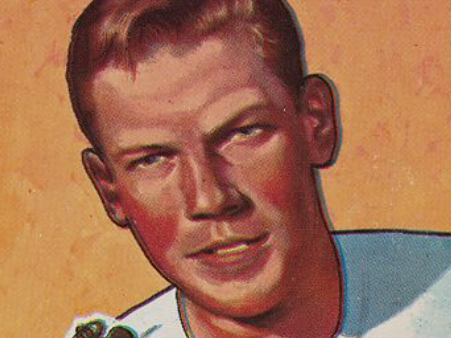
Enter former NFL star quarterback George Ratterman also in 1961, who was running for sheriff with the intention of cleaning up Newport. He vowed to shut down gambling and vice but the underworld was not about to go down without a fight.
Ratterman was lured to a hotel suite above the Tropicana nightclub and was drugged. The next thing the ex-gridiron star knew, he was in bed with stripper April Flowers. Three cops exploded into the room and arrested Ratterman.
The former Cleveland Browns star fought back with a blood test that revealed he had been drugged. The sick scheme fell apart and he was elected sheriff. Then Attorney General Robert F. Kennedy sent in the FBI to help.
RECOMMENDED VIDEO
‘I got rid of the gambling and prostitution’
“In four years I got rid of the gambling and the prostitution,” Ratterman said years later, “and I didn’t get killed.”
The coda to Newport’s wild ways was the demise of the Cleveland mob’s man in Kentucky: Frank “Screw” Andrews. His departure from this mortal coil harkened back to that of Murder Incorporated killer Abe “Kid Twist” Reles in 1940. Reles was ratting out his old pals, but before he got to big cheese Albert Anastasia, he went sailing out the window of the Half Moon Hotel in Coney Island.
The New York tabloids joked: “Canary could sing but couldn’t fly.”
And so it was, on December 17, 1973, “Screw” died after “falling” from a fourth-floor window at Saint Luke Hospital in Fort Thomas, Kentucky. It was widely reported as an underworld settling of accounts.
The era of Andrews and other crooks feasting on the corrupt town was over.
bhunter@postmedia.com
@HunterTOSun