
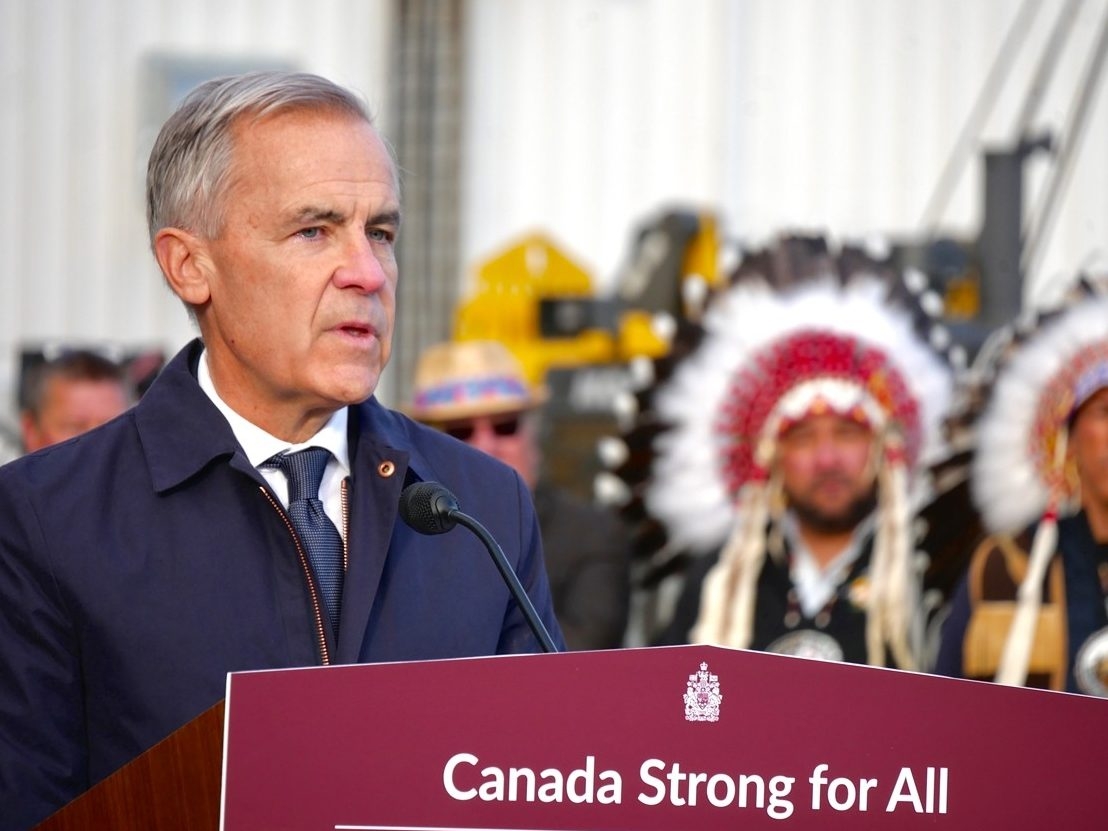
With Prime Minister Mark Carney and Canada’s premiers and territorial leaders meeting with representatives from Canada’s First Nations for what’s described as historic talks on Monday, Canadian taxpayers have a right to ask what, exactly, is the price tag of reconciliation?
The meeting is being held to discuss Carney’s major projects agenda and its impact on First Nations, economic partnerships, treaty rights and other issues.
Meanwhile, the bill to taxpayers to achieve reconciliation with Canada’s Indigenous people keeps rising.
A report by the Fraser Institute last week estimated that over the past 50 years – but primarily since 2017 – Ottawa has paid out more than $110 billion to First Nations for lawsuits and class action settlements.
In addition, the fiscally conservative think tank estimated last month that during the Justin Trudeau era from 2015 to early 2025, inflation-adjusted federal spending on Indigenous issues exploded from $10.3 billion to $40.8 billion annually – seven times faster than the rate of overall federal spending.
- GOLDSTEIN: Wasteful and ineffective, federal spending on Indigenous issues is out of control
- EDITORIAL: The Liberals’ Indigenous spending money pit
- EDITORIAL: Feds ignore law on First Nations funding
Canada’s Indigenous people’s lives seem never to improve
Despite this, the lives of Canada’s Indigenous people seem never to improve.
The federal government’s own community well-being index – which measures education, labour force activity, income and housing – shows only a small uptick in the standard of living for First Nations in recent years.
Overall, the standard of living for Canada’s 1.5 million First Nations, Metis and Inuit people remains well below that of the general population, including shorter life spans, higher rates of unemployment, poverty, suicide, drug addiction, mental illness, incarceration, and as victims of homicides and other crimes.
One of the issues is that when Trudeau came into power, he stopped enforcing the First Nations Financial Transparency Act passed by the Stephen Harper Conservative government in 2013, requiring First Nations to publish audited financial statements and salaries and expenses for chiefs and councillors.
The other is that, in the words of then parliamentary budget officer Yves Giroux in 2022, while the federal government was spending more than ever on Indigenous services, it was accomplishing less.
RECOMMENDED VIDEO
Two things that need to happen
At least two things need to happen to ensure that taxpayers are getting good value for money spent on Indigenous issues.
First, the Mark Carney government must enforce the First Nations Financial Transparency Act.
Second, there needs to be a forensic audit into federal spending on Indigenous issues.