
Asher Davis was vaguely aware that subscription-based car perks had “become a thing,” he said. But when the 33-year-old was thrown into the new-car market unexpectedly, after nine years of blissful ignorance, what he found disturbed him: as far as he could tell, the roster of new cars with no subscriptions attached had dwindled drastically.
“I feel like eventually I won’t have a choice,” he told Fortune.
Davis’s frustration is aimed less at any single subscription—offerings run the gamut from remote start to horsepower upgrades—than at the market’s direction.
Automakers are betting that drivers will get used to paying monthly for features built into cars they’ve already bought. Early evidence suggests consumers will tolerate some of it, but not fees for hardware they’ve already paid for, and their willingness to pay is slipping.
Why automakers are flipping the switchEdmunds doesn’t formally track the spread of subscription-based car features, according to Ivan Drury, the firm’s director of insights. But Drury knows the trend firsthand.
“I’ve got a Subaru that has the location and remote start based upon a subscription fee,” Drury told Fortune. “And my prior vehicle, a 2024 F150, had both of those for free.”
Different manufacturer, different time, he noted, but the contrast is the point. “It’s becoming more frequent and more annoying,” he said.
The appeal for automakers is straightforward. “Number one, it really is based upon the fact that they can,” Drury said. Modern vehicles are connected to the internet, which means features can be switched on and off remotely.
“It’s not like it’s a hard touch point thing,” he said, like swapping leather for cloth. “It’s the fact that there is control over some things that are actually hardwired into the vehicle, but at the same time—flip of a switch.”
The dealership, meanwhile, “hates it,” Drury said. No salesperson wants to sheepishly explain that some of the bells and whistles on a customer’s new toy sit behind a paywall.
“But they’re just the middleman,” Drury said. “It’s shifting where the money’s going, but at the end of the day, who’s bearing the cost? The customer.”
Where drivers draw the lineBMW briefly test-drove a subscription for heated seats, charging drivers in markets including the UK, Germany, and South Korea a monthly fee to use seat heaters already installed in their cars. The fee was never offered in the U.S., and the backlash was swift and severe enough that BMW dropped the heated-seat subscription in September 2023.
“Talk about leaving a bad taste in your mouth,” Drury said. “It’s like you bought this vehicle; it’s good to go. You should just be able to hit the button. Get that heated seat. And you paid for a BMW, and you might get yours turned off?”
The episode suggests a red line for consumers: Charging for something long considered part of the car, in a vehicle already sold at a premium, reads differently than charging for a genuinely new capability.
Peter Anderson, 36, a luxury car enthusiast who has been driving high-end cars since age 14 and a half (“thanks to the great state of North Carolina’s legal driving age requirements”), agreed. “Honestly, if the technology is something like heated seats, I don’t want to pay for something that’s already built into the car and I’ve paid for the car to be equipped with those seats,” he told Fortune.
But automakers are banking on his openness to subscriptions in general.
“I’m into [subscriptions] to an extent,” Anderson said. “If there’s an update to the software that’s capable of giving me better performance or a new feature, I’d pay to enable it.”
Anderson cited upgrades to power, handling, and driving dynamics. “Even if it was just a new mode that could be added because the software had evolved,” he said.
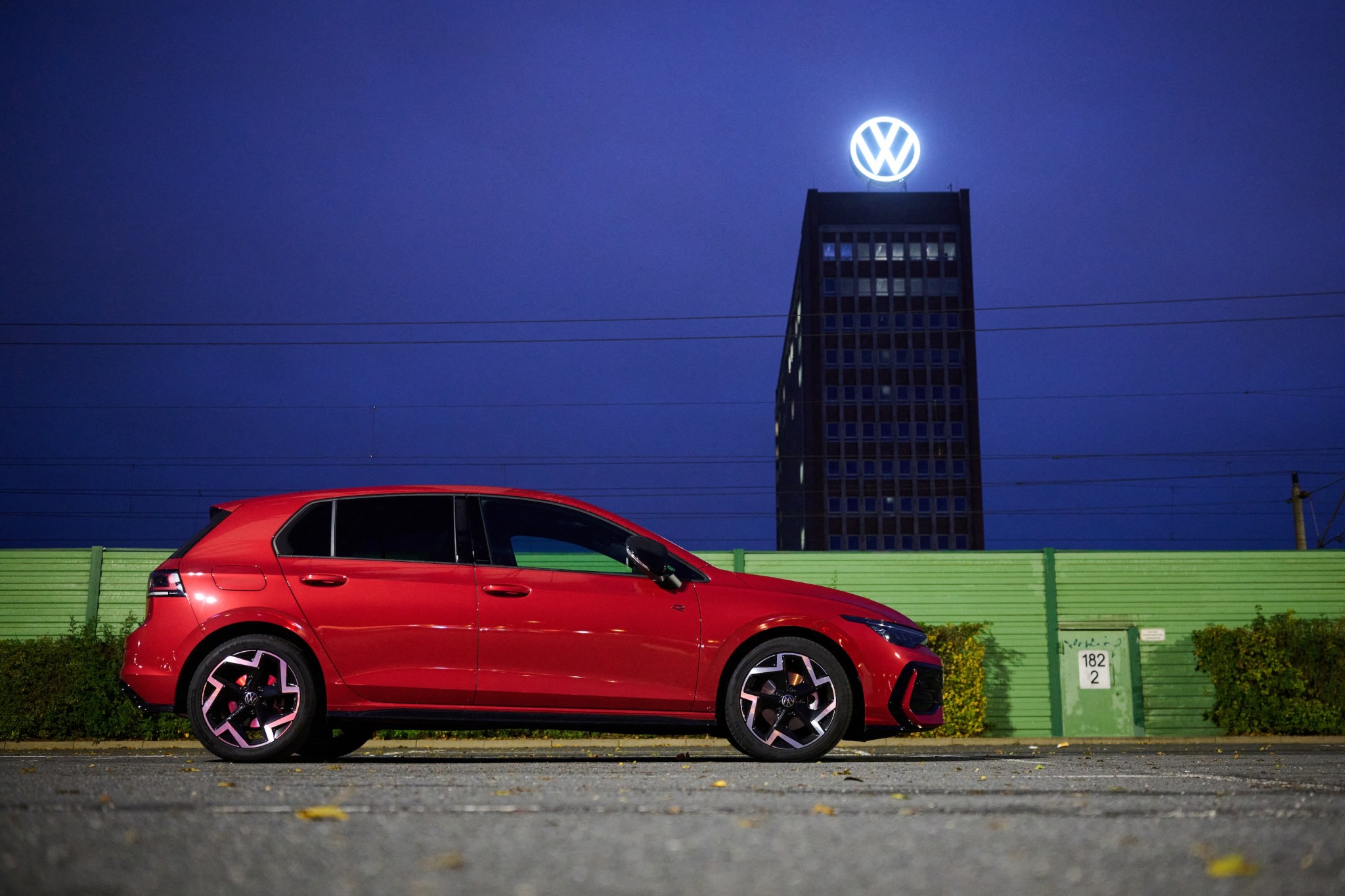
Volkswagen, No. 1 on the 2026 Fortune 500 Europe, is testing that appetite. In 2025 it brought its “Power on Demand” subscription for the ID.3 electric hatchback to the UK, letting owners of Pro and Pro S versions pay £16.50 (roughly $22) a month to raise output from 201 to 228 horsepower. The extra 27 horsepower is already built into the car’s hardware.
Online, some Volkswagen customers cried foul (“If you’re OK with this dystopian nonsense, you’re a sucker,” one Redditor said). Volkswagen, meanwhile, told Fortune that customer feedback “has been positive.”
A $20 fee on a $787 paymentThe subscription push arrives as vehicle costs hit records. The average monthly payment on a financed new car reached $787 in the third quarter of 2026, up from $756 a year earlier, according to Edmunds data. The average rate on those loans has held near 7%.
Against payments like that, a $20 or $30 monthly subscription can feel almost negligible, which is exactly what makes it easy to underestimate.
Sue Helper, an economics professor at Case Western Reserve University’s Weatherhead School of Management and a former chief economist at the U.S. Commerce Department, said the monthly sticker price can be a misleading odometer.
“The important thing is to look at the total cost of owning a vehicle, not just the monthly payment,” she told Fortune. “A subscription that costs a few dollars a month may seem insignificant, but multiple fees can add up over several years. Consumers have to weigh those costs against the value they actually get from the features.”
Subscriptions aren’t inherently exploitative, Helper said. They can make sense for services that require ongoing investment, like connectivity or software updates.
Part of the problem is attention, she said. “Consumers have limited time and attention, and they may not fully account for recurring charges when they initially purchase a vehicle.”
She draws the line at charging for hardware already baked into the purchase price. “One difference between a vehicle-related subscription and a magazine subscription is that the former is tied to a very expensive investment,” Helper said. “It wouldn’t be fair to say that the $50,000 vehicle is in fact not usable if a consumer doesn’t pay an ongoing fee.”
She pointed to New York City’s “click to cancel” rule, which Mayor Zohran Mamdani’s administration put into effect Oct. 1, as a policy that can keep tactics that exploit consumer behavior from becoming “standard business practice.”
What the market is sayingThe risk isn’t only on the consumer side. “A subscription might generate additional revenue in the short term, but if customers feel they’re getting less value for their money, they may be less likely to buy from that company again,” Helper said.
“The competitive question is whether consumers see enough value in a paid feature to keep subscribing—and whether the company’s pricing strategy strengthens or weakens its appeal relative to other brands,” she added.
The market has started to answer. In S&P Global Mobility’s 2025 Connected Car Study, published in July 2025, 68% of respondents said they would pay for connected-car services, down from 86% in 2024.
Automakers are betting the decline is about presentation, not principle: that drivers who balk at a heated-seat fee will still pay for a performance upgrade or a connectivity plan if the value is clear.
Drury worries that the fees will fade into background noise, and that resistance will erode as a new norm sets in. “There’s huge backlash, but at the same time, if even anybody signs up, they make money,” he said.
“Only older people like myself are going to remember that ‘Hey, that used to be free, that used to be something normal that my car always had—and now you guys are charging for it.’”
This story was originally featured on Fortune.com