
The $7,500 federal EV tax credit ended Sept. 30, 2025, killed off by the Trump administration and Congress, which scrapped fuel economy rules and the other policies that had been propping up electric vehicles. The predictable result: sales fell off a cliff. The less predictable result, and the one worth your attention, is how fast the floor held.
If you want the short version, the market cratered and then stabilized at a level that looks a lot like where EVs were a couple of years ago. It is bruised, not broken. The real story is which companies survived the shock, which products are still moving metal, and what the rest of the world is doing while America recalibrates.
The drop was immediate and ugly. In the month before the credit expired, electric vehicles pushed past a 14 percent share of retail car sales, according to JD Power. People were, naturally, cashing in before the money vanished. Then the hangover hit. The electric share plunged to 7.1% the following month, and the month after that battery-powered cars fell to just 5 percent of retail sales, a share last seen in 2022.
So that is the damage: a market that had clawed its way to a double-digit share got cut roughly in half almost overnight. If you pulled demand forward with a subsidy, you pay for it later. Nobody should be shocked.
Here is where the narrative gets interesting. Tyson Jominy, who runs data and analytics as a senior vice president at JD Power, says the EV market has been more resilient than many expected. His framing is that EV sales hit the floor quickly after the credit ended, which is another way of saying the pain was sharp but short.
The numbers back him up. The EV share of retail sales bounced back over 6 percent in December, and September's figure landed at 7.9 percent. Jominy's bottom line is that the market only went back about two years in terms of EV share. Losing two years of progress stings, but it is not the collapse the doomsayers promised.
Dealer lots tell the same story from a different angle. The number of days EVs spent sitting unsold fell in each month from April through September, according to Cars.com. In March, the average EV took 115.6 days to sell; by September, that was down to 89.4 days. For reference, during the subsidy-fueled buying frenzy the year before, EVs moved in 80.5 days. Jenni Newman, editor-in-chief of Cars.com, says the declining days-on-lot figure shows the market getting closer to a balance between supply and demand.
Not everyone suffered equally. Overall U.S. EV sales grew 6.1 percent between the second and third quarters to around 262,000 units, the strongest showing since the credit ended, according to Cox Automotive. But strip out one company and the picture changes completely: without Tesla, the market would have shrunk slightly over that span.
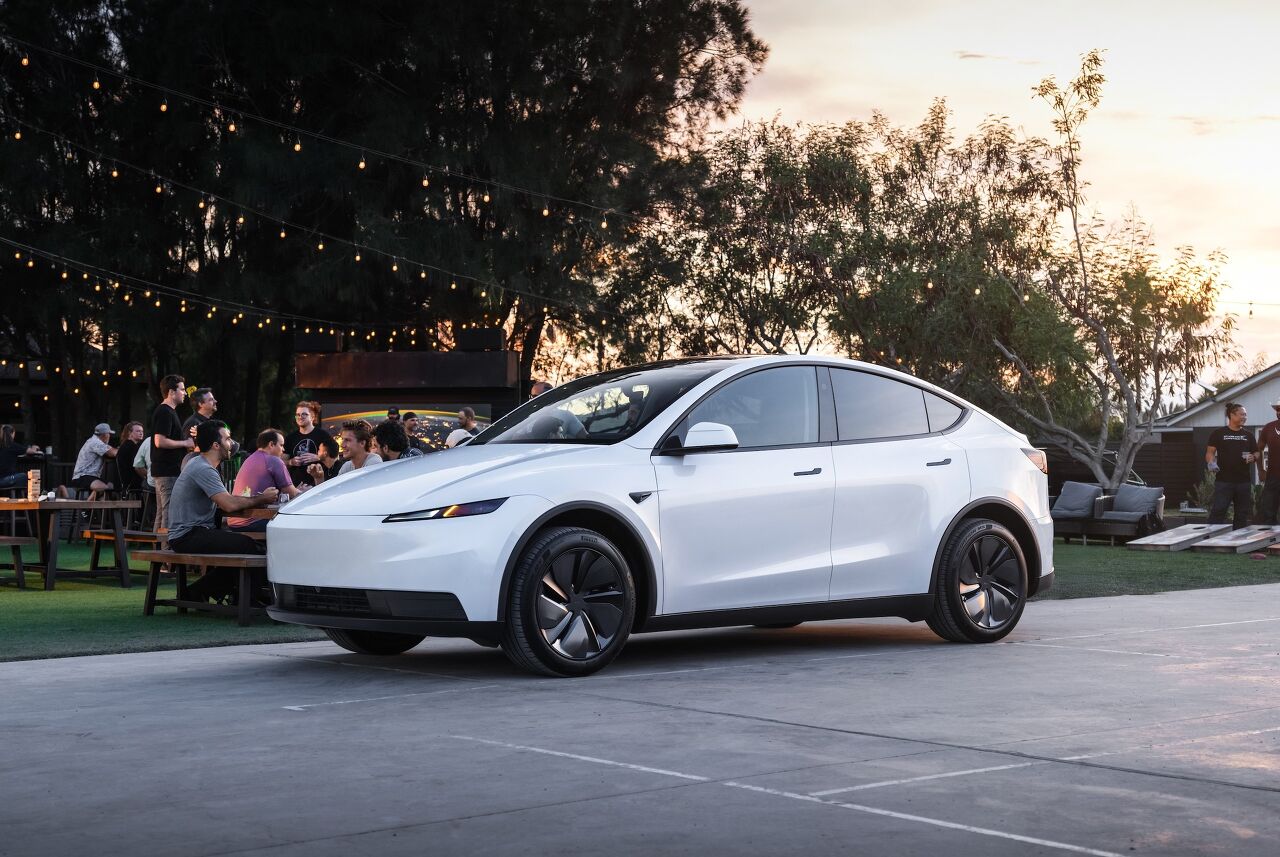
That is remarkable given Tesla was not exactly booming. Year over year, Tesla's U.S. sales dropped 19.7 percent in the third quarter. But the broader market contracted by close to 40 percent year-over-year over the same period, so by sheer gravity Tesla's slice of the U.S. EV market climbed back above 50 percent. Tom Libby, who leads loyalty solutions and industry analysis at Mobility Global, credits Tesla with largely holding up against the decline seen among non-disruptors.
The explanation is partly about repeat buyers. Libby points out that roughly half of Model Y owners pick another Model Y as their next vehicle, against an industry-wide model-level loyalty figure of 26 percent. When nearly half your customers come back no matter what Washington does with incentives, policy shocks hurt less.
Rivian is the other bright spot. Its deliveries surged on the back of the new R2, described as a top all-around Model Y rival and the company's first product with mainstream potential. Among the legacy crowd, Toyota steadily grew EV sales as it rolled out new models, making it a notable outlier.
The structural lesson of this year is about flexibility. EV-only manufacturers had no gas lineup to fall back on when the policy winds shifted, while legacy automakers simply retreated to the products that still make money. And retreat they did: since the credit ended, legacy automakers have scrapped or pushed back roughly two dozen electric models, including the Ford F-150 Lightning, Volkswagen ID.4, and Honda Prologue.
Libby puts the logic bluntly: manufacturers are in business to make money, not to make cars, which is why cutting back on EVs makes sense when the regulations loosen. Hyundai CEO José Muñoz describes the same moment from inside the industry, saying the credit's end triggered sudden and significant shifts across the market. His read on the options: automakers had to either add their own incentive, lose sales, or do something in between.
Two forces are quietly working in EVs' favor. The first is the used market, which took a dive after the credit ended but rebounded quickly and has risen sharply since. Americans bought over 47,000 used electric cars in the most recent reported month, a 21 percent year-over-year jump and the biggest share EVs have ever held of the used car market, according to Cox Automotive. The supply is there too: more lightly used, modern long-range EVs are coming off lease than ever.
The second force is gas, though its effect is modest. Costly fuel has yet to drive a big jump in U.S. EV sales the way it has elsewhere. Still, Muñoz notes a real-world wrinkle: dealers who had asked Hyundai to dial back Ioniq 5 shipments started asking for more after the war in Iran began. Industry watchers credit $4-a-gallon gas with part of the used-EV demand.
The takeaway is simple. Subsidies pull demand forward, and their removal yanks it back, but the underlying floor for EVs is higher and stickier than the headlines suggested. If you are tracking the US market, watch whether share holds near the high single digits, whether Tesla's loyalty cushion keeps it above half the market, and whether the R2 proves legacy brands wrong about mainstream appeal. The money is gone. The cars, mostly, are not.
[Images: Tesla, Rivian, Ford, Honda, Hyundai, VinFast]