
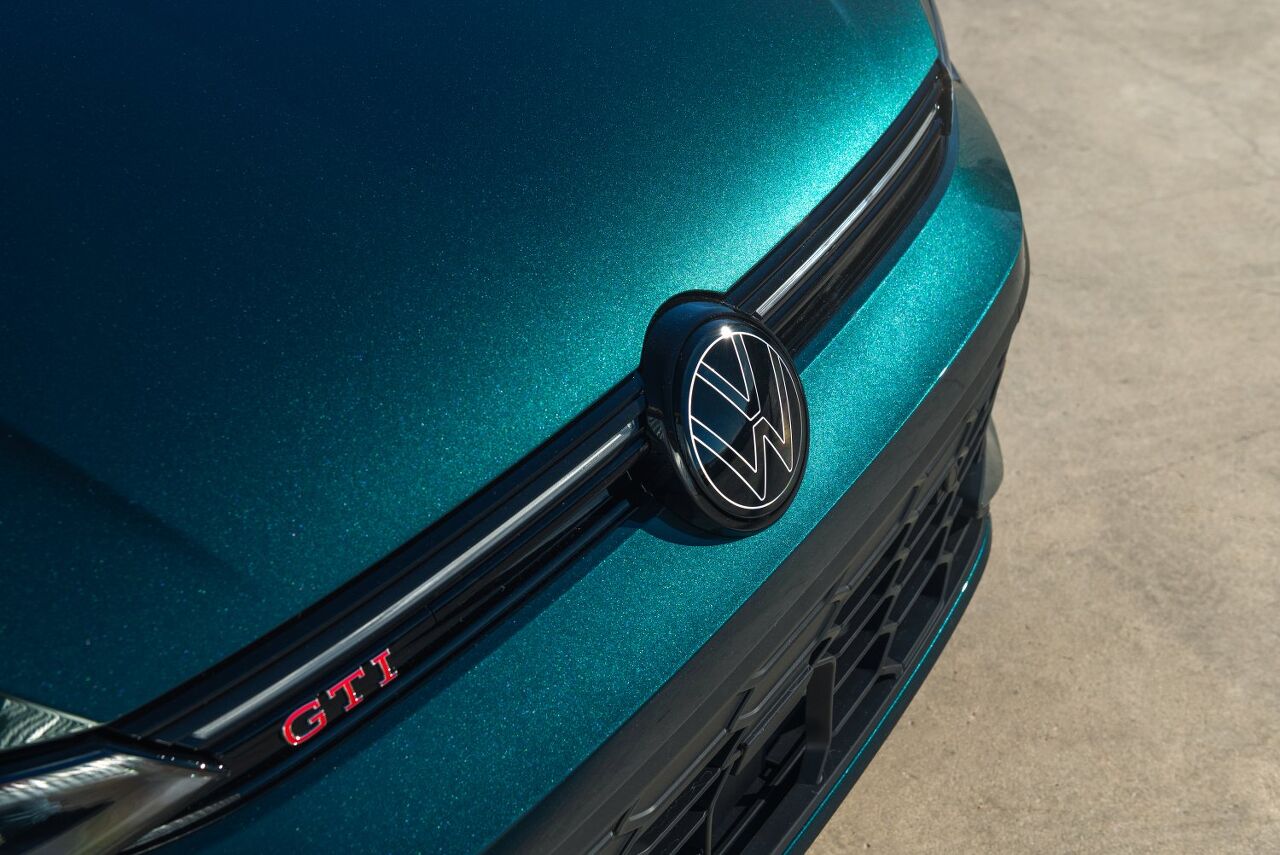
On Monday, a former Volkswagen engineer confessed to securities fraud in Manhattan federal court. While this is the highest profile incident of insider trading currently taking place within the automotive sector, the industry is perpetually saturated by financial shenanigans.
As part of a plea deal, Michael Stamp admitted that he had wittingly purchased shares of Rivian prior to any public announcement that the brand would be entering into a multimillion-dollar joint venture on all-electric vehicles. Stamp and his co-defendant Marcus Plank (another VW employee) were arrested and charged in July under an indictment issued by a grand jury in the Southern District of New York.
According to Bloomberg, the duo had been living in California on assignment from Germany and reportedly caught wind of important details regarding ongoing negotiations between VW and Rivian. Court documents stipulate that the talks were dubbed “Project Climb” and that the two men had knowingly “gained access to confidential, nonpublic information” that was later used to purchase thousands of shares of Rivian stock.
From May to June 2024, Stamp apparently used numerous brokerage accounts to buy up roughly 9,000 shares and even more stock options. Plank seems to have made far fewer purchases. However, the indictment suggests that a member of his family appears to have done the same. It’s estimated that Stamp had made about $250,000 by trading prior to the official announcement, whereas Plank accrued significantly less.
Despite the two men having said they were not guilty over the summer, Stamp has since changed his tune. “I knew that what I was doing was wrong and a breach of my duty to my employer,” Stamp said at a recent hearing.
Apparently, the smoking gun was the fact that the two men had conducted internet searches pertaining to insider trading shortly before buying shares. Plank had been investigating how the crime was prosecuted while Stamp looked into the statute of limitations. In all cases, these events took place just days before Volkswagen and Rivian formally announced their plans on June 25, 2024.
The two men have been charged with several counts of securities fraud and are potentially facing up to 25 years in prison. Thus far, their defense seems to hinge on how investigators went through basically all of their online activities over the last few years. The assertion is that it’s not definitive proof of anything in itself and could be chalked up to coincidence. Defense attorneys want it thrown out ahead of the trial.
It’s assumed that the investigation has been indirectly targeting other Volkswagen employees due to how wide a net has been cast. But little is known about whether that has yielded anything actionable.
The play is often for a few select individuals to be made an example of while other parties go unpunished, either due to a lack of evidence or plea deals. This has been seen in instances of criminal regulatory violations, union bribery, and insider trading.
While this doesn’t really excuse the former Volkswagen employees from criminal wrongdoing, it’s worth pointing out that insider trading seems to be rampant within the industry. We’ve seen countless instances of high-ranking executives at EV startups dumping shares ahead of bankruptcy. These are also often the same businesses that leverage “special purpose acquisition companies” (SPACs) as shell companies to quickly spin up IPOs on major stock exchanges and raise an immense amount of capital over a short period of time.
Even though these financial plays often draw negative attention from the Securities and Exchange Commission (SEC), criminal proceedings are actually fairly uncommon. But many of these instances fall into a legal gray area that hinges primarily upon criminal intent — which is difficult to prove.
For example, Kimbal Musk sold nearly 90,000 shares of Tesla stock valued at roughly $108 million in 2021. On the following day, CEO Elon Musk publicly issued a poll on social media asking whether he should sell off 10 percent of his stake in the company, creating a sudden dip in the share price.
The SEC launched a probe into the matter, hoping to learn whether the two brothers had exchanged information ahead of the posting. While subpoenas were issued, no enforcement action was ever filed.
But investment finance revolves around convincing parties to spend money on your project or pumping money into something that you believe is about to become much more valuable. Last month, Tesla conducted a publicity stunt for a "flying car" it’ll never actually build and managed to boost its own share price by over 5 percent in a single day.
Granted, the wording used was carefully curated to indicate that the car will technically be available as a one-off to anyone the automaker deems worthy — helping the company avoid any legal issues. But we’ve seen other companies become targets of the SEC for misrepresenting products in an effort to boost investment capital.
We also have countless high-ranking automotive executives who are given stock-based compensation as part of their payment packages. Even though these can be accompanied by rules regarding trading, many individuals are given quite a bit of leeway.
For example, General Motors CEO Mary Barra has made multiple stock sales and option exercises over the last two years. This included dumping about 40 percent of her holdings in summer 2025 as part of an automated trading trigger. But she also reportedly sold over $35 million in shares through the first half of this year.
As the face of GM, one presumes Barra has access to an immense amount of insider information that would be extremely valuable in terms of investing opportunities. This may even include her being replaced as chief executive, which we now know is something the automaker has been working on thanks to reporting from The Wall Street Journal.
That’s not to accuse Barra of criminal wrongdoing. But it underscores the vague nature in how financial legalities are handled. By simply giving employees access to company stock one could argue that the table is already set up for potential malfeasance. There are wealthy members of the United States Congress, and individuals within the federal government, who seem to do nothing but make trades based upon forthcoming activities they alone have information about. But little seems to come of it in terms of criminal investigation.
None of the above absolves Stamp and Plank from allegedly making thousands off insider deals. But it does call into question the way the SEC conducts its business. There are a plethora of instances where it’s hard to tell the difference between what constitutes criminal action and what’s deemed acceptable.
The recent ousting of long-term CEO Jensen Huang at Nvidia sent the company’s share price into free fall. But direct action from the White House helped ensure he was reinstated. Both Huang’s departure and reinstatement curiously hinged on matters of national security and encouraged Nvidia’s share price to seesaw. The opportunities this undoubtedly created for insider trading would have been beyond immense. But that appears to be par for the course among technology firms.
Tech firm Anthropic just saw one of the largest tech IPOs in history and is now seeing valuations drop swiftly, mimicking what we’ve seen from loads of tech-focused automotive startups. Chief executive Dario Amodei, along with president and board chair Daniela Amodei have both reportedly sold about $280 million in stock at the peak IPO price shortly before Anthropic’s valuation started to decline.
Officially, the deals were pre-disclosed IPO transactions (accounting for roughly 1.5 percent of their total investment) and that makes them totally legal. Shares were sold to underwriters (not the public) so the duo could bank in on the lofty IPO valuation. While there’s still something about the deal that feels unsavory, everything seems to have taken place within the approved trading windows — even if that legal period seems kind of arbitrary.
Some people fly under the radar after garnering millions or end up being protected by carefully navigating the bureaucratic minutia of the law. Others are made examples of and the only obvious difference is that they failed to play the game well enough to avoid scrutiny. Former Volkswagen engineers Plank and Stamp seem to have fallen into the second category, with Stamp now seeking a guilty plea in order to cut some kind of deal with the prosecution.
Historically, that involves ratting out other involved parties so that investigators can rope in additional targets. We’ll probably see whether or not that’s the case in the coming months.
[Image: Volkswagen Group; Rivian; Tesla]
Become a TTAC insider. Get the latest news, features, TTAC takes, and everything else that gets to the truth about cars first by subscribing to our newsletter.