
See more Toronto Sun on Google — save as a Preferred Source
OTTAWA — High gas prices are making more than just motorists’ eyes water.
New data released Monday by Statistics Canada shows the consumer price index (CPI) increased 3.1% year over year last month, up from 3% in August.
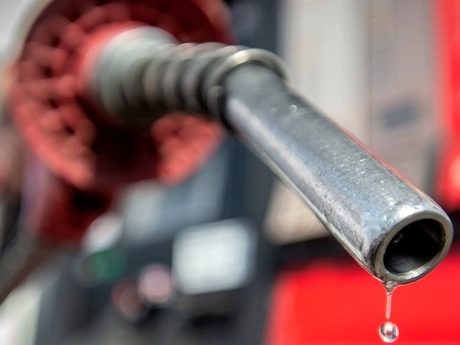
That, the data says, is largely due to high gasoline prices, which were up 27.8% from this time last year.
August saw a 22.8% increase in gas prices with September’s annual transition to winter gasoline blends moderating prices.
“Prices for energy accelerated in September, rising 19% year over year following a 15.4% gain in August,” says the StatCan report.
“Crude oil prices increased in September, reaching their highest level since May amid ongoing uncertainty about the wars in the Middle East, resulting in higher prices for gasoline and fuel oil.”
- CHARLEBOIS: Canada's food inflation problem isn’t Donald Trump, it’s Canada
- CHARLEBOIS: Under Carney, food inflation has outpaced inflation every single month
Gas pains not easing anytime soon
StatCan’s main measure of inflation, the CPI, tracks how much money Canadians pay for a fixed “basket” of goods and services, including housing, entertainment, groceries and gasoline.
Taking gas prices out of the equation, September’s CPI increased by 2.2% after going up 2.4% in August.
September’s report from the International Energy Agency (IEA) shows Brent futures hitting $105 US per barrel, up $21 US from early August and 45% above pre-war levels.
Ongoing hostilities between the United States and Iran have constricted output with more than 10 million barrels per day in production remaining offline and Persian Gulf oil exports cut in half.
The report says the agency doesn’t expect full Middle East oil output to resume until next year, suggesting the pain at the pumps — and Canada’s increasing inflation — won’t be easing soon.
Grocery price growth slowing, shelter trending upward
Those who use household heating oil weren’t spared — particularly those in Atlantic Canada, where fuel oil is widely used for winter heat.
Fuel oil prices increased by 57.8% year over year in September compared with 43.7% in August.
Grocery shoppers saw some relief, however, with prices increasing by only 1.7% in September, down from the 2.8% increase seen the month previous.
“Although price levels remain high, this was the smallest yearly increase since May 2024 (plus-1.5%) and the second consecutive month where grocery price growth increased at a slower pace than the all-items CPI,” the report says.
“Driving the year-over-year slowdown in grocery prices in September 2026 were declines in prices for fresh vegetables (minus-2.9%) and sugar and confectionery (minus-2.7%.) Prices for other food preparations (plus-1.8%) and fresh or frozen beef (plus-8.7%) rose at a slower pace in September than in August (plus-2.8% and plus-11%, respectively), also contributing to the slowdown.”
Despite these slowdowns, the report says, grocery prices have increased 33% since September 2020.
Shelter prices increased by 1.8% year over year in September, up from August’s 1.5% increase.
Homeowners and mortgage insurance rates saw big jumps, up 4.9% in September, while costs of home maintenance increased by 1.2%.
Tu Nguyen, chief economist with advisory firm RSM Canada, said she believes the Bank of Canada will likely hold its policy rate at 2.25% next week.
“Core inflation measures remain at or below target, which means the Bank of Canada can afford more of a wait-and-see approach,” she said, adding that RSM’s baseline is a hold through 2026 with interest rate hikes not coming until January 2027.
“The Bank of Canada will continue to watch how elevated oil prices spill over to other categories, which would make inflation broad based.”
The central bank’s next interest rate announcement comes next Wednesday.
Speaking with the Toronto Sun , a government official maintains core inflation remains within the Bank of Canada’s target and slowed from August, despite September’s increase being largely driven by energy prices — exacerbated by external factors like war and supply chain issues half a world away.
“Energy prices are going up everywhere,” the official said.
“We’re not unique in that sense, but the core fundamentals remain and we’re going to continue putting forward measures that support controlling inflation and affordability writ large.”
bpassifiume@postmedia.com
X: @bryanpassifiume