
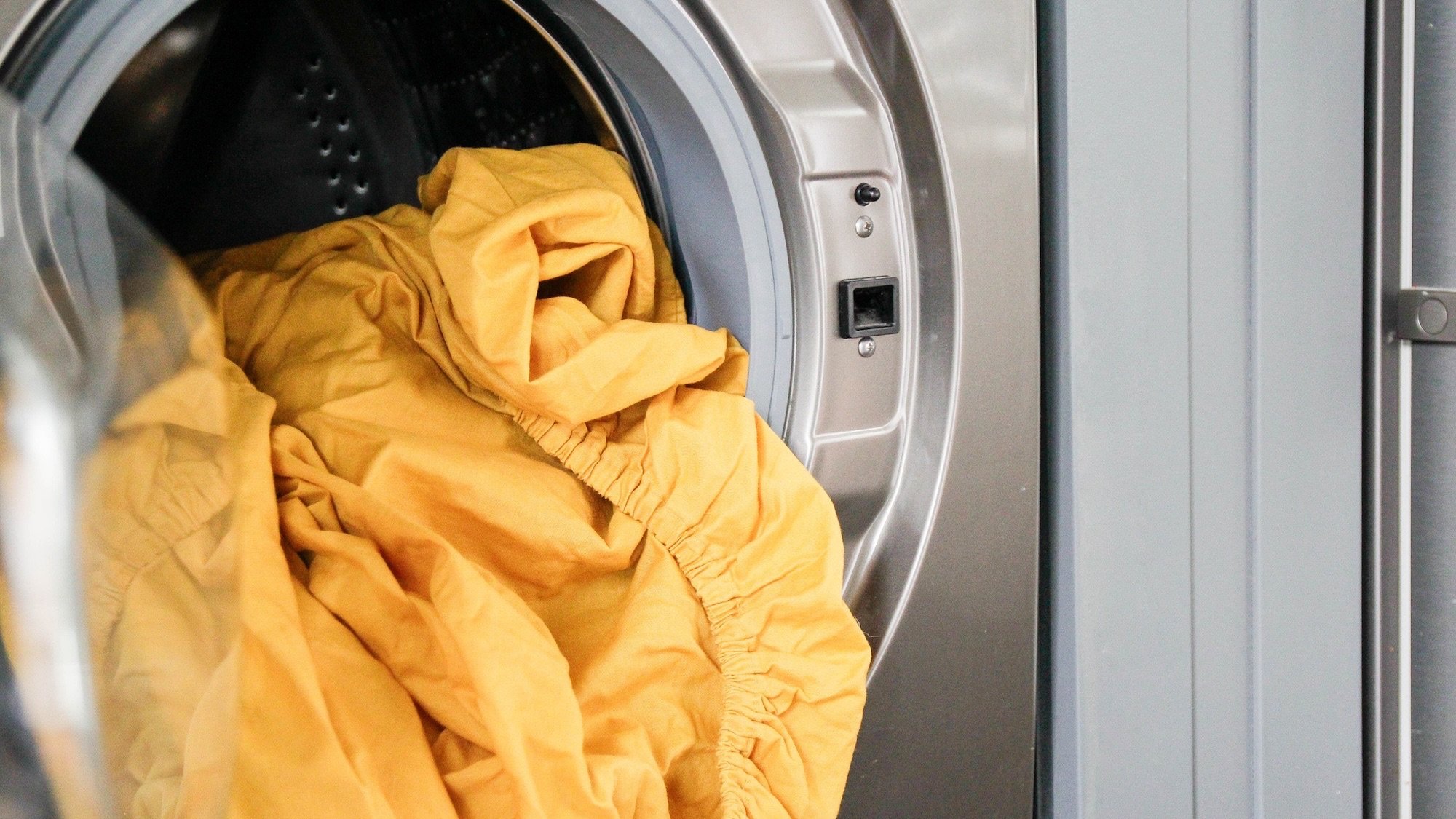
You’ve had a long day. You can’t wait to get home, take a hot shower, and climb into bed. Sounds wonderful, doesn’t it? Well, we hate to break it to you, but it could actually be incredibly gross.
Naturally, everyone’s cleaning routines are different, so this isn’t a blanket statement (pardon the pun). Statistically speaking, most of us are not washing our bedding and bath things nearly enough. It’s generally recommended that people wash their bedsheets and bath towels every one to two weeks, but as a study conducted by Sleep Advisor showed the average person pushed it to around 24 days (25 for pillowcases alone). Single men tend to be worse, as a UK study found, with a majority of them holding off on washing or changing bedsheets for four months. Think that’s gross? There are 5 percent of people overall who wash them once or twice…a year.
“Every day we shed skin cells, and that is what dust mites feed on,” says allergy and immunology specialist Dr. Sandra A. Ho, MD. “So, regular removal of skin cells and dust mites with washing help to keep your bed—where you spend a third of your life—optimized.”
Dr. Ho recommends that dust mite-sensitive patients follow the recommended cadence and wash sheets and bath towels every one to two weeks, using hot water specifically (or even a special “Sheets” or “Towels” setting, if your machine has those).
If the towel smells funky, wash it. Image: Getty Images yamasanWhile it’s easy to understand the need for this routine in terms of simple hygiene, what’s truly concerning is invisible to the naked eye. Germs, spores, and other kinds of particles live on every surface we come in contact with daily, even clean towels. Those shedding skin cells (which bacteria just love to munch on) and the wide range of organisms that can live on the human skin are rubbed off when we towel down, creating a microbial community that is different from those found on clothing or bedsheets. You’re essentially creating a primordial soup of intermixing elements after every bath.
To put it simply, you, your towels, and your sheets are all becoming distinct ecosystems full of germs and mites, which only grow the longer you go without laundering your items.
And the impact can be wide-ranging, according to Dr. Ho, especially among the 20 million or so people in the US who suffer from dust mite allergies. “Dust mite allergy contributes to asthma, allergic rhinitis, and even eczema flares,” she says. “These symptoms can not only affect quality of life but can have complications such as hospital visits for asthma, sinus infections, and super infections of the skin from flared eczema leading to scratching and excoriations of the skin.”
So, yes, your cozy domicile can potentially be a Jurassic Park of microbes, mites, and germs the longer you put off your chores. For bedsheets, you’ll want to keep an eye out for visible stains, sweat marks, crumbs, dirt, or bugs, as well as a sticky or slimy feeling to the texture of the sheets, and, of course, odors. Smell is also one of the biggest red flags for bath towels. Your body may give you even clearer warning signs that it’s time to throw everything in the wash.
“If your asthma or allergies are flared, and it has been more than a couple weeks since the last laundering, it’s best to prioritize laundering of these items right away,” advises Dr. Ho.
And, please, do it at least once or twice a week.
The post How often you should wash your sheets and towels, according to science appeared first on Popular Science.