
“Ek kachori, do samosa…
In mardon ka kya bharosa…”
[“One pastry, two fried snacks…
Men? You can never trust these chaps!”]
The popular slogan, with a rhythm as addictive as its rhyme, has become the unlikely soundtrack to a wave of women-led protests across India. What began as anger over women’s safety has found expression in chants that are funny, juvenile, but impossible to get out of your head. “Mere sar mein dard hai, uska karan mard hai” [I have a headache, and men are the reason] is another favourite.
The protests produced hilarious slogans - many of which were not entirely untrue - as social media was filled with videos of women taking to the streets. But the meme-ification of the messaging should not make us forget why the protests began in the first place.
Women are still fighting for something as basic as the freedom to step outside without having to calculate the risks. The fear of safety spills into almost every aspect of life, sometimes even getting in the way of doing their job to the fullest, as I was recently reminded yet again.
When the India-West Indies series was announced, I had my eyes set on travelling to Lucknow for the first T20I. With family in the city, I planned my trip around the fixture. But as the game approached, I found myself asking the same question that comes up every time I have a match to cover: how would I get back from the stadium at night?
Located along Amar Shaheed Path, away from the city’s main residential areas, the Ekana Cricket Stadium is not easy to reach. With limited public transport nearby, you are only dependent on an auto or a cab. Even then, you may be dropped on the highway, nearly a kilometre from the venue, leaving you to cover the final stretch on foot.
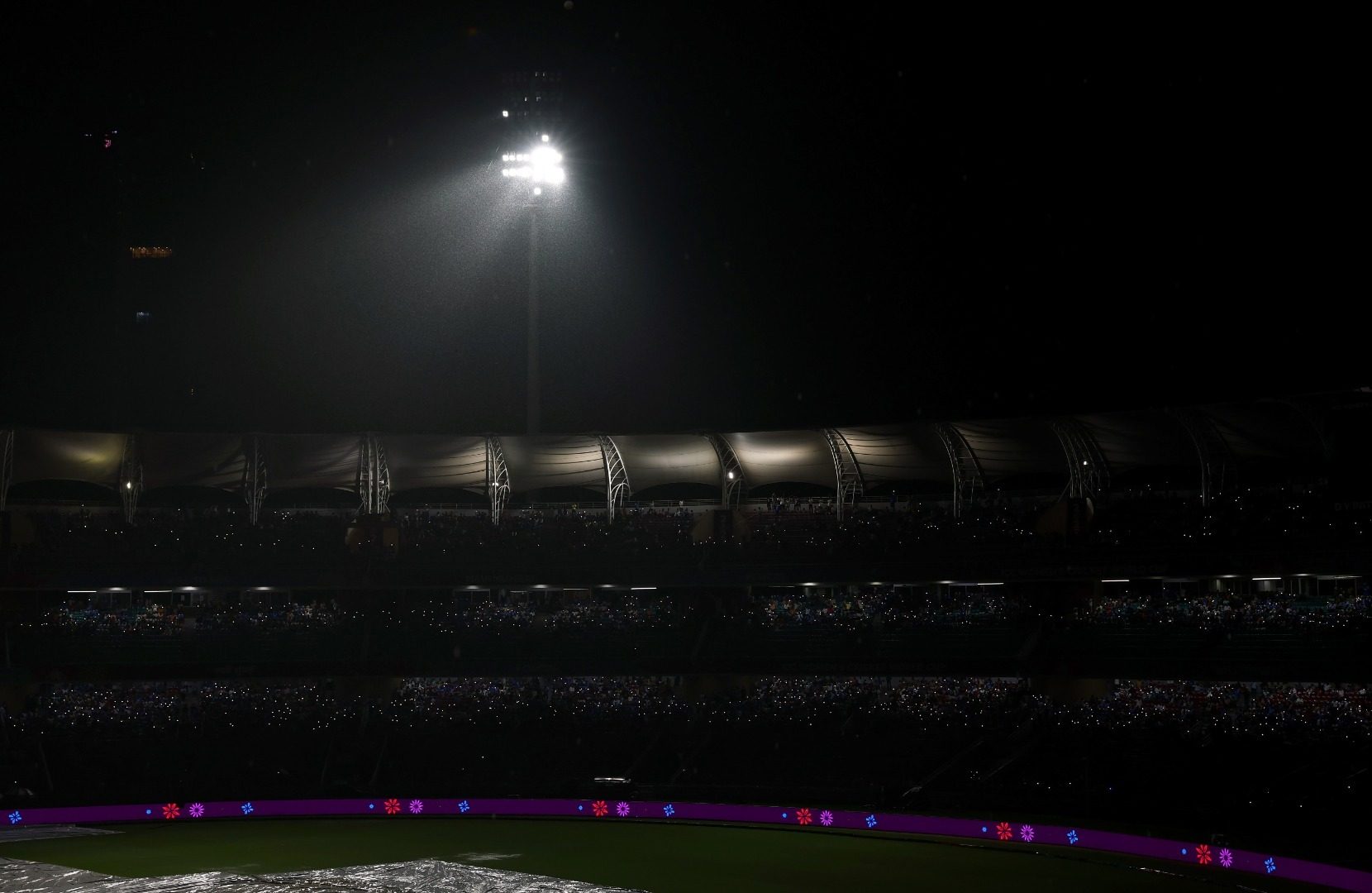
Getting back is worse. After a late game, you are left walking towards the one-way highway in near darkness, hoping to find transport back to the city. Cabs can be hard to find, and waiting alone for one to arrive is hardly reassuring. Even having your own car is not an easy fix, with parking spots nearly two kilometres from the ground.
Very often, the safest option is to ask someone in the family to drive across and pick you up late at night. I did not want to put mine through that stress, so, despite wanting to watch the match, I hesitated.
And that is what makes me angry. I would like to think of myself as an independent woman. I work, I travel, and I want to do my job without having to negotiate my way around concerns that should not be mine to solve. Yet a cricket match, something I should be looking forward to, becomes another worry. That is a part of women’s freedom which we rarely talk about. It is not always a dramatic confrontation or a headline-grabbing crime; sometimes, it is simply a decision not to go somewhere because the journey back feels unsafe.
My hesitation over a cricket match might seem like a small matter, but it speaks to a much wider frustration that has been playing out across India. In Delhi, protests gathered momentum following the alleged gang rape of a 17-year-old girl at Aastha Kunj Park in September. In the aftermath, access to public parks after sunset was restricted, while the renowned Lady Shri Ram College, located near the park, temporarily suspended physical classes and shifted to online learning. The measures were intended to keep women safe, but the explanation only sharpened their anger. They were being forced to curb their movements, stay quiet and make do. The students protested for their freedom, demanding a safer society in which they would not have to bear the brunt of others’ actions.
The solutions offered are depressingly familiar: they must adjust, be mindful of what to wear and follow strict curfews. The responsibility to stay safe somehow falls on those most at risk. Why not try the solution proposed at the protests and lock the perpetrators up after sunset instead?
How safe is cricket watching for women?Samreen Razzaqui, a reporter with a leading Indian newspaper, echoes my concerns about covering a cricket match, pointing to the challenges posed by the location and accessibility of newer stadiums. “A lot of it comes down to logistics and how stadiums are planned.”
These two problems are particularly apparent in smaller Indian cities, where newer stadiums are often built on the outskirts, away from residential areas and established public transport networks. In contrast, grounds in older metropolitan cities such as Kolkata, Mumbai, New Delhi and Chennai are generally more integrated into the urban landscape, making them relatively easier to reach. But getting to a stadium is only half the problem. For those leaving after a night match, finding a safe and reliable way home can be just as difficult.
“In a Tier 2 city, travelling late at night is still not very reassuring from a safety perspective,” Samreen says. She recalls similar difficulties in Assam and Indore, where road closures and a lack of transport left her struggling to find a way back. After raising concerns about finding a ride following IPL matches, her organisation arranged a cab for her within Delhi. However, the arrangement does not extend to other cities, where she has to rely on hotel cabs and taxis, with the expenses reimbursed by her employer.
“Within Delhi, knowing that transport will be available is extremely reassuring. Most of my worry in the city is about travelling late at night, so there’s nothing to worry about on that front, no matter how late the match finishes. I know I can get home safely and will be dropped at my doorstep. Having that assurance takes a huge burden off my shoulders,” she says.
Melinda Farrell, an Australian journalist who travelled to India for the 2023 ODI World Cup, faced similar difficulties at Ekana Stadium. “Lucknow was actually the biggest issue in 2023. You had to walk so far at night before you could call a cab,” she recounts. When BCCI officials realised her predicament, they insisted that she wait for them to leave and drove her back to her hotel. “They were really helpful and went out of their way to make sure I was safe.” Even then, this sort of arrangement is an ad hoc one; it is not feasible to offer the same to every woman journalist who covers a game.
Some cricket associations have made arrangements to ease journalists’ journeys home. The Gujarat Cricket Association organises buses for those covering matches in Ahmedabad, where the stadium is on the outskirts of the city. The buses pick up reporters from designated points, offering them a more reliable way to travel after games.
Lavanya Lakshminarayanan, a journalist with Sportstar, recalls how difficult it once was to travel to and from the Maharashtra Cricket Association Stadium in Gahunje, outside Pune. “It involved coaxing a local auto or car driver to help drop me back”. She also remembers reporters covering the Women’s T20 Challenge pushing the MCA to organise a bus that travelled through central Pune, with journalists making their way to designated pick-up points. “That was incredibly helpful for everyone who came.”
For journalists, the situation can improve with institutional support. But such arrangements are not guaranteed at every venue, and even when they are available, they largely serve those covering the game professionally. What happens to women fans who have no organisation to arrange their transport, no expenses to claim back and no assurance that a ride will be waiting when the match ends? Several venues also install internet jammers that make it extremely difficult for fans reliant on app-based taxis to get home.
Mansi, who has attended matches at venues across Mumbai and Vadodara, says the difficulty is not confined to smaller cities. While Brabourne and Wankhede in Mumbai are relatively easy to reach because of their central locations and proximity to transport links, night matches at DY Patil Stadium in Navi Mumbai can finish after the last local trains have stopped running.
At the BCA Stadium in Vadodara, the parking area is pitch-dark and finding a cab is difficult. During the 2026 Women’s Premier League playoffs, Mansi booked a private vehicle to take her to and from the ground and wait throughout the match.
“That cost me Rs. 3,000 per game, which is absurd when you consider I paid Rs. 500 for the tickets,” she exclaims.
Mansi has occasionally left Wankhede before a match ended because getting out through the crowds and navigating packed cab queues and trains can become difficult.
“I have never heard my guy friends ever worry about when and how they will get home. For them, getting to and from is pure logistics, whereas for women the safety of the transportation forms a large part of the equation.”
Radha Lata Gupta, founding member of The Bucket Hat Cult, a travelling group that supports the Indian Women’s Cricket team, says she has felt comfortable alone only in Mumbai and Navi Mumbai. In other Indian cities she has visited for cricket games, she tries to find someone to accompany her, particularly at night.
“I think it’s become a default setting for me to not travel alone,” she says. She often takes friends along even when they are not particularly interested in the match. “I suppose that’s partly because it’s fun to have company, but it’s also a much safer and more positive experience.”
Extending metro or train timings for matches can help, but only if a station is accessible from the stadium in the first place. Even then, women may have to navigate packed trains and jostle for room among crowds of men as thousands of spectators head home.
The experience is not necessarily safer abroad, but better transport connections can make travelling to and from stadiums easier. Radha found Perth and Canterbury in the UK easier to navigate alone, pointing to their walkability, well-maintained pavements, signboards and public transport. “In both Perth and Canterbury, I went to the cricket matches alone, and I didn’t have any difficulty.”
Lavanya found that tram and train networks in Melbourne made getting around easier, while Brisbane’s bus connections were relatively straightforward to navigate. In Dubai, she felt particularly comfortable, despite having to walk past deserted construction sites to reach her accommodation. Her experience in India, however, varies from city to city, depending partly on how much faith she has in local systems.
Still, Lavanya is careful to suggest that overseas travel is not always safer. She once waited nearly half an hour for a cab in Brisbane and witnessed men flashing women outside football stadiums in England. What made a difference was the heavy presence of policemen in the areas.
“Women’s safety is a problem everywhere. It’s just maybe the resources to deal with it or the amount of attention it’s given varies from country to country.”
Katya Witney, my colleague at Wisden.com, has found that even established cricket venues in England can make travelling home difficult. While grounds such as Lord’s and The Oval are centrally located, matches elsewhere can leave her facing long walks to stations or rushing to catch the last train. In Canterbury, she has to run along an unlit footpath to reach the station, often using her phone’s torch. Returning to London in the early hours can be equally uncomfortable. “I don't feel massively safe waiting for a taxi outside Euston station.”
Drunken fans add to the unease. “The drinking is actually the main problem for me,” Katya says. Intoxicated men can make journeys home uncomfortable for women, even when no direct incident occurs. “I haven’t actually had a bad experience; I’ve just felt unsafe.”
For women journalists, the problem is compounded by the fact that leaving early is rarely an option. While fans can begin making their way home with the crowd after the final ball, reporters often have to stay back for presentations, interviews, podcast recordings and press conferences, sometimes for another hour or two. By the time their work is done, the crowds have dispersed, and public transport options are often limited.
“The fact that women reporters do have to be on edge for late-night games is one of the most annoying parts of the job,” Lavanya says. “It is taking a while for the world to understand that women don't ideally want the special accommodations, but this isn't a world that allows women to engage with it 24x7 the way it largely lets its men.”
The precautions women take have become almost second nature: carrying pepper spray cans, sharing their live location with someone they trust, staying on a phone call while travelling alone or feigning to be on one. Lavanya recalls being groped in a crowd after a match in Colombo, while Samreen encountered a man who tried to expose himself while she was walking towards her office cab back from a stadium. Yet neither have allowed these experiences to keep them away from the game. As Lavanya puts it, “The safety aspect always works at the back of the mind, but if it's not stopping our male colleagues, it really shouldn't be the first barrier for me.”
The solutions at stadiums are not particularly complicated: shuttle buses connecting grounds to transport hubs, designated pick-up points, better lighting and public transport that runs in coordination with match timings. Teams leave in escorted buses, but spectators are often left to navigate crowds and traffic on their own.
Yet the problem extends beyond cricket and cannot be solved by transport arrangements alone. When asked what would make travelling to and from matches safer for women, Katya put it simply: “I don’t know what the answer is apart from deep societal change.”
And perhaps that is the saddest part of it all. Even when the right arrangements are made, there is no immediate fix for the fear that follows women far beyond a cricket stadium. It is not just about watching a match, getting home after work or walking down a familiar street. It is about having to think twice before doing the most ordinary things, in places where you should never have to feel afraid.
So we carry on, sometimes in dread, sometimes in hope, and often with the quiet determination to live as normally as we can. Perhaps one day, we will no longer need to turn our fear into humour to make people listen, or wonder whether something as simple as watching a cricket match will end with us making it home safely.
Follow Wisden for all cricket updates, including live scores, match stats, quizzes and more. Stay up to date with the latest cricket news, player updates, team standings, match highlights, video analysis and live match odds.