
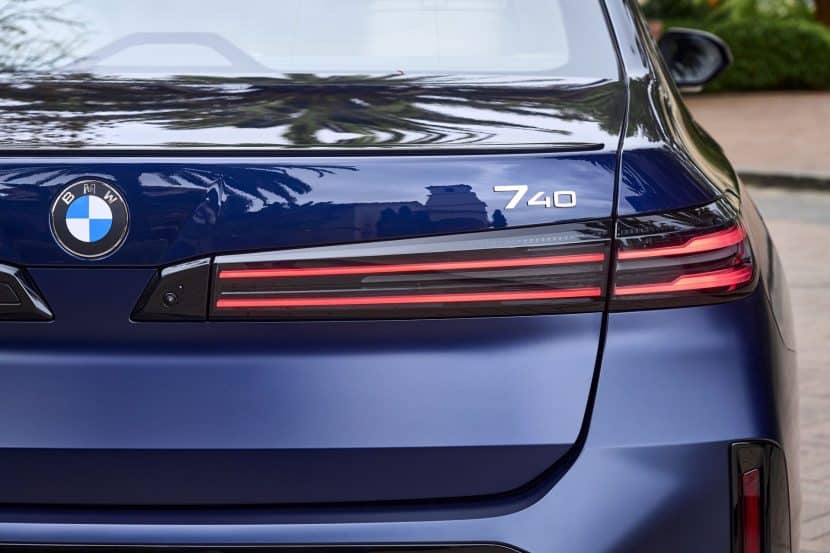
A 7 Series buyer chooses between three very different cars: the electric i7, the V8 M760 xDrive, and the six-cylinder 740. After two days with the refreshed 2027 740 xDrive in California, I’d take the six. It’s quick enough, rides the way a flagship should, and costs far less than the other two. What keeps it from being an easy call is the new cabin, where BMW swapped physical controls for screens, and not every swap worked.
This is the LCI (BMW’s mid-cycle refresh) of the G70 generation. Little changed mechanically. The news is an illuminated kidney grille, slimmer crystal daytime running lights, longer taillights, a Neue Klasse-style interior, and a name without the “i”: the 740i is now the 740. The G70 launched with the most divisive 7 Series face since the E65, and this facelift calms it down much like the E65’s did.
The Six-Cylinder Makes The V8 Hard To JustifyThe B58 3.0-liter inline-six, one of BMW’s best engines, works with a 48-volt mild-hybrid system built into the ZF eight-speed automatic. It makes 394 hp and 398 lb-ft, plus a brief 29 lb-ft electric boost, good for 0-60 mph in 4.9 seconds in a sedan that weighs 4,852 pounds. That sounds marginal on paper. It isn’t. Floor it at 65 mph and, after about a second of hesitation for the kickdown, the 740 keeps pulling well past what a pass requires. The mild hybrid also smooths engine restarts in traffic. The EPA rates it at 24 mpg city, 30 highway and 26 combined.
2027 BMW 740 xDrive
Good
- Smooth, strong inline-six
- Excellent ride comfort
- Agile with rear-wheel steering
Bad
- Too many touchscreen controls
- No physical iDrive controller
- Rear seats don’t fold
Without surprise, the six-cylinder generally stays in the background, doing its work without demanding attention. Sport mode sharpens its responses and makes it more audible, but it remains restrained. That balance matters more in a flagship than another few tenths off the acceleration time.
The eight-speed is a highlight: shifts, even paddle downshifts, are close to imperceptible. The M760’s V8 sounds fantastic, and the i7 is the pick if you want to drive on electricity, but American roads leave little room to use what the V8 adds.
Not much or anything has changed with the suspension, the car is roughly the same weight as its predecessor. But what changed is the software tune of the My Modes. In Comfort, the 740 feels softer and more comfortable than before, pun intended, while in Sport, it feels sharper and more composed. This seems to be BMW’s latest strategy to spread the driving modes even more when it comes to feel and driving dynamics.
Rear Steering Makes This Long Sedan Drive SmallerThe standard two-axle air suspension is the best argument for a 7 Series. On steep, twisting mountain roads the body stayed calm, and in the city the 740 floats. Our car also had rear-axle steering, and I’d consider it essential. It made a U-turn in one full lock, and in stop-and-go traffic the car never felt too big. It also steadies the car at speed. Add the active anti-roll stabilizers too: they cut body roll and spare passengers who get carsick.
There are limits to how much that hardware can disguise. Despite its precise turn-in, the nearly 5.4-meter-long 740 is happier in sweeping bends than on tight back roads. Granted, there aren’t that many tight roads in America, so we’re in luck.
The New Cabin Has Better Software And Worse ControlsThe interior divides people more than the exterior. Standard BMW Panoramic Vision projects information along the base of the windshield from pillar to pillar. Set the steering wheel too high and the rim hides half of it. Lower the wheel to a proper driving position and it works so well that the head-up display feels redundant. iDrive X is the best BMW software yet: quicker than iDrive 8.5 and 9, better organized, and easy to declutter. BMW Maps, which draws surrounding cars at accurate angles, is now good enough to rival CarPlay. The “Hey BMW” voice assistant is helpful though, especially for opening submenus that weren’t immediately obvious.
The hardware is a step back. The iDrive controller is gone, so everything runs through the touchscreen or a tight cluster of haptic buttons that you have to look down to use. Even the air vents are now aimed from the screen. And a $100,000 sedan should have two wireless charging pads, not one. On the positive column you have the quality of the interior compared to the other Neue Klasse-based cabins, like the iX3 and iX5. The controls, whatever are left, are of higher-quality materials, the leather is as great as always in the 7 Series, and the either leather or alcantara-covered dashboard and ceiling give it a majestic look and feel.
Now the steering is weirdly shape, or at least the base one. It has the 6 and 12 o’clock spokes, but luckily the M Sport and M Sport Pro packages give you the “normal’ one, which is still odd with 4 and 8 o’clock spokes.
The Driver Camera Is The Cleverest Thing In The CarThe front passenger can watch videos while you drive, and an infrared camera makes sure you don’t. I was skeptical, but the screen went black the moment I glanced at it, even through polarized glasses, yet looking at a mirror or at my passenger didn’t set it off. Covering the camera didn’t fool it either. The same camera runs Highway Assistant, which allows hands-free driving up to 85 mph and changes lanes when you look at the mirror. Lane keeping now nudges you back instead of fighting you the way older BMWs did. It’s also a lot smoother handling the Lane Keep Assist functions while the Highway Exit feature brings hands-free driving a step closer to reality.
BMW also includes a City Assistant with this latest update that not only detects traffic lights but also automatically stops the car at red lights and sets off when the light turns green. In the new 7 Series and i7, the luxury sedans won’t move if the monitoring camera detects that the driver isn’t paying attention to the road.
What Changed For Passengers In The Back Seat?Less than up front. The door tablets keep the old software, a miss in a flagship. The 31.3-inch 8K Theater Screen gains an HDMI port integrated below the rear vents controls and a camera for Zoom calls. The new digital rear-view mirror exists because that screen blocks the view out the back.
The Executive Lounge slides the front passenger seat away so the rear passenger can stretch out on a footrest. It comes bundled with the Theater Screen in a $6,850 package. Dolby Atmos is new to the 7 Series, through Bowers & Wilkins speakers (18 standard, 36 with the Diamond option), and only the iX comes close in BMW’s lineup. The trunk holds about 19 cubic feet, but the rear seats don’t fold.
If you’re patient enough, BMW will also bring a new package next year. For an undetermined amount of money, you will be to order a refrigerator, a retractable and highly adjustable table, and a wireless charger. But that will come with a trade-off: you’re going to lose the middle seat.
Is The 740 xDrive Worth It Over The V8 And i7?The 740 xDrive starts at $102,800 before destination, and the rear-wheel-drive 740 is $3,000 less. Options like cashmere upholstery and carbon trim add up quickly, but a lightly optioned car still delivers what a 7 Series promises. The Mercedes-Benz S 500 4MATIC, also a mild-hybrid inline-six, starts roughly $10,000 higher.
This is the 7 Series I’d buy. The interior asks you to accept fewer buttons than a BMW should have, but the drivetrain, the ride and the rear seat are as good as anything in the lineup, at a price the i7 and M760 can’t match.
First published by https://www.bmwblog.com