
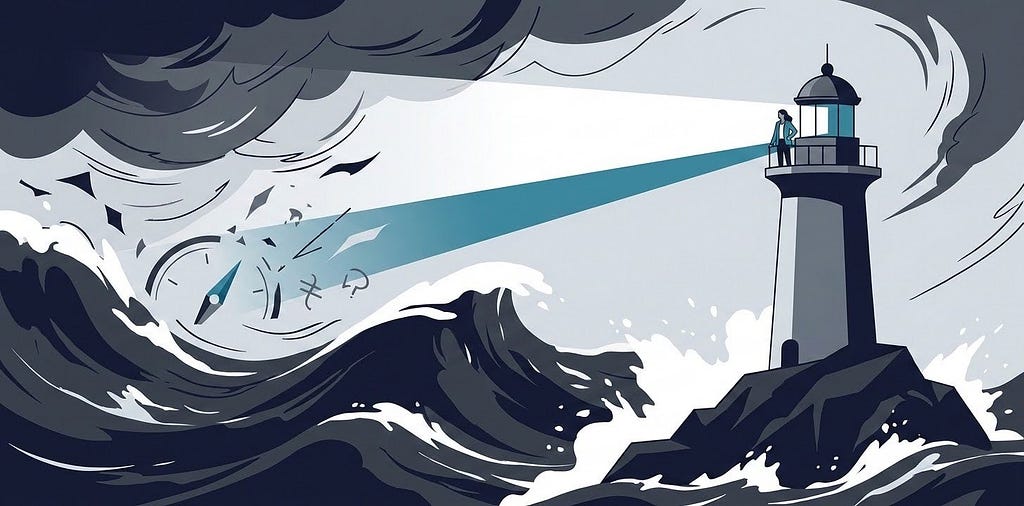
While panic around what AI means for our industry is the reflex right now, calm is a decision. The calm that comes from knowing what you actually know is the rarest and most valuable thing you can bring to a moment like this.
I recently turned 50 and reckoning with that did what it does to so many people. It made me think. Not in a hauntingly dramatic, staring-out-the-window way, but in an introspective way where you start taking stock of what you’ve actually learned, what still rattles you, and what has stopped rattling you entirely.
That thinking rooted itself from a conversation I had with Skift founder Rafat Ali. When he found out my birthday was coming, he got genuinely excited for me, which is not how most people react to 50. He told me the day after my birthday would be the best day of my life, because that’s when you get to put the whole thing behind you. He said that you just stop carrying the pressure you put on yourself and the pressure you imagine everyone else is putting on you.
That conversation quickly moved on from my age and on to work, to his industry and to what AI is doing to all of it. Without noticing, Rafat said the same thing again in a completely different context.
“There’s so much uncertainty,” he told me, “that the people who stay calm and certain are the ones everyone listens to. In a moment where nobody knows what’s happening, calm is the whole advantage.”
I haven’t stopped thinking about that since.
Those two pieces of advice are actually one piece of advice. The relief Rafat promised me about 50, the freedom of putting down the need to prove yourself, is the exact thing that makes a person valuable in a moment like this one.
The whole industry is panicking about AI. The people who come out of it fine will be the ones who already learned how to put the panic down.The fear is real, widespread, and not at all stupid. That’s exactly why it’s worth handling well.
The fear is real
The numbers are striking.
Pew Research found that 71 percent of Americans now think AI will mean fewer jobs over the next twenty years, up from 64 percent two years earlier, and among adults under 30 it’s 73 percent. Pew is careful to note that number reflects what people expect, not jobs that have actually been lost.
ADP’s global study of more than thirty-nine thousand people, led by their chief economist Nela Richardson, found that anxiety, not confidence, is now the defining feeling workers have about their work.
A survey from the Sylvia Brafman Mental Health Center found nearly half of workers say AI worry has hurt their mental health, climbing to two in three among the youngest polled.
It has gotten real enough that it’s showing up in doctors’ offices. Dr. Simbiat Adighije described a patient who couldn’t stop checking the news, couldn’t stop imagining which parts of her job and her identity might be automated next, and made a point worth holding onto
The anxiety is real whether or not the prediction driving it ever comes true, the same way climate anxiety is legitimate no matter what you think of any particular model.
This isn’t in your head. The ground is actually moving, and anyone who says otherwise is lying to your face.
Look closely at that Pew number, though, because it’s quite telling. The dread is at an all-time high, and it’s a forecast, a thing people expect, running well ahead of what has actually happened to them. That gap, between how frightened people are and what has actually changed in their own working lives, is where panic lives.
Fear and panic are not the same thing. Fear is a reasonable response to a real risk. Panic is what happens when the fear starts making your decisions for you.
The clinical psychologist Zachary Sikora says that fear is literally our survival response, useful, hardwired, and designed to keep us alive. When it spikes, however, it impairs the part of the brain that handles reasoning and judgment, the exact faculties you need most when things are uncertain.
The more afraid you get, the worse you think.
Every disruption runs the same arc. The panic always comes, and whether it takes you is up to you.We have seen this exact panic before
Every big technological shift runs the same arc.
Dora Czerna traced it across decades of disruptions and named the stages. First comes democratization, when a tool suddenly lets a lot more people do something that used to take an expert. Then comes panic, when the experts realize it. Then a stretch of genuine quality collapse, when all those new people flood the zone with mediocre work. Eventually, new norms settle in, and the field is bigger and different and mostly fine.
When desktop publishing arrived, it gave us a decade of ransom-note flyers with twelve fonts on them, and then it gave us a generation of designers who could do more than any typesetter ever could.
The panic comes for everyone. Whether you give in to it is up to you.
This isn’t simply a modern problem. Calestous Juma, who spent years studying how societies react to new technology, found the same pattern running back six hundred years. Coffee, refrigeration, mechanized farming, electricity, every one of them met a wave of fear and resistance before it became ordinary.
The fear, he found, was rarely really about the technology, but rather about people sensing they might lose a piece of their identity or their livelihood, feeling it first and reaching for the evidence afterward.
Economist Derek Thompson has pointed out that the single strongest argument for AI not causing some overnight jobs apocalypse is one word, history. New technology has been reshaping work for centuries, and the story is always the same. The technology shows up, the work changes, and it almost always goes slower and messier than anyone predicted in the panic.
I’ve certainly experienced my own smaller versions of this. The web was going to make everyone a designer, and then it didn’t. The bootcamps were going to flood the field and end the profession, and then they didn’t.
Every time this happens, the panic feels like the end of something, and every time it turns out to be the loud, ugly middle of something, the part right before the new normal shows up and everyone forgets they were ever that scared.
Panic in a downturn is the go-to emotion, even at the top. Nancy Koehn, who studies how leaders handle crises, points to research showing that more than half of leaders become more closed-minded and controlling when a crisis hits, and more than four in ten get angrier and more reactive. The steadiness we remember in the leaders who got it right, the Lincolns and the Shackletons, was always the rare response, which is exactly why it resonates so well.
None of this means the fear is wrong. It means the fear is a stage, and stages pass, especially for the people who don’t let it take over.
The calm that wins is the kind you earn, from knowing what you’re good at and no longer needing to prove it.The calm that wins is the kind you earn
There’s a version of calm that’s just denial, the person insisting nothing is changing while the ground shifts under them. Plugging your ears with your fingers, screaming “la la la la la,” hoping the phase just passes you by.
That’s not what Rafat was describing in our conversation. The calm that actually wins is the kind you earn, the kind that comes from knowing what you’re good at, having done the work enough times to trust your own informed point-of-view, and no longer needing to prove any of it to anyone.
ADP’s global study found that the workers using AI the most heavily reported significantly less stress than the ones barely touching it, about half as many said they felt overloaded.
Ethan Mollick has been saying for years that the people who get their hands on AI, who learn its edges and its failures firsthand, are the ones who stop fearing it and start using it well.
Familiarity is what turns a vague threat into a known quantity. The dread lives in the gap between you and the thing you’re afraid of.
Patrick Neeman argues that the way out of AI anxiety is to trade the vague fear, the sense that you’re falling behind because everyone else seems to get it, for a specific picture of what would actually have to change in how you work. Vague is the natural state of panic. Specific is the natural state of calm.
The discomfort of being visibly bad at something new, Neeman writes, is just the cost of staying in the game.
This is where Rafat Ali’s point-of-view comes back in, because it turns out his advice wasn’t a passing mood. Ali actually built his whole company around it. When he relaunched Skift in September 2026, he wrote that AI is making information cheaper every month and judgment more valuable, and the three things that never get cheaper are knowledge nobody else has, a point of view on what it means, and access to the people who make the decisions.
The calm he promised me and the strategy he bet his company on are the same thing. Both come from being secure in the one thing the machine can’t hand you.
In a moment when no one is sure what’s happening, the calm, informed person doesn’t just steady themselves, they become the one everyone else steadies against. That is the oldest definition of leadership there is.
The reason panic is such a bad trade is that it spends all your energy on the part you can’t control, the speed of the technology, and none on the part you can, the judgment you bring to it.
You can either dread the future or help build it.The future is a design problem
There’s a specific cost to the panic that most people miss.
Gallup found that when a worker crosses over into believing their job is likely to be eliminated, their engagement drops, their burnout climbs, their satisfaction falls, and they become measurably more likely to start looking for the exit. The belief does the damage, often well before the technology does anything at all.
Panic is not a neutral way to wait out a storm. It quietly degrades the exact things, your focus, your judgment, your work, that you’d need to come through it well.
The real question is what you do with the uncertainty instead. Economist David Autor argues that the AI future should not be not treated as a prediction exercise, but rather as a design problem,.
We tend to talk about what’s coming as though it’s weather, something to forecast and brace for. Autor’s point is that we have enormous say in how it actually goes, through the choices we make and the things we decide to build.
The future isn’t something you wait to find out. It’s something you have a hand in making.
Economists aren’t the only ones saying this. Carolyn Dewar, who advises chief executives at McKinsey, bluntly says that AI won’t decide the future, the people leading through it will.
That’s really a description of what leadership has always been. The best leaders stay calm when no one else does. They get informed instead of getting loud, and they keep making clear-eyed decisions while everyone around them spins out.
A moment of maximum uncertainty is exactly when that kind of person becomes most valuable.
Panic is abdication. Calm, informed, and decisive drives success.
That is the difference between panic and calm. One treats the future as weather, something you brace for and can’t change. The other treats it as a problem, which is a thing you already know how to handle.
Which brings me back to Rafat Ali and to the thing he told me about turning 50. The relief he promised was finally putting away the weight of trying to prove you belong, and discovering that what’s left underneath is everything you actually know how to do. That’s the same calm that wins right now, the calm of someone who has stopped bracing for the future and started building their small corner of it.
You can spend this moment frightened of what AI might take from you or you can get quiet, take stock of what you actually bring, and go to work.The people who come through this just fine are already doing the second thing. They put the panic down, and they got back to the part that was always theirs.
References and further reading
The fear is real
- Pew Research Center, Americans Are Increasingly Wary of AI. The survey finding that 71 percent of Americans expect AI to mean fewer jobs over the next twenty years, rising to 73 percent among adults under 30.
- Nela Richardson and ADP Research, Today at Work. A global study of more than thirty-nine thousand workers finding that anxiety, not confidence, now defines how people feel about their jobs.
- Sylvia Brafman Mental Health Center, The AI Anxiety Era. A survey finding nearly half of workers say AI worry has hurt their mental health, climbing to two in three among the youngest.
- Dr. Simbiat Adighije, Anticipatory Anxiety About AI Is Showing Up in Clinic (KevinMD). A psychiatrist on treating patients for AI dread, and why the anxiety is real whether or not the prediction driving it comes true.
- Zachary Sikora, 5 Things You Never Knew About Fear (Northwestern Medicine). On fear as a survival response, and how it impairs the brain’s reasoning and judgment when it spikes.
We have seen this panic before
- Dora Czerna, Disruption Has a Shape. A designer tracing the recurring arc of technological disruption, democratization, panic, quality collapse, then new norms.
- Calestous Juma, Why Do People Resist New Technologies? (World Economic Forum). A Harvard professor on six hundred years of fear and resistance to new technology, from coffee to electricity.
- Derek Thompson, Why America’s AI Discourse Feels So Broken. On history as the strongest argument that AI won’t cause an overnight jobs apocalypse.
- Nancy Koehn, Leadership Under Pressure (Harvard Business School). On research showing most leaders turn closed-minded and reactive in a crisis, and why the steady ones are rare.
The calm that wins is earned
- Ethan Mollick, Doing Stuff with AI (One Useful Thing). On why the people who get their hands on AI, and learn its edges firsthand, stop fearing it and start using it well.
- Patrick Neeman, AI Wants Builders. On trading the vague fear of falling behind for a specific picture of what would actually have to change in how you work.
- Rafat Ali, The New Skift. The Skift founder’s argument that AI makes information cheaper and judgment more valuable, and that knowledge, a point of view, and access never get cheaper.
The future is a design problem
- Vibhas Ratanjee and Gallup, Your Most AI-Fluent Employees Are the Most Afraid. On how believing your job will be eliminated measurably drops engagement and raises burnout, often before the technology does anything.
- David Autor, on treating the AI future as a design problem rather than a prediction exercise, and the enormous say we have in how it actually goes.
- Carolyn Dewar, AI Won’t Decide the Future. Leaders Will (McKinsey, via Fortune). On judgment as the thing that can’t be outsourced, and leadership as the work of staying clear-eyed under uncertainty.
In a world of panic, calm and certainty win was originally published in UX Collective on Medium, where people are continuing the conversation by highlighting and responding to this story.