
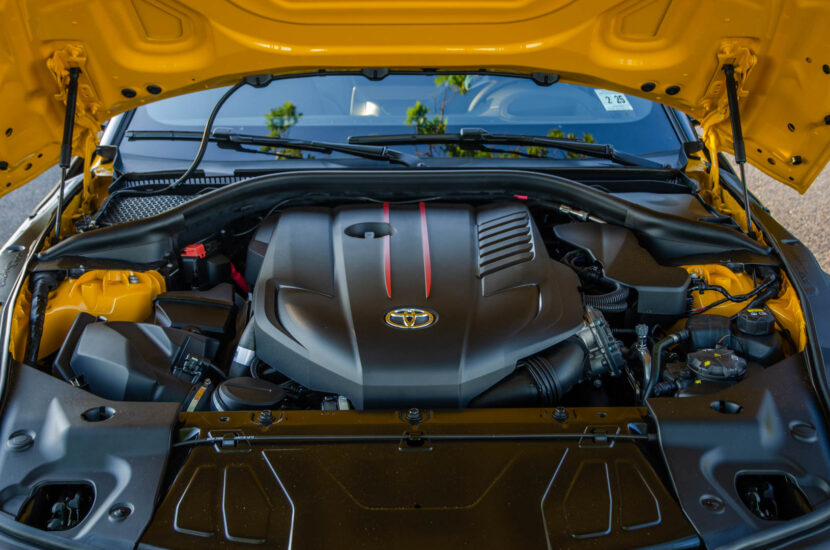
The B58 engine debuted in 2015. It replaced the N55 (and earlier, twin-turbocharged N54 engine) as the turbocharged, inline-six workhorse powering BMW’s “40i” offerings—most notably at the time, the 340i. With 320 horsepower (in U.S. spec), it represented a solid power bump from the outgoing 300-horsepower N55. And over the years, it’s become clear the B58’s substantial changes significantly enhanced durability and longevity relative to those older platforms, too. Now over a decade later, the engine arguably seems poised to become BMW’s most important motor ever.
To be clear: the B58 isn’t necessarily making a claim to the most famous power plant to come out of Bavaria. The S54 made the E46 M3 unforgettable. And the V12 in the McLaren F1 occupies a place in automotive history that no mass-produced six-cylinder can reasonably expect to take. But if “most important” means an engine that defines the brand, reaches beyond its own showrooms, and still has a role in the brand’s future, the B58 is making a serious claim.
The Engine for Almost Every Kind of BMW—And MoreThe B58’s importance never coasted on one headline power figure. BMW makes it work in sports sedans, grand tourers, roadsters, and SUVs. It can provide quiet, easy acceleration in a daily driver or give an M Performance model the character that distinguishes it from a merely fast car. The versatility is a huge component of the B58’s claim to fame. A spectacular engine reserved for a rare M car can shape BMW’s reputation. But the B58’s ubiquity shapes the experience of owning a BMW across much of the range. It keeps the straight-six—a layout central to the brand’s identity—relevant in cars people actually buy. That said, its reach extends far beyond the 3 Series. The outgoing Toyota GR Supra is perhaps the best-known example. Toyota chose the B58 for a revived sports car with its own considerable inline-six legacy, and the final 2026 Supra produces 382 hp. The partnership was controversial among some fans, but it also put a BMW engine at the center of one of the decade’s most talked-about sports cars. An inline-six, no less. Extremely interesting niche cars use it, too. You need look no further than the INEOS trucks and Morgan Plus Six.
The B58 Is Only Getting Better With TimeIt seems the B58 can’t miss. Recent developments demonstrate the B58 is, incredibly, still on an upward trajectory. The latest major update came in 2022; the B58 gained a more efficient combustion cycle, optimized intake ports and combustion chambers, and more. In the new M350, the B58 engine is even more powerful thanks to a tuned-up hybrid system that delivers an additional 30 lb-ft (40 Nm) of torque over the engine’s previous iteration. Then there’s the Bovensiepen Spider. Based on the BMW Z4, the hand-built roadster uses a tuned inline-six rated at 320 kW, or approximately 429 U.S. horsepower. Just 99 cars are planned. An engine that began its life in a pretty standard 3 Series now also sits in a limited-production sports car built all around driving pleasure.
There are worthy rivals for BMW’s most important engine. The M50 engine found its way into almost every BMW imaginable during the 1990s. Its successors became just as pervasive deep into the 2000s. Before it, the M10 debuted with the original Neue Klasse cars, while powering the legendary 2002 Turbo and underpinning BMW’s Formula 1 efforts. But remember: the B58’s story is still being written. What’s more, the case is already remarkably complete: it powers the everyday cars, gives special cars a compelling heart, has earned a place in another manufacturer’s sports-car lineage, and is following BMW into its next generation. Not to mention, earned the hearts of BMW enthusiasts many times over. Few engines have done so much for the brand in so many different roles.
First published by https://www.bmwblog.com