
Standing in the plaza of Jalpan de Serra, a town in Querétaro’s remote, mountainous Sierra Gorda, I gazed up in awe at an enormous, intricately designed mission. Having lived in California for 30 years, I was familiar with the missions, designed by the Franciscan priest Junípero Serra, and for whom one of the busiest freeways in the Bay Area is named. But none of the California missions I’d visited were anywhere near as elaborate and baroque as this structure. In fact, I later learned that the style of the five Sierra Gorda missions is known as “mestizo baroque.”
Junípero Serra, a priest from the island of Mallorca, achieved his dream of becoming a missionary in the Americas at the age of 36, in 1749. After disembarking in Veracruz, he refused to ride horseback to Mexico City, instead journeying on foot the entire 270 miles, despite a severe leg injury. Five months later, he walked another 175 miles from Mexico City to the Sierra Gorda. He used the motto siempre adelante (always forward) to drive his missionary zeal.
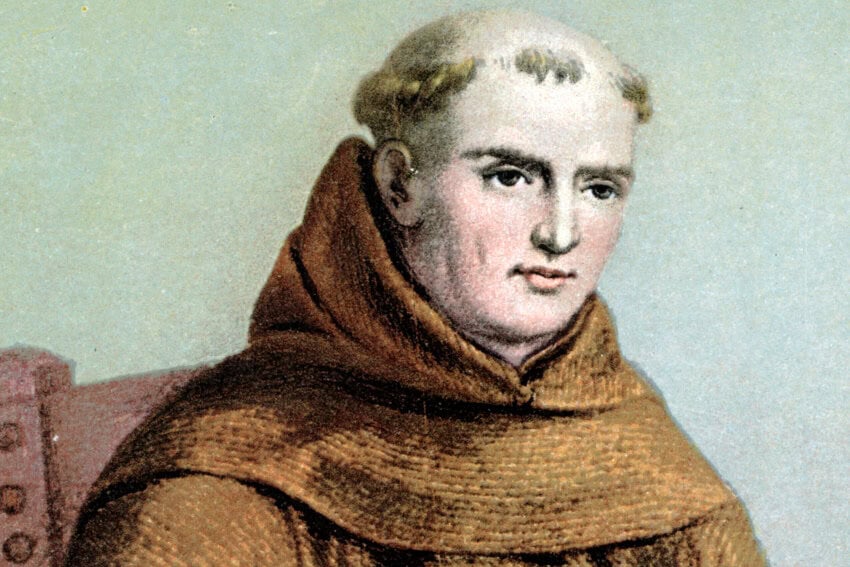
Junípero Serra has been canonized by the Catholic Church for founding Franciscan missions in Querétaro, Baja California and what is now the U.S. state of California during the 18th century. (Public Domain)In the Sierra Gorda, he evangelized the local population and used the sweat of the Pame, local Indigenous people, to build the five missions that, 250 years later, would become a UNESCO World Heritage Site.
There are several reasons for the dramatic difference in style between the two sets of missions, those in the interior of Mexico and the later ones on the Pacific coast, from Baja California to present-day San Francisco.
LocationThe Sierra Gorda missions were close to rich colonial centers, like Mexico City, Querétaro and Guadalajara, which served as supply hubs, as well as to well-established trade routes and ample financial backing from New Spain.
Don’t miss Mexico’s amazing aqueducts
On the other hand, the missions in Alta California (now the U.S. state of California) were built in remote, isolated outposts, thousands of miles from supply ports. Few overland routes existed, which forced Serra to rely on infrequent supply ships.
Skilled laborIn Mexico, the local Pame and other Indigenous artisans had been carving stone for centuries. After being converted, they blended Catholic iconography with Indigenous symbols, creating a hybrid of rich, intricate facades that look as if carved from stone filigree rather than masonry.
In contrast, unskilled workers in Alta California used local sun-dried adobe bricks, timber and river stones, resulting in a much simpler style.
The goal of the missions Monument to Junípero Serra in Jalpa de Serra, the Querétaro town that now bears his name. (A01376748 Eric/Wikimedia Commons)In Mexico, the imposing mission architecture was designed to convey permanent control over wealthy interior mining and agricultural zones, whereas in Alta California the missions were built as a military strategy. International law at the time required actual physical settlement to hold a region. Placing missions next to military forts along the coast created a visible barrier against Russian fur traders moving south from Alaska and British explorers from the Pacific Northwest.
Leadership style differencesIn addition to architecture, Serra’s way of governing also differed. While he used the same forced Catholic conversion and paternalism in both areas, his treatment of the locals differed. In the Sierra Gorda, he spent nine years learning the Pame language, translating catechisms, teaching European farming techniques and helping the Pames defend their agricultural plots from predatory Spanish soldiers and landowners. And he allowed the well-integrated Pames a high degree of freedom.
In California, however, Serra’s treatment of the Indigenous people was very mixed. On one hand, he wrote letters and reports condemning the violence, rape and mistreatment of native women by Spanish military officers, even walking hundreds of miles to Mexico City to meet directly with the viceroy to secure a “bill of rights” for Indigenous people.
The year Querétaro translated me and taught me a new grammar for living
But he was a harsh disciplinarian. Indigenous people were subjected to confinement in crowded, unsanitary conditions; forced labor; and corporal punishment if they tried to leave. Tragically, the isolated missions in Baja and Alta California also became vectors for European epidemic diseases, to which the local population had no immunity, leading to huge population decline, whereas the Pame had already developed relative immunity.
Reactions to Serra’s canonizationPope Francis canonized Serra in 2015, during a visit to the United States. After such a complicated life, it’s no wonder that his canonization was greeted with very mixed reactions, especially in the U.S. Many traditional Hispanics cheered the decision, seeing it as a long-overdue acknowledgment by the Church of the role the Spanish-speaking missionaries played in bringing the faith to the Americas.
Others condemned the canonization, protesting at the archdioceses in Los Angeles and Washington, D.C., and dubbing Serra the “saint of genocide.” They were also disappointed that Pope Francis canonized Serra when only a few months earlier he had apologized for the “grave sins” committed against Indigenous peoples during the conquest of the Americas.
Mexicans were ambivalent. Because most Mexicans are mestizo — a mix of Spanish Catholic and Indigenous — people wrestled with practicing a deep faith that they loved, yet with the painful awareness that it was introduced through brutal colonial subjugation.
Clearly, Junípero Serra was a complex character. On one hand, he went out of his way to defend Indigenous and women’s rights, yet at the same time betrayed a lack of respect for their human dignity and agency. I suspect he will always be viewed as a complicated historical figure with a controversial legacy.
Louisa Rogers and her husband Barry Evans divide their lives between Guanajuato and Eureka, on California’s North Coast. Louisa writes articles and essays about expat life, Mexico, travel, physical and psychological health, retirement and spirituality. Her recent articles are available on her website, authory.com/LouisaRogers.
The post Junípero Serra: A complex character with a controversial legacy appeared first on Mexico News Daily