
See more Toronto Sun on Google — save as a Preferred Source
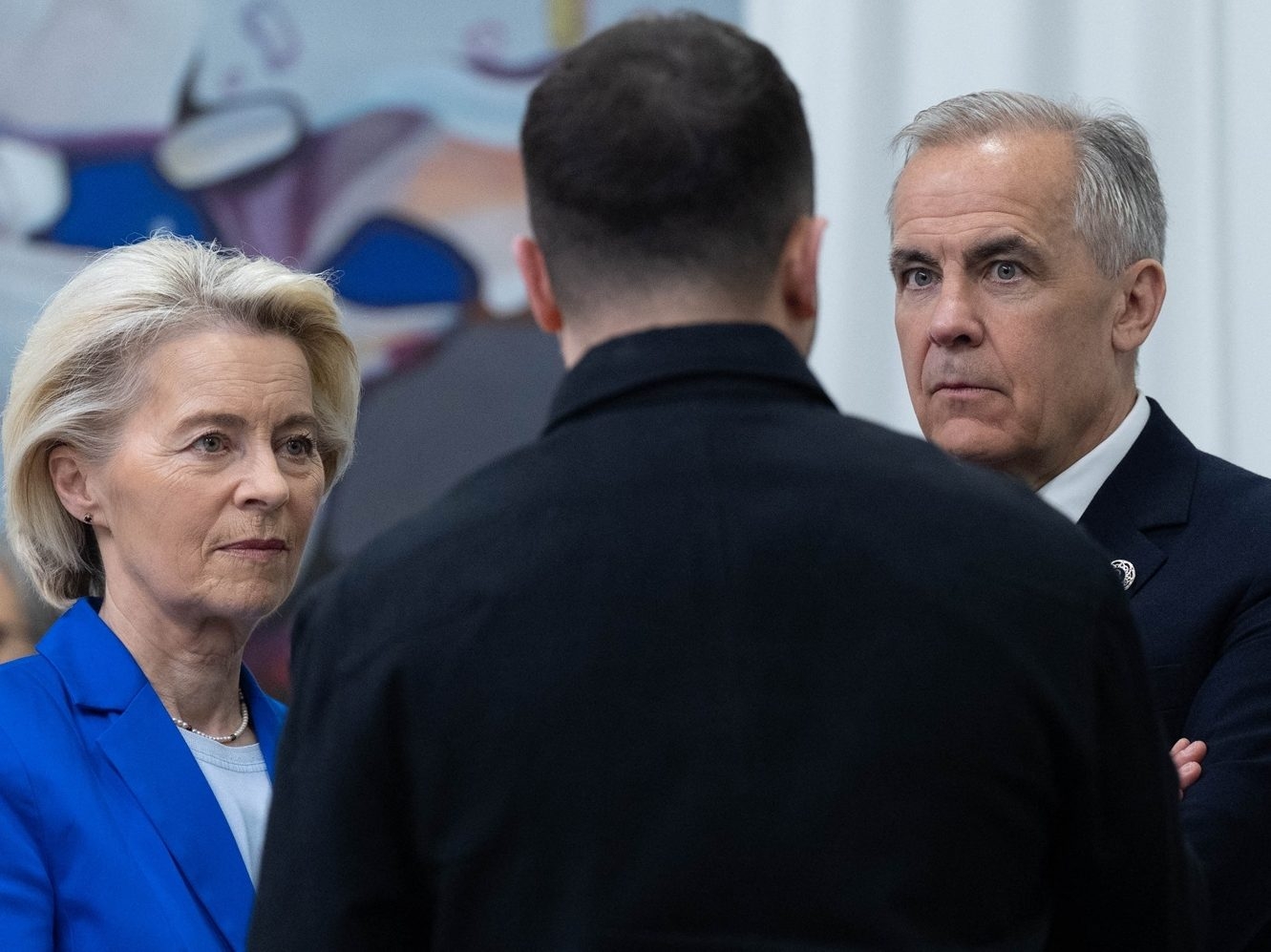
Mark Carney’s goal this week when he travels to Europe is to make Canada an “associate member” of the European Union. It’s a title and status that doesn’t currently exist, but according to the Wall Street Journal it’s what Carney and EU leaders plan to unveil this week.
Based on discussions with representatives from more than a dozen governments, the Journal reported that talks between Canada and the EU are far deeper and more advanced than Canadians have been told.
The article expands on previous reporting on how Carney texts regularly with European leaders using his British mobile number. Now, instead of just speaking with France’s Emmanuel Macron and Finland’s Alexander Stubb, he’s been able to bring Italy’s Giorgia Meloni and Germany’s Friedrich Merz around to his way of thinking .
In Carney’s view, there must be a counterbalance to the United States . Since becoming PM, Carney has been upfront about his European desires, jetting off to European capitals rather than Washington days after being sworn in.
“Canada is the most European of non-European countries,” Carney said several times while standing with European leaders.
What is Carney really negotiating?
In the news release announcing his trip to Europe later this week, he returned to his boilerplate line about the world being more dangerous and divided and that requiring Canada to draw closer to Europe .
“Our shared values, complementary strengths and common interests serve as the strong foundation on which we can build a stronger future. Together, Canada and our European partners have the ambition and strength to create a more just, stable and universally prosperous world,” Carney said.
The problem with what is being reported by the Wall Street Journal is that Carney has never told the Canadian public just how deeply he is trying to integrate Canada with Europe.
Our Parliament has not sat since June 18 and won’t return until Sept. 21, a 96-day break. During that time, Canadians have learned more about these talks from the Wall Street Journalthan from their own government .
There have been talks toward what would amount to a deeper free-trade agreement, allowing people and goods to move “frictionlessly” between Canada and the EU. There have been discussions about building data centres, cloud computing networks and satellite systems completely removed from the American tech giants that currently dominate those fields.
The Journal even reported that Carney is looking to re-orient Canadian infrastructure, from pipelines to rail and ports, to ship natural gas, fertilizer and other goods to Europe.
“Earlier this week, senior EU officials debriefed European ambassadors in the glass-panelled Brussels office tower popularly known as ‘the Space Egg.’ The message: If talks succeed, Canada will become closer than any other country outside Europe,” the Journal reported.
RECOMMENDED VIDEO
Ten years of free trade with limited results
And, of course, there will be deals signed and unveiled on Thursday when Carney is at the European Parliament. The PM announced this weekend that he will host a Canada-EU Summit at the end of October.
All of this amounts to incredibly far-reaching changes to Canada’s political and economic orientation and there has been no debate about it. On this one file, Carney is moving at speeds not seen in generations, but he isn’t keeping the Canadian public informed and that is a problem.
It’s not even clear that all of this could result in the EU and Canada getting closer.
More than a decade ago, then-prime minister Stephen Harper negotiated a free-trade deal with the EU. That deal was supposed to be implemented in the early days of the Justin Trudeau government and to this day, 10 of 27 EU member states have failed to ratify and fully implement the deal.
The main sticking point: Dairy and agricultural issues. They’re the same sticking points we’ve had with the Americans and the same reasons Britain called off free-trade talks with Canada.
Will any of that change?
- LILLEY: Michigan Governor’s reckless Line 5 crusade puts Ontario’s energy security at risk
- LILLEY: The midterm myth won’t save Canada from Trump’s tariffs
Sovereignty question remains
Canada exports roughly $400 billion US to the United States each year, but in 2025 sent just shy of $31 billion US to the entire EU. After a decade of having a free-trade agreement with the EU, our exports have only increased by $8.4 billion after accounting for inflation.
That increase in exports to the EU after a decade of free trade amounts to about one week’s worth of exports to the United States.
This isn’t to argue that we shouldn’t diversify. We absolutely should. But the Europeans may not be interested in what we’re selling and 10 years of free trade with them would appear to back that up.
We need to be realistic about what the opportunities are. We also need to start asking what we are giving up, including in terms of sovereignty, to achieve Mark Carney’s European dreams.
If Carney wants to fundamentally reorient Canada toward Europe, the least he can do is explain the plan before signing the deal.