
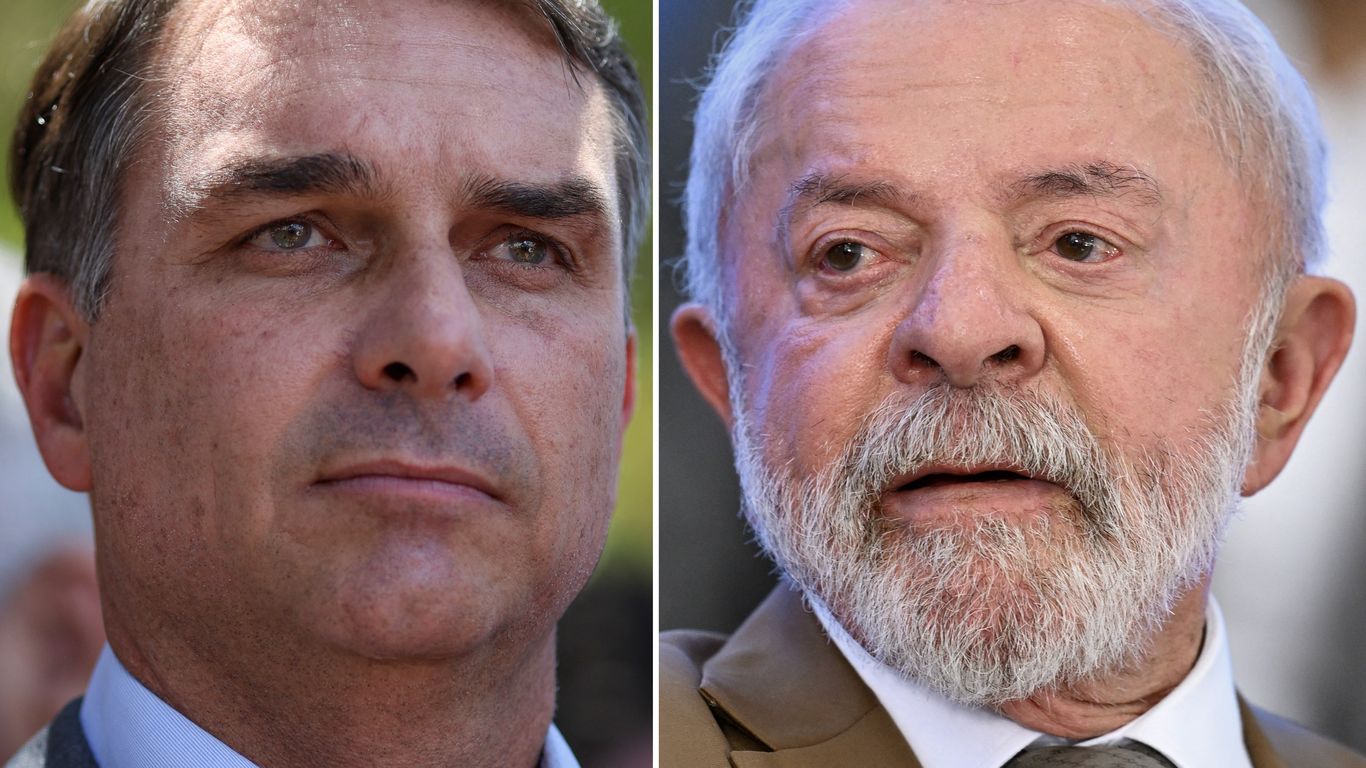
Brazil President Luiz Inácio Lula da Silva was elected to a fourth, nonconsecutive term in the nation's presidential election according to early results released Sunday evening.
Why it matters: Lula's victory deals a setback to Brazil's right-wing populist movement and preserves a major counterweight to President Trump's influence in Latin America, with tensions over trade and tariffs threatening to persist.
- Lula, the incumbent candidate, was facing Flávio Bolsonaro, the son of former Brazilian President Jair Bolsonaro. Flávio was widely seen as the heir to the nation's right-wing populist movement.
The big picture: The election has been shaped by the impact of U.S. tariffs, climate change and the Amazon rainforest, 60% of which is in Brazil.
- Bolsonaro campaigned on public security and tackling corruption, presenting himself as a continuation of his father's political legacy, while Lula emphasized defending Brazilian sovereignty against U.S. pressure.
- Yet substantive policy debate was limited, with both candidates focusing instead on corruption allegations levied against the opposing camp, wrote Matthew Taylor, a Brazil politics expert at American University.
Zoom in: After the U.S. imposed additional 25% tariffs on some Brazilian goods this summer, Lula accused Bolsonaro of being "Trump's candidate" and the U.S. president of wanting to "colonize" Brazil.
- Lula has enacted climate policies aimed at reversing environmental deregulation under the previous administration, while Bolsonaro denied climate change and pledged to continue his father's political legacy.
- Amazon deforestation has fallen 71% since 2022, the year before Lula returned to office, reaching its lowest annual level on record in 2026. Yet Lula's environmental record is complicated by his support for expanded oil development.
- Lula defeated Jair Bolsonaro in the previous election. The elder Bolsonaro is now serving a 27-year prison sentence for plotting a coup to overturn the 2022 election, though he remains under house arrest due to health problems.