
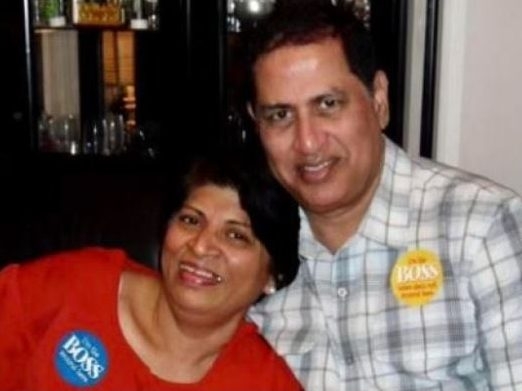
The Scarborough man found not criminally responsible last year for butchering his parents with a golf club no longer displays symptoms of schizophrenia and has been allowed accompanied passes outside of Whitby’s Ontario Shores psychiatric hospital.
Kyle Sequeira , 31, seems to be on the fast track to community release and now there’s very little to stop that.
Prosecutors had applied for a rare “high-risk” designation that would mean the Ontario Review Board — which holds hearings each year to determine the “least restrictive” conditions for someone found NCR, while maintaining public safety — could not release Sequeira on a conditional or absolute discharge or grant him unescorted passes into the community. Instead, he’d remain in a hospital unless the ORB went to court to have the designation reviewed and rescinded.
But after hearing final submissions on Tuesday, Superior Court Justice Anne Molloy dismissed the Crown application with written reasons to follow.
‘Pulverized’ mom with golf club
In March 2025, Molloy found Sequeira, 29, NCR on two counts of second-degree murder due to undiagnosed and untreated schizophrenia: He used a Callaway golf club to smash in the head of his mom, Lynette Sequeira, 65, and to beat and mutilate his dad, Francis “Frank” Sequeira, 68, in the master bedroom of their Scarborough home over Labour Day weekend in 2021 .
His mother’s face had been “pulverized” and his father stabbed so many times with the broken golf club that an autopsy couldn’t determine the number of wounds.
After trying to clean the gruesome scene, their son covered the bodies and then went downstairs to listen to music, smoke weed and unsuccessfully beg a “friend with benefits” to pick him up, telling her “my sureties are dead.”
His mom, an administrative assistant at the University Health Network, and his dad, the banquet supervisor at Scarborough Golf and Country Club, had bailed him out twice – first in 2019 after Sequeira was charged with attempted murder for stabbing his friend 13 times in a drunken rage; and then, just nine days before they were slaughtered, they’d put up $15,000 each to get him released from jail again after he attacked two police officers called to the home over his dispute with his female friend.
RECOMMENDED VIDEO
Crown says he lacks insight into illness
Crown attorneys Dimitra Tsagaris and Andrea McPhedran had unsuccessfully argued Sequeira wasn’t NCR, just furious at his parents for calling the police and stressed by his imminent trial for attempted murder. Molloy ruled otherwise.
“While he may have had disagreements with his parents in the past and angry outbursts from time to time, these killings were such acts of butchery that they fall outside the realm of rational thought,” she wrote in her judgment.
At the high-risk hearing, prosecutors argued Sequeira may be doing well now that he’s medicated, but he still lacks insight into his illness and poses a serious danger to the public if released. He has no social support, would likely abuse substances again — his condition worsened due to cannabis use — and was very good at camouflaging his symptoms.
Molloy questioned why a judge would be in a better position than the very experienced Ontario Review Board. “I’m struggling with my role here,” she said. “What’s the purpose of my doing the exact same assessment the ORB is doing?”
High-risk application a PR ‘exercise:’ Defence
A high-risk designation is used sparingly, but adds another layer of oversight for someone who poses a serious danger, McPhedran argued. “This case is one of those very few cases,” she said. “The Crown is trying to use every tool that’s available to protect the public.”
And good on them.
But Sequeira’s lawyer Marcus Bornfreund dismissed the application as an unnecessary “public relations exercise” — Sequeira’s schizophrenia is in remission, he’s consenting to treatment and has sworn off pot and alcohol. The ORB, he argued, are the ones best able to monitor his progress and determine when he’s earned more release privileges.
“These are the people we trust to do it and they ought not have the interference of the court from doing so,” he said.
Molloy agreed and told Sequeira that “I can see already that you’re looking better.”
His next chance at increased freedom comes at his next ORB hearing in February, where unsupervised passes will no doubt be on the table. After all, the hospital had already recommended them at his first hearing last year.
mmandel@postmedia.com
- MANDEL: Another stranger killer deemed not criminally responsible
- MANDEL: Schoolgirl killer Paul Bernardo set to torture families again