
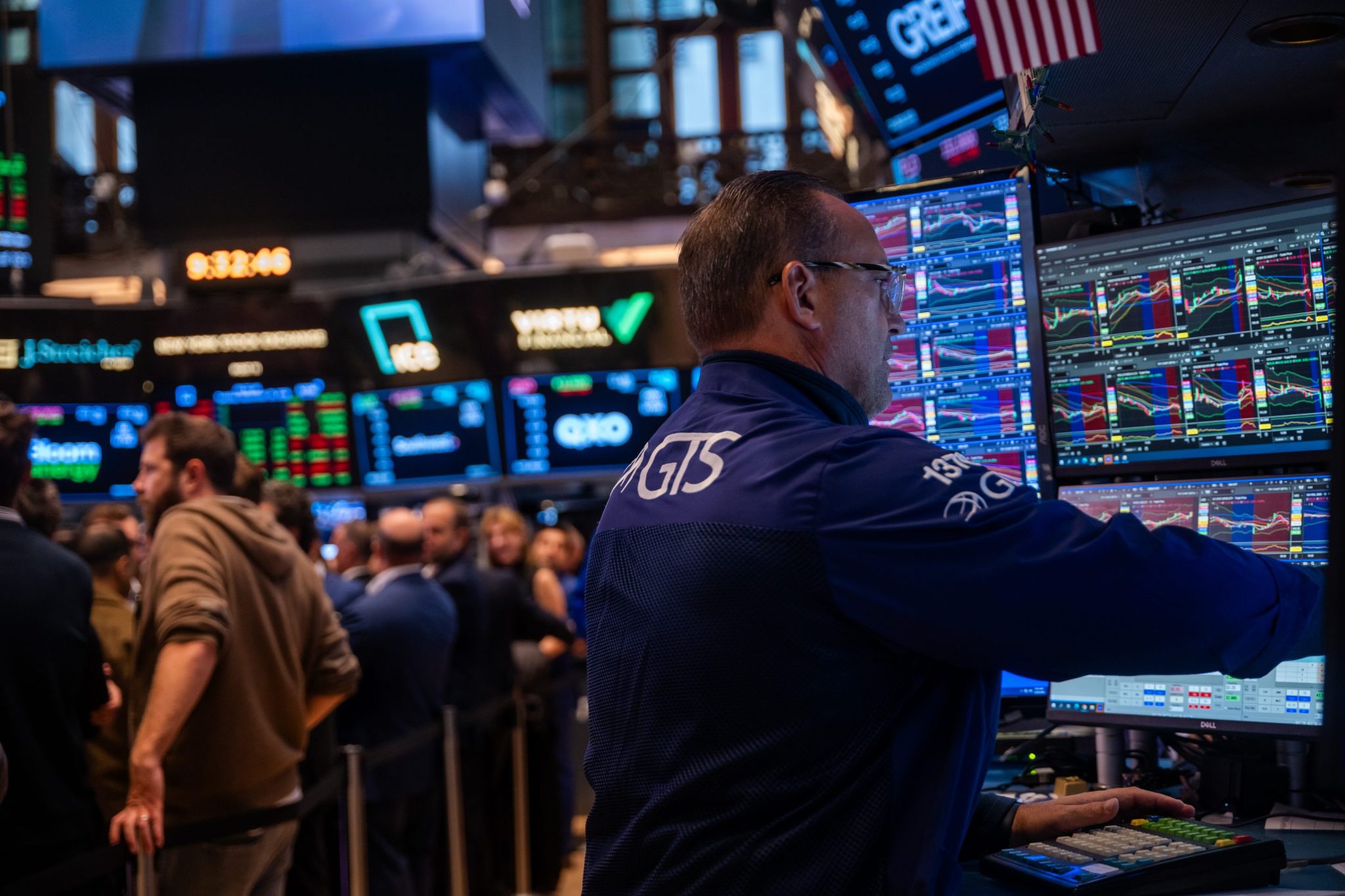
Stocks struggled globally today as the price of oil rose to $108 per barrel. Asia was mixed, while markets declined in Europe. U.S. futures were up this morning following a tech-led selloff on Friday. Nasdaq futures were up strongly before the open in New York—suggesting that traders now believe last week’s dumpster fire was overcooked.
“Things are looking a lot cheerier than they were at the close on Friday. After yet another lurch lower for tech, buyers have once again appeared,” Chris Beauchamp, chief market analyst at trading platform IG, told Fortune.
“Amid all the doom-laden commentary we saw last week, it is easy to forget that the S&P 500 was at a record high just two weeks ago. Last week looks more like a healthy rotation than the beginning of something more dramatic, no matter how much many bearish types would wish it otherwise.”
Factoid: Today is the 39th anniversary of Black Monday, when the Dow Jones fell 22.6% in a single day. Watch a great archive video of the TV evening news on that day here.
- S&P 500 futures were up 0.47% this morning. The index fell 1.09% on Friday.
- In Europe, the Stoxx 600 was down 0.78% in early trading, and the U.K.’s FTSE 100 was down 0.87% before lunch.
- Asia: South Korea’s KOSPI was up 1.76%. Japan’s Nikkei 225 was down 0.62%. India’s Nifty 50 was down 1.19%. China’s CSI 300 was up 0.09%.
- Brent crude rose to $108 per barrel.
- Bitcoin was at $82,769.
The yield on the benchmark 10-year Treasury was 5.08% this morning, down from its recent peak of 5.3%. So how bad was it last week when yields spiked? The market was pricing in risk similar to the Great Financial Crisis, according to this chart from Michael Hartnett’s team at Bank of America.
Hyperscalers’ cost of capital has more than doubled since 2023, hurting the profitability of AIIncreasing yields in the bond market are making it more expensive for tech companies to borrow the money they need to fund AI development. “The [weighted average cost of capital] for hyperscalers is now 10%, up from 4% in 2023,” according to Bank of America’s Savita Subramanian.
Ten percent, therefore, is now the ROI threshold hyperscalers need to meet.
“Economics 101 tells us that investing makes sense until returns on incremental invested capital (ROIIC) fall below the weighted average cost of capital (WACC). Inflation, real yields, credit events, increased regulations, equity supply outpacing demand are risks from here,” she said in a note.
To give you an idea of how closely the AI-debt market situation is being watched, Subramanian said, “Most of our equity meetings are 90% AI, 10% everything else. But they all boil down to the question above.” Her forecast: The capex wave has further to run, but there might be a “marked shift in trend” next year if yields don’t decrease.
Read the full digital edition of today’s Fortune 500 Digest here.
This story was originally featured on Fortune.com