
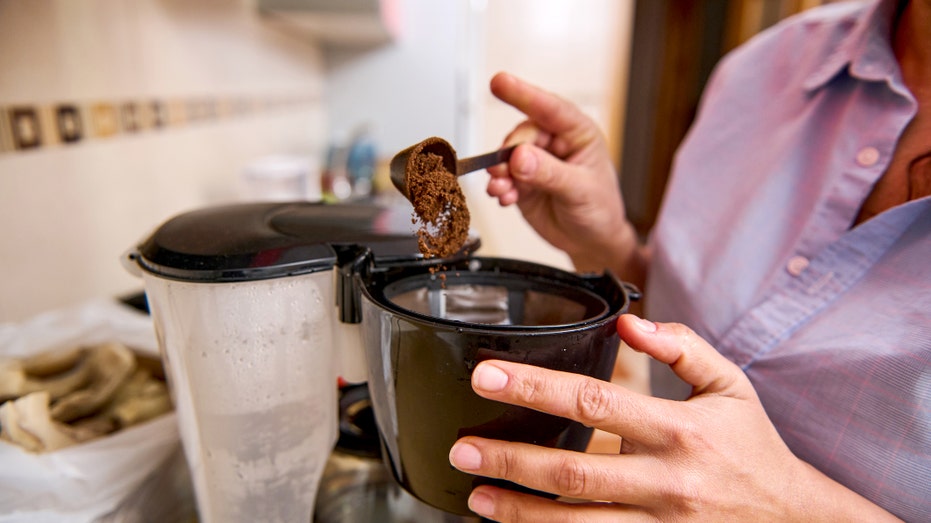
Brewing a cup of morning coffee is an essential part of most Americans’ routines — but cleaning the coffee maker isn’t, a lot of the time.
Recent reports and viral social media posts have highlighted the potential for mold and bacteria to build up inside home coffee makers — while beans marketed as tested for mold have left some drinkers wondering what may be lurking beyond the carafe.
But Heather Perry, the California-based CEO of Klatch Coffee and a two-time U.S. Barista Champion, said there is little reason for most home brewers to panic.
COFFEE LOVERS CAN TAKE HEART: UP TO 5 CUPS A DAY APPEARS SAFE FOR MOST ADULTS, EXPERTS SAY
She said a few simple steps can ensure a better cup.
"Coffee equipment cleanliness has way more importance when it comes to the flavor and the way it impacts it than [as] a true safety issue," Perry told Fox News Digital. "Coffee is totally fine to be type B about."
She debunked common coffee fears and shared five tips for a better brew.
Recent warnings have made coffee-cleaning and sourcing issues sound more alarming than they need to be, said Perry.
COFFEE EXPERT WARNS ONE LAZY HABIT CAN TURN YOUR SINGLE-SERVE MACHINE INTO A GERM TRAP
"You do not at all need to be worried at home about mold and bacteria," Perry told Fox News Digital.
"It is incredibly low on the list of things to worry about, in my opinion, when it comes to coffee equipment."
As for coffee being branded as "tested for mold," Perry had a blunt assessment.
"That is 100% a marketing thing," she said.
The part you should be most worried about cleaning is the pot, Perry said — which can throw off the taste of your cup.
"Once that’s in your pot, you’re gonna taste that in your cups," she said.
'HOTEL VIBES' COFFEE HACK RAISES EYEBROWS AS EXPERTS WARN OF SLEEP QUALITY RISKS
Coffee stains can especially build up in insulated carafes that can't be seen.
"Those thermos pots are where I think we find a lot of coffee stains are staying, and that will absolutely begin to affect the flavor of that coffee," Perry added.
For homes with hard water, mineral buildup can gradually affect the machine's performance and, ultimately, the taste of home-brewed coffee.
Perry suggested using faucets and showerheads as an easy visual cue. When they need cleaning, your coffee maker probably does, too.
"Whatever you see in your sink faucets, your showerheads — that’s what’s happening with your coffee brewer," she said.
LOOKING FOR BETTER COFFEE? HUNDREDS OF CHEFS AND SOMMELIERS SAY THESE ARE THE WORLD'S BEST
The easiest way to limit that is to make sure you’re starting with good water, she added.
She recommended water filtered at home or, in areas with particularly hard tap water, bottled water, and she cautioned against distilled or reverse-osmosis water, which lacks the minerals that help flavor coffee.
Since "coffee [is] 98% water, you want good water, and you want it to have enough minerals because that’s what the coffee flavor sticks to," she said.
If you're grinding your own beans, the grinder doesn't need constant deep cleaning, but Perry does recommend checking the hopper and grounds area for an oily film.
"I would absolutely make sure you’re wiping that out with a dry paper towel. Get the coffee oils off of it," she said.
CLICK HERE TO SIGN UP FOR OUR LIFESTYLE NEWSLETTER
A smell should also tip you off.
"It’s not that fresh coffee smell, it’s that old coffee smell," she said.
TEST YOURSELF WITH OUR LATEST LIFESTYLE QUIZ
Perry added, "If you start to see coffee oils forming, the longer they stay, the harder they are to get off."
The fridge is not the best spot to keep coffee grounds because they can absorb moisture and surrounding odors, according to Perry.
"Your freezer is actually a better preservative," she said.
CLICK HERE FOR MORE LIFESTYLE STORIES
But even that might not be necessary. "Leave the one bag out that you’re using right now. As long as you’re consuming it within a month, it’s going to be fine," she said.
Perry said the most important factors are the coffee itself and the water.
She summed it up this way: "Start with really good ingredients … Coffee and water are absolutely going to be your two biggest starting points."