
These are the stories making headlines in fashion on Friday.
Yeezy’s Comeback Show Falls Short
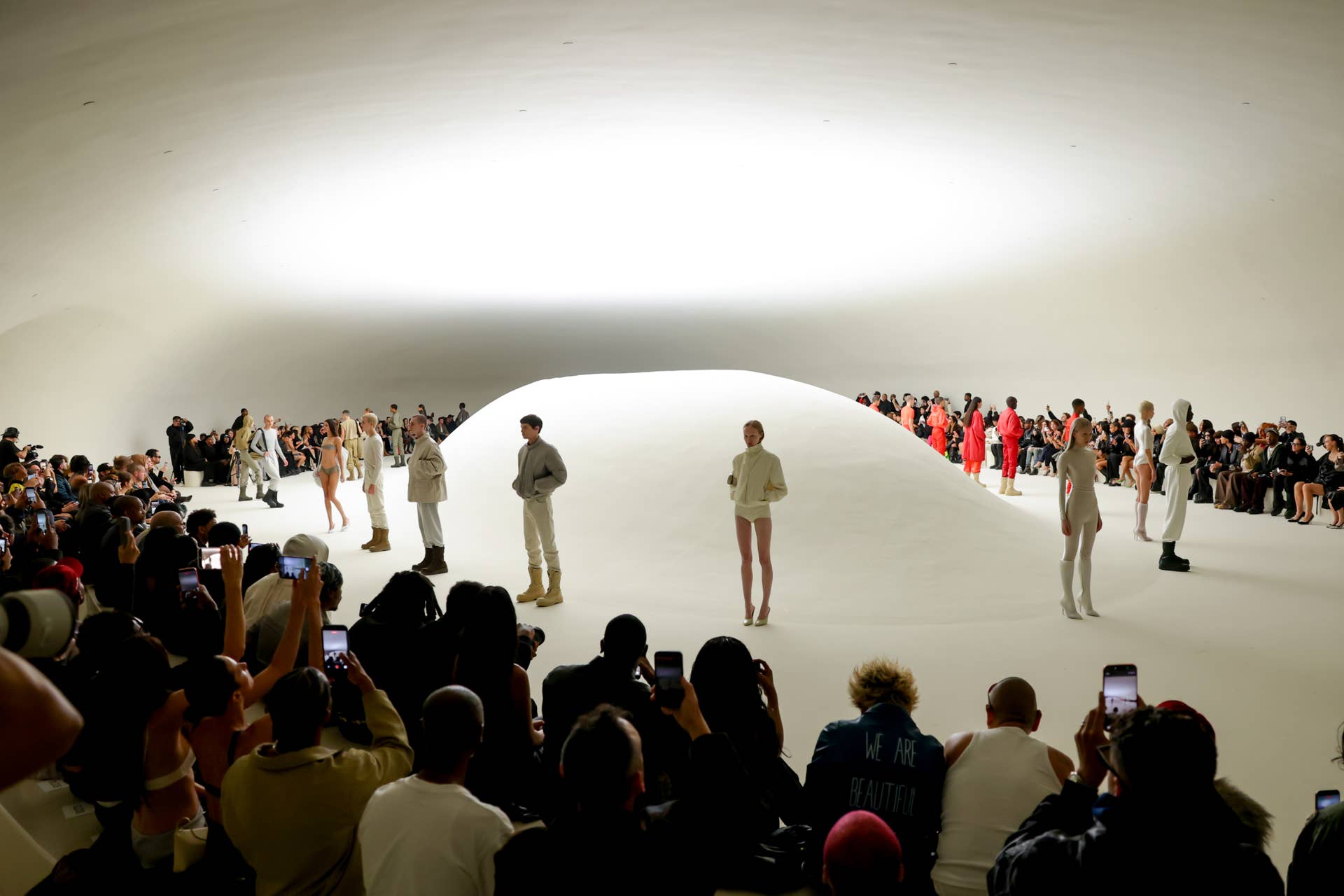
Ye, formerly known as Kanye West, staged a runway comeback Wednesday in Los Angeles. The roughly 15-minute show, billed as Yeezy Season 01, featured military-inspired menswear and revealing women’s looks. It was his first collection since Adidas, Gap and Balenciaga cut ties with him following his antisemitic comments. The New York Times’ Jacob Gallagher called it a “rehash” and said that “Ye is no longer a vital voice in fashion.” {The New York Times/paywalled}
Pay Structure Revisions Fail To End Bangladesh Garment Protests
Garment workers in Bangladesh staged fresh protests Thursday, forcing more than 100 factories in the Ashulia hub near Dhaka to suspend operations. The unrest began Saturday, despite a wage board decision Wednesday to introduce a revised pay structure from December, with the size of the increase still undecided. Workers want the minimum monthly wage raised from 12,500 taka ($100) to 30,000 taka ($242). {Reuters/paywalled}
Ralph Lauren Raises Outlook as Asia Leads Growth
Ralph Lauren raised its full-year outlook after a better-than-expected second quarter, but shares fell Thursday on a softer third-quarter forecast. Asia led with 28% growth as sales in China rose by more than 35% while Japan and Korea were up by double digits. North American revenue grew 6% to $885 million and Europe rose 3% to $696 million, slowed by tough comparisons and weaker store traffic. The company expects stronger growth in the first half of fiscal 2027 than the second, citing the timing of marketing activations, wholesale shipments and off-price reductions. {Ralph Lauren; Vogue Business/paywalled}
E.l.f. Beauty CEO Says Affordability Sets Brand Apart
E.l.f. Beauty’s hit its 31st straight quarter of growth, as the company raised its fiscal 2027 forecast to $2 billion. CEO Tarang Amin told Vogue Business it was “a phenomenal quarter,” with every brand growing. He sees room to grow abroad, as only 25% of the business is outside of the U.S. When asked how this week’s midterm results could affect the business, Amin pointed to affordability. “I would say the biggest theme from this election was affordability, and when it comes to affordability, I believe we’re the best positioned of any company,” he said. Amin also shared that the company won’t move upmarket. {Vogue Business/paywalled}
Reformation Sales Climb More Than 19%
Reformation’s third-quarter revenue rose 19.1% to $173.6 million, marking its 22nd straight quarter of double-digit growth. The retailer raised its full-year outlook to $610 million to $612 million, up from the prior range of $602 million to $606 million. The company, which went public in July, posted a $1.1 million loss tied to stock-based compensation taxes, while adjusted EBITDA climbed 64.2% to $23.1 million. {Reformation}
Why Supreme Is Hot Again
Supreme is staging a comeback after years of declining spending and predictions of its fall, with U.S. direct-to-consumer sales up more than 35% in the first three quarters of 2026. The brand has stuck to its core collaborations, skate-shop retail and accessible prices, and its appeal is growing among younger demographics. On StockX, Supreme was the top-selling apparel brand in 2026 for the first time since 2021, with sales volume up 38%. Resellers say demand for vintage pieces is also rising. {Business of Fashion/paywalled}
Do you have an emerging brand you want to share with Fashionista readers? Jumpstart your business with our affordable digital offerings.