
Autumn is here! The air is crisp, the leaves are falling, and the sky is alive. November brings a whole gamut of celestial phenomena for stargazing enthusiasts from a planetary prom to a meteor shower that can explode occasionally into the most spectacular of sky shows, and a comet that won’t return for 21 years Let’s get to it!
November 12-ish: Mercury, Venus, Mars, and Jupiter in AlignmentMercury is generally difficult to spot. It’s our solar system’s smallest planet and is often lost in the sun’s haze. But in the middle of this month, this speedy boy is flitting in to join the party that Venus, Mars, and Jupiter are throwing all month. The three larger planets will be in alignment for all of November, festooning the morning sky just before dawn. Venus will be in the southeastern sky, with Mars high in the eastern sky and Jupiter a bit lower, but also towards the east. And Mercury? Look low in the southeast, and it should be visible just before the sun emerges over the horizon.
November 16: Mars and Jupiter ConjunctionAs the month continues, Mars and Jupiter will edge closer and closer to one another, casting shy glances at one another across the sky like teenagers at a school dance. They’ll finally slide in for a waltz just before sunrise on November 16, where their conjunction in the eastern sky will be chaperoned by the bright star Regulus. Look to the east, but make sure you stop looking once the sun begins to peek its way into the firmament. No planetary conjunction is worth cooking your eyes.
November 18: Leonids Meteor Shower Predicted PeakAnd once the music stops and Mars and Jupiter will slip gracefully away, the fireworks will begin. The Leonids will be visible all month, but their peak is predicted for November 18. At that time, their radiant point—the point from which the meteors appear to emerge—will be right next to the two disengaging dancers in the constellation Leo. This shower usually produces 10 to 15 meteors per hour. However, in 1966 it exploded into one of the most spectacular displays of celestial pyrotechnics ever seen, with thousands of meteors visible every minute. So you never know what you might see!
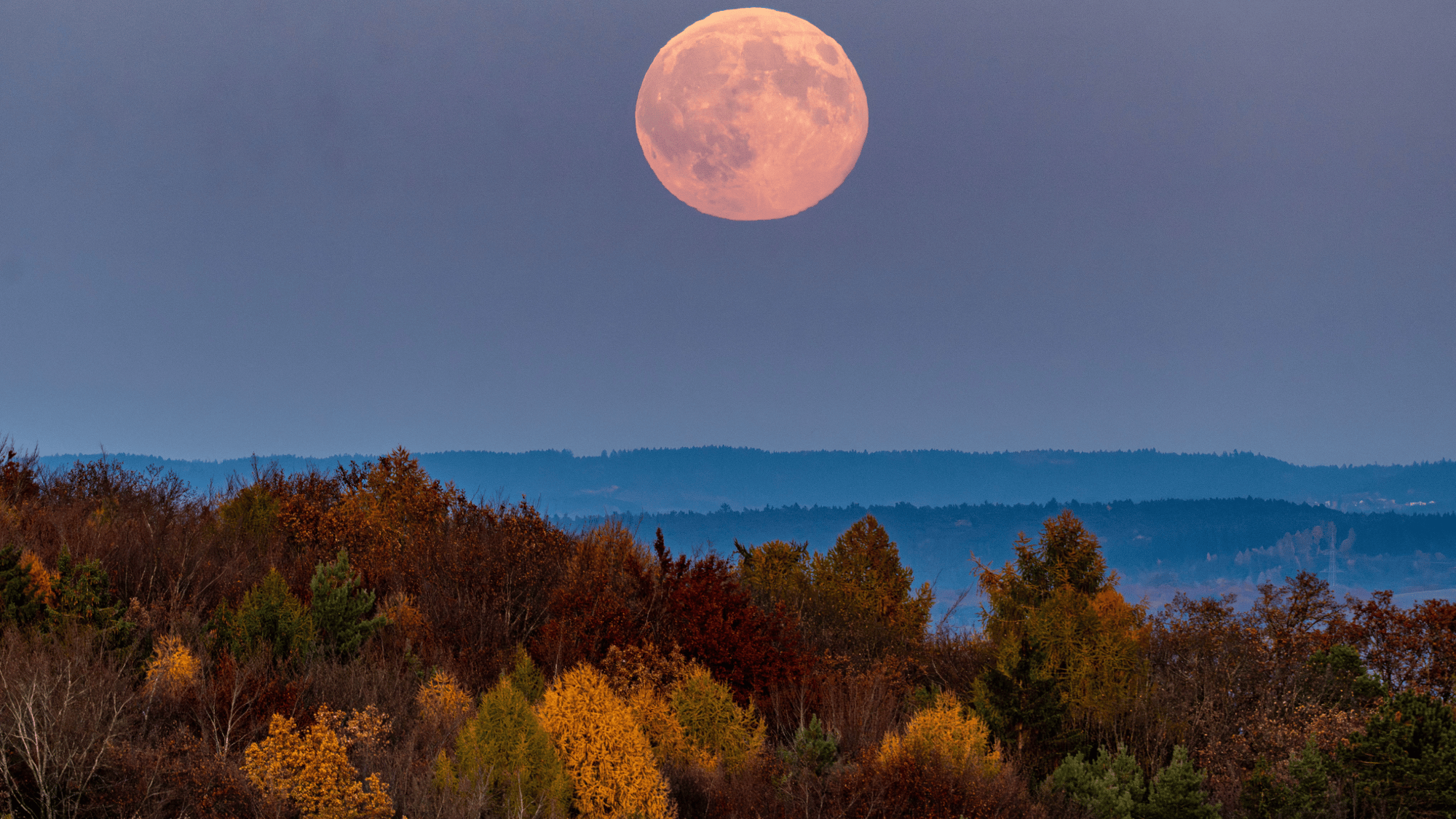
November 24: Full Beaver SupermoonThis month’s full moon is the first of three consecutive supermoons. As per the ever-indispensable Farmer’s Almanac, it will reach peak illumination while below the horizon at 9:50 a.m. EST on November 24. When actually visible, it’ll appear brightest on the evenings of November 23 and 24. This month’s moon takes its name from the industrious, dam-building rodents of North America, whose long summers of hard work start to pay off in November, when they retreat to their lodges to wait out the winter. Several other Indigenous nations have names that also refer to what animals get up to during the fall: the Tlingit call it the Digging Moon, to the Algonquin it’s the Whitefish Moon, while the Dakota and Lakota call it the Deer Rutting Moon.
November 27: Comet 161P/Hartley–IRAS PerihelionThe final event of November: a visit from Comet 161P/Hartley–IRAS. The space rock will reach perihelion—the point at which it’s closest to the sun—on November 27. At that point, its magnitude will be about 12, which means you’ll want a decent telescope to spot it. The International Comet Quarterly suggests at least using a telescope with at least a 7.8 inch (20 centimeter) aperture. If you’ve got such an apparatus, look to the east-northeast, just above the horizon.
Remember that you’ll get the best experience gazing up at the stars if you get away from any sources of light pollution. You should also give your eyes plenty of time adjust to the darkness, and review our stargazing tips before heading out into the night.
The post November skygazing: Planetary alignments, a supermoon, comet, and more appeared first on Popular Science.