
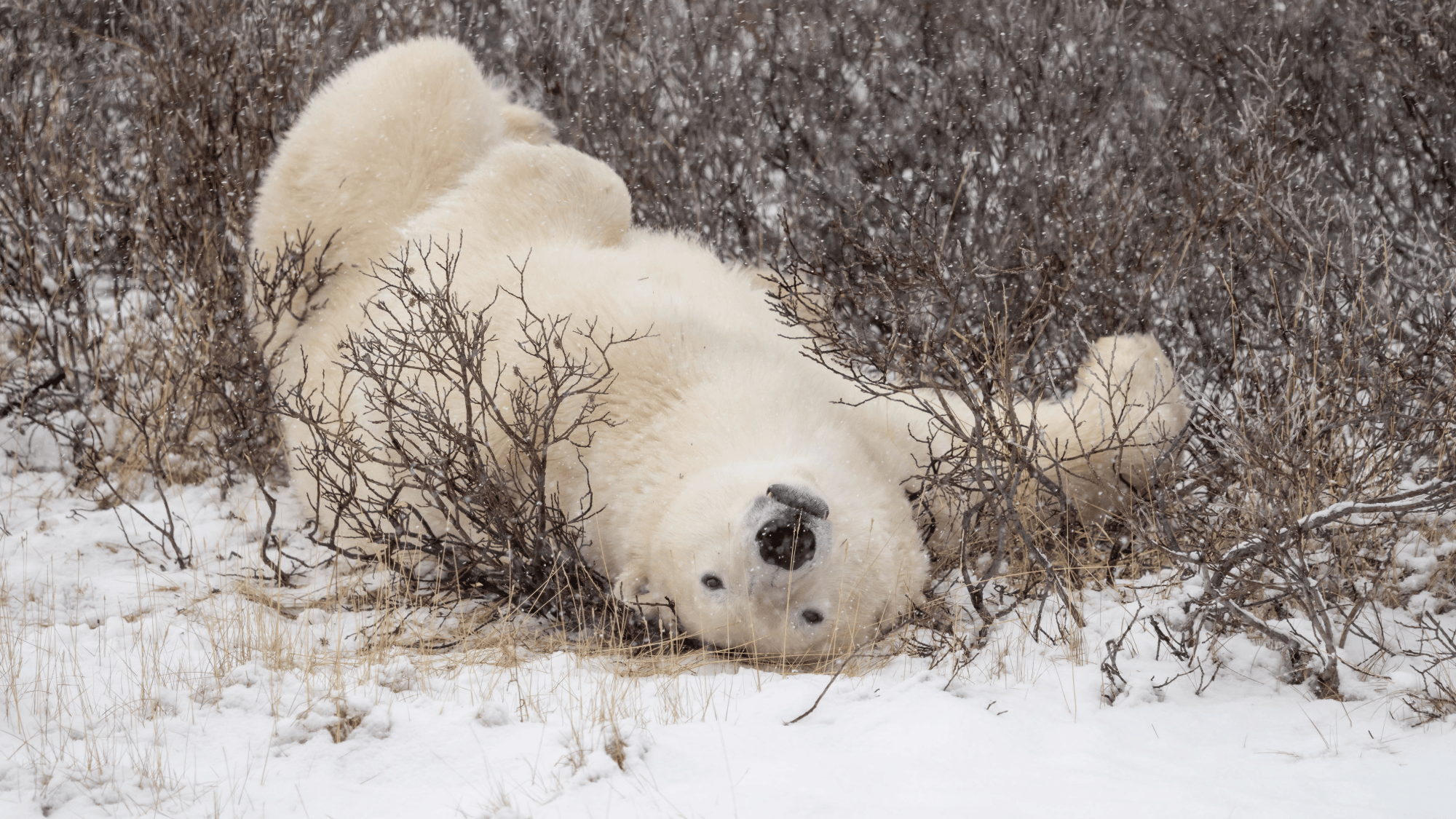
Polar bears (Ursus maritimus) are typically solitary creatures. But in a Canadian town on Hudson Bay, the predators gather along the coast every fall to wait for the ice to freeze.
“It’s an incredible phenomenon to experience,” Alysa McCall, director of science at Polar Bears International (PBI), tells Popular Science. “The bears return to this stretch of coast because it’s where the Bay freezes first, thanks to freshwater from the Churchill River plus the Bay’s currents and winds.”
Sea ice platforms help polar bears catch seals, which are their main source of prey. It’s usually harder for them to do so without the ice, as exemplified in a video PBI captured of a bear on the shore unsuccessfully trying to hunt a seal in the water.
This makes polar bears particularly vulnerable to climate change, which is bringing about longer ice-free seasons. In fact, polar bears in the Western Hudson Bay subpopulation today are stuck on land for around one month longer than their grandparents. What’s more, their numbers have approximately halved since 1979 because of sea ice loss.
Nicknamed the Polar Bear Capital of the World, the residents of Churchill, Manitoba have front-row seats to the annual polar bear gathering (you can also watch through their Polar Bear Live Cams). They are thus also exposed to conflict with these very large temporary neighbors, and climate change is extending this potentially dangerous overlap.
The bears are waiting for the sea ice to form so that they can hunt for seals. Image: Kt Miller/Polar Bears International. Katharina M Miller, Kt Miller“When polar bears are on land, they are generally fasting. They sometimes venture into towns and communities to look for food, and human areas are full of things that attract curious bears – from trash bins to food smells,” McCall explains. “As climate change causes polar bears to spend more time on land, they have more opportunities to encounter people.”
As such, McCall and her colleagues at PBI have developed new tools to facilitate human-polar bear coexistence. One of them—cheekily named Bear-dar—is a medium-range polar bear detection radar currently being used at the Eureka Weather Station in Nunavut, Canada. Now the team is testing Bear-vision, a smart polar bear detection camera, at Churchill’s waste facility. According to McCall, it’s cheaper and simpler to use than Bear-dar, and works like a doorbell camera that warns you if there’s a polar bear hanging out outside.
Bear-dar being installed at the Eureka Weather Station in Nunavut, Canada. Image: Elbert Bakker/Polar Bears International. Elbert Bakker“The team hopes to make the technology open-source so that Bear-vision will be widely available and accessible. More bear-safe tools mean fewer negative encounters, ultimately keeping people and polar bears separate and safer,” says McCall. “What’s happening along Hudson Bay shows how much communities can do to live harmoniously with nature.”
The post Polar bears are gathering close to this Canadian town—and co-existing with humans appeared first on Popular Science.