
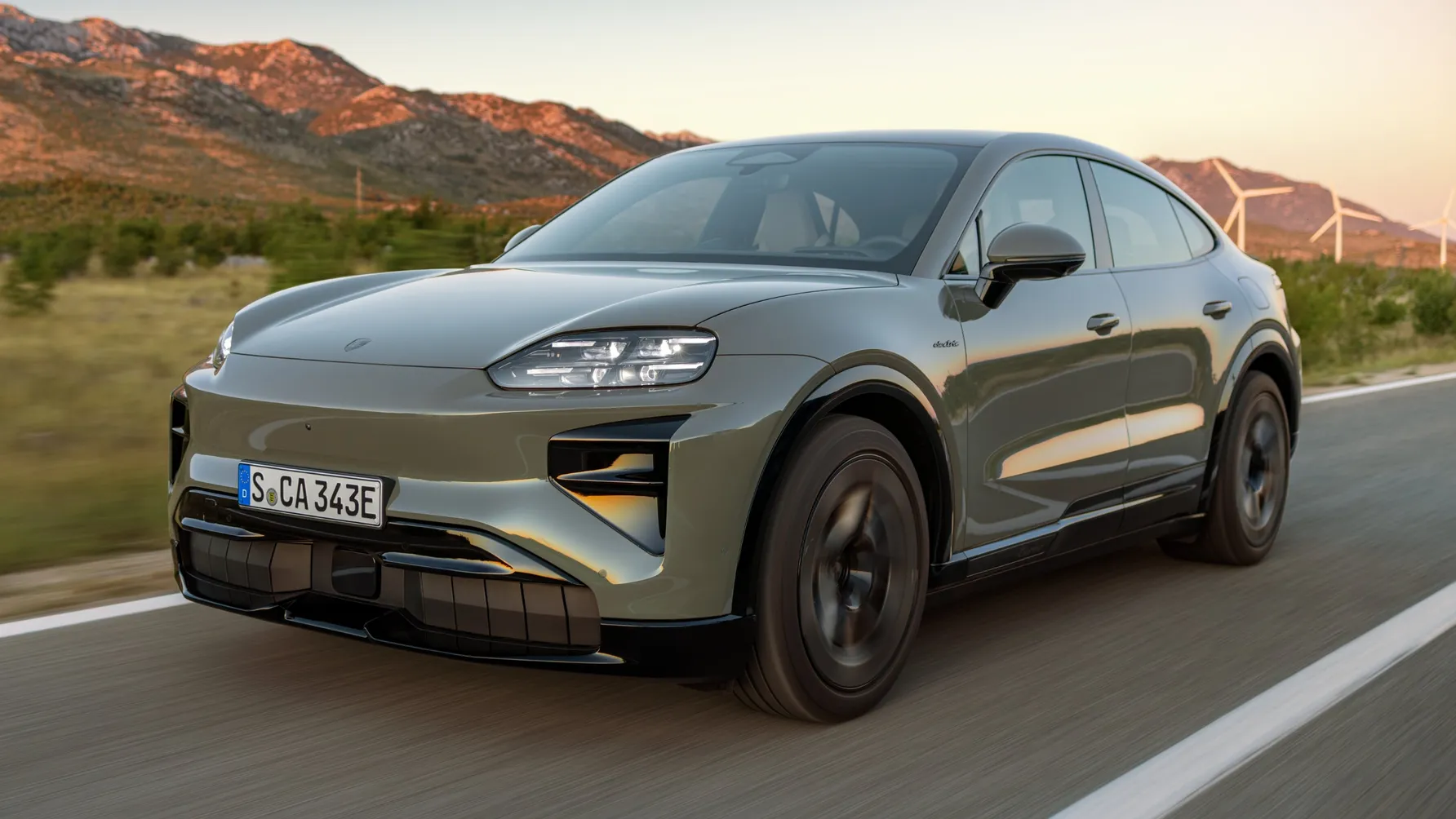
When it launched the Taycan, Porsche expected that by 2030, eight out of 10 cars it sold worldwide would be electric or, at a pinch, plug-in hybrid.
That went well, then...the prediction has now been pretty much inverted. It’s rushing out two new crossovers powered by internal combustion: a Macan and a big seven-seater above the Cayenne.
PHOTO BY TopGear.com
Plus, it’ll launch a mid-engined supercar, previewed by a concept called Mission S. This won’t be a limited-edition car like the 918, nor an EV like the stillborn Mission X concept. It’s a full production supercar, the first Porsche designed under the leadership of Tobias Sühlmann, who has been design chief since February.
OTHER STORIES YOU MIGHT HAVE MISSED:
XX
XX
Porsche’s CEO Michael Leiters says that by 2030, two-thirds of the cars Porsche sells will still have an engine.
PHOTO BY TopGear.com
By last year, it was painfully clear its buyers weren’t that interested in the German carmaker’s EVs. In America, they wanted gasoline. In China, demand for most Porsches—which had been a third of the company’s total output—collapsed as people switched to new expensive local brands. Porsche found itself without the gas-powered Macans many buyers wanted.
Because that car died in summer 2026, building a replacement is now a top priority to sell alongside the electric Macan. It’ll be done in a hurry, but research and development chief Michael Steiner tells Top Gear that, in any case, all projects will be done faster because that cuts cost, and digital tools now let Porsche avoid the need to make hundreds of prototypes.
This ICE Macan will share its platform with the current Audi Q5, just as the original Macan did with the original Q5. Don’t expect it to look or feel like an Audi clone, though. Porsche has a fine record of making its cars very different from related Audis. Steiner tells us it will have V6 and four-cylinder engines, with a PHEV option. Launch is in 2028.
PHOTO BY TopGear.com
In a similar vein to the electric and ICE Macans, Porsche has now decided on an indefinite life for the ICE Cayenne to complement the very different EV version. That’ll help keep the company above water in the United States.
Porsche’s shift upmarket is reflected in its plan to launch a large top-of-the-range SUV by 2030. It’s an addition, not a replacement for anything, above the Cayenne. This, too, will be powered by gasoline and PHEV drive. Expect the kitchen sink of luxury and tech. Its main target is rich buyers in the US. But it will be built in Germany, like all Porsches, says Leiters.
But EVs will remain: While the Taycan is selling at about half the rate it did when launched, it’ll stay on sale, as will the electric Macan and Cayenne.
PHOTO BY TopGear.com
Conspicuously, the electric Boxster and Cayman, with no gas equivalents, are finally going on sale next year, after a long delay caused by a swap in battery cell supplier. The battery pack is behind the seats, where the engine was in the old car, so the weight distribution isn’t much altered, and you sit lower than with an underfloor battery.
It will get the same E-Gear faked sound and gearshift system that works really well in the Taycan, so Top Gear is open to the possibility this could be a properly lovable electric sports car. Leiters talks the talk: “I was very, very skeptical. And then I drove it. It’s a fantastic car.”
PHOTO BY Porsche
Leiters is confident he can pull new levers with the Porsche brand to pull in more profit. Decades of rock-solid engineering and racing presence mean it can swerve upmarket with the new supercar and big SUV. Yet it’s not just exclusive but inclusive—everyone’s welcome at Porsche gatherings.
This wide brand stretch means it plans on launching more limited-run editions, especially of the 911. That includes more high-end GT and Manthey Racing versions, as well as ‘heritage’ special editions. These sell for much higher prices than the regular 911 Carrera. The old 911 GT2 RS Clubsport 25, for example, was a 30-off edition at more than £500,000 (around P41.8 million) per car.
Then further up, customers can specify super-high levels of modification and custom builds. An example was the Flachbau car shown at Monterey Car Week. These one-offs peak above £10 million (around P836 million). The company’s Sonderwünsch (special wishes) department is also fully restoring and retrimming Carrera GTs at up to £750,000 (around P62.7 million) per car. That’s good business: Eleven have been completed, and 37 more Carrera GT owners have signed up for the treatment.
PHOTO BY Porsche
Raising revenue through high-end projects will help Porsche to restore financial health. But costs must come down, too. Having been consistently one of the most profitable companies in the business for decades, last year it made almost no money.
It’s not just the misreading of the EV/ICE split that undid Porsche. The Euro is painfully high. And because the Taycan and electric Macan weren’t selling as strongly as it had predicted, it was having to pay compensation to suppliers for under-ordering.
PHOTO BY Porsche
Leiters plans to lower its breakeven point from around 300,000 vehicles a year to 200,000. The company had grown fat with its big sales in the 2010s. So the plan includes cutting the number of management jobs by a huge 40% over the next few years, and in the same period cutting production jobs by 30%. That’s 9,000 people in all.
Those are viciously hard targets. But Leiters keeps emphasizing that this is still Porsche and always will be. His plan is called Sportwagenschmeide, German for ‘sports car workshop.’ He often refers back to Ferry Porsche’s dream of a sports car, and how he set up a workshop to build one. Porsche’s company went on to build its reputation on sportiness, high quality, racing success, and yet cars with practicality and longevity as well.
“I want Porsche to be futureproof,” Leiters says. But some things will not change. He adds emphatically: “I can assure you the 911 will never be electric.”
PHOTO BY Charles Banaag
NOTE: This article first appeared on TopGear.com. Minor edits have been made.