
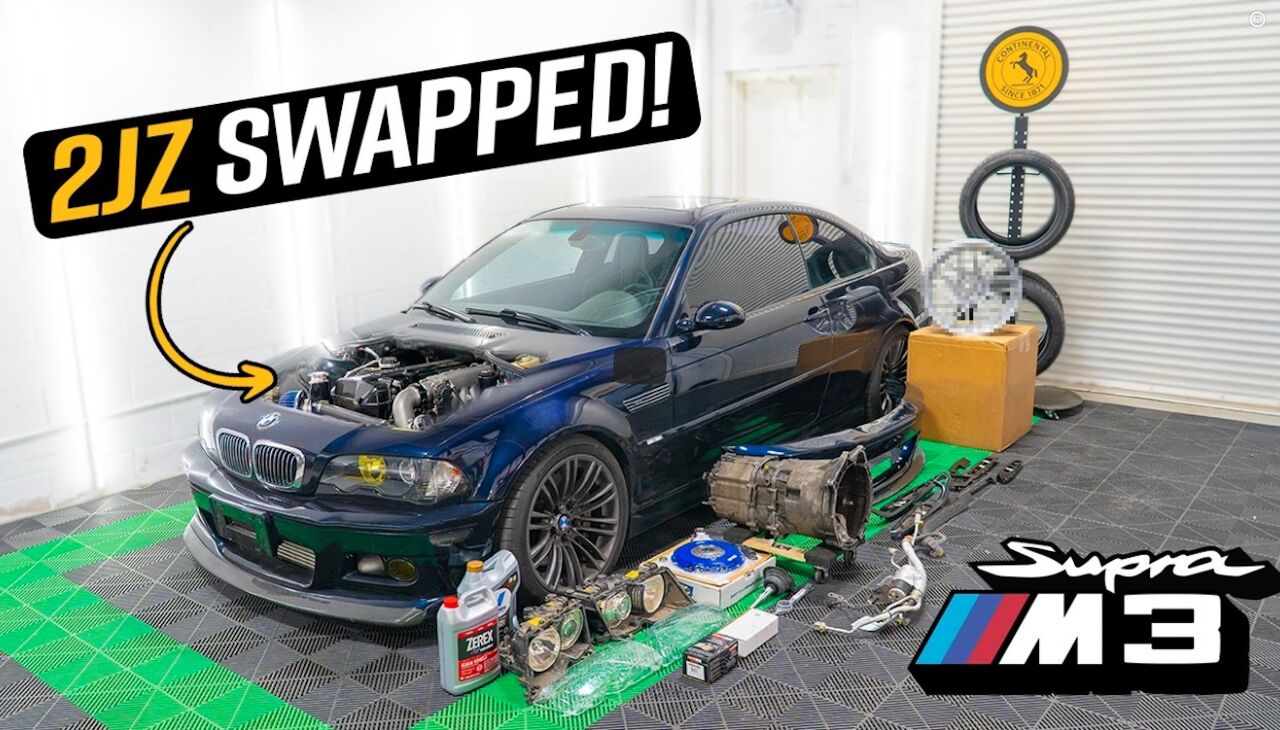
Speed Academy transitions the motorsports-focused 2JZ-swapped BMW M3 into a more street-friendly machine.
The process involves replacing a racing shifter with a factory unit, rebuilding damaged rear brake lines, troubleshooting rotor floating setups, and installing new wheels and tires to improve road manners.
Speed Academy is a website and YouTube channel based on making things go fast and enjoying cars. Peter Tarach and Dave Pratte are the forces behind Speed Academy.
The TTAC Creators Series tells stories and amplifies creators from all corners of the car world, including culture, dealerships, collections, modified builds and more.
An AI-produced summary of the transcript, edited by a staffer, is below.
[Image: Speed Academy/YouTube Thumbnail]
Become a TTAC insider. Get the latest news, features, TTAC takes, and everything else that gets to the truth about cars first by subscribing to our newsletter.
Summary
The video follows the ongoing effort to make a heavily modified BMW E46 M3 powered by Toyota’s legendary 2JZGTE engine more suitable for everyday street driving. Built more than five years earlier with a motorsports-focused setup, the car is now being refined to improve comfort, usability and street manners without sacrificing its performance potential.
This episode focuses on three main projects: replacing the racing-style shifter with a more factory-like setup, repairing corroded rear brake lines, and investigating how to eliminate clicking noises from the front floating brake rotors. The work encounters several complications, but the brake-line repair is completed successfully.
1. Reworking the Shifter and Transmission
The first task is replacing the existing motorsports shifter with a more conventional BMW-style factory shifter.
The engine swap created an unusual packaging challenge. Because of the adapter plate and the position of the 2JZ engine, the transmission sits farther back than it would in a standard BMW configuration. This required a shortened shift rod, making the installation of the factory-style shifter more complicated.
The team removes the existing shifter and cuts down the shifter arm to determine whether the new arrangement will fit. An initial test is inconclusive because the shifter assembly cannot be held securely in position. The decision is made to remove the transmission and proceed with the necessary modifications.
Removing the gearbox proves more difficult than expected. The engine's oil pan interferes with the subframe, preventing access to the upper transmission bolts. The solution is to lower the subframe slightly to create enough clearance.
Transmission and clutch modifications
While the transmission is out, the team replaces the aggressive motorsports clutch with a 2 Plus clutch designed to be more street-friendly. Its more organic friction material should provide smoother engagement while retaining the capacity to handle the engine's power.
The transmission also receives modifications to accommodate detents, which help center the shifter and provide a more conventional shifting feel. The original SMG gearbox housing must be machined and threaded to accept the detent components. The presenter explains that this is a practical alternative to sourcing increasingly rare complete manual-transmission bell housings.
After reinstalling the gearbox, the team fits a missing shifter-support bracket into the transmission tunnel. Rather than welding it into place, they choose rivets and panel-bond adhesive to avoid damaging the carpet or creating a fire hazard.
The shortened shifter is eventually installed, and the initial results are encouraging. The gears engage, the centering detents work, and reverse is available, although the shifter sits slightly farther back than it would in a factory M3.
However, a new problem emerges: the clamp on the shifter rod contacts the driveshaft's flexible coupling, commonly called the guibo. An attempt to modify the rod by welding it goes badly, with excessive heat damaging the component. The presenter acknowledges the mistake, leaving this part of the shifter installation requiring further attention.
2. Repairing the Corroded Brake Lines
The next major job involves a leaking rear brake line. Corrosion has damaged the line above the fuel tank, meaning the tank must be lowered or removed to access the affected area.
Fortunately, removing the tank proves less difficult than anticipated. The team identifies the corroded section and decides to replace the damaged portion rather than unnecessarily replace the entire line.
Fabricating replacement lines
The repair involves several steps:
- Cutting out the corroded section of the original brake line.
- Creating the appropriate flares for the fittings.
- Measuring and bending replacement tubing to follow the original routing.
- Installing unions and connecting the replacement lines.
- Checking the finished lines for leaks.
The presenter uses copper-nickel tubing because it bends easily and offers good corrosion resistance. This flexibility makes it easier to shape the new lines around the suspension components and fit them into the available space.
The process requires some trial and error. One replacement line is initially made too long and must be shortened and reflared. The presenter also emphasizes the importance of installing fittings before completing the bends, since making flares on the vehicle is more difficult.
Ultimately, the team finishes reconstructing the damaged brake lines. They refill the system, bleed the brakes and confirm that the repaired lines are not leaking. The fuel tank can then be reinstalled.
This is the episode's clearest success: the leaking brake lines are repaired, and the presenter concludes that the job was manageable despite the initial concerns about rust and access.
3. Converting the Front Floating Brake Rotors
While the rear brake-line work is underway, another team member investigates a separate refinement intended to make the M3 more pleasant on the street.
The car uses two-piece floating StopTech brake rotors. These are motorsports-oriented components designed to allow movement between the rotor ring and its center section. That movement can produce clicking noises, which are normal for this type of hardware but undesirable for a street-driven vehicle.
The goal is to convert the rotors to a non-floating configuration to eliminate the noise.
Research reveals that the conversion is more complicated than expected. Some versions of these rotors use conical washers that can be reversed to change the assembly from floating to non-floating. However, this car has an earlier rotor design with flat Inconel washers and taller mounting bobbins that create the floating action.
One possible solution would be to machine all 20 mounting points across the two rotors precisely. Instead, the team consults with a specialist from Mountain Pass Performance, who suggests trying different conical washers and reversing their orientation.
The necessary hardware has not yet been sourced, so the rotor conversion is postponed until a future episode.
4. The Bigger Picture: Making a Race-Inspired Car More Livable
Although the video contains plenty of mechanical work, its larger purpose is to address the compromises that come with building a car around performance alone.
The original E46 M3 project prioritized motorsports capability. Now, the team wants to retain the appeal of the Toyota 2JZ-GTE engine and the BMW chassis while improving everyday usability.
That means more than increasing power or improving lap times. It also means making the car easier to drive in traffic, improving clutch engagement, giving the shifter a more familiar feel, eliminating unnecessary noises and ensuring the braking system is reliable.
The episode illustrates how complicated those refinements can become in a custom engine-swap project. A seemingly straightforward shifter replacement requires transmission removal, machining, fabrication and additional troubleshooting. Meanwhile, aging brake lines and specialized motorsports components introduce their own challenges.
Bottom Line
This is a progress episode rather than a performance showcase. The team makes meaningful headway toward turning the 2JZ-powered E46 M3 into a more civilized street car, but not every project goes smoothly.
- Transmission and shifter: The factory-style shifting arrangement is largely installed, but interference with the guibo and a damaged component leave further work to be done.
- Clutch: The more street-friendly 2 Plus clutch is installed.
- Brake lines: The corroded rear lines are repaired, the brakes are bled, and the system is checked for leaks.
- Front rotors: The team identifies a potential solution for eliminating floating-rotor noise, but the conversion remains unfinished.
The central takeaway is that building a high-performance car and making a high-performance car enjoyable to live with are two different challenges. The team is working through the unglamorous details that can make the difference between a demanding project car and a genuinely usable street machine.