
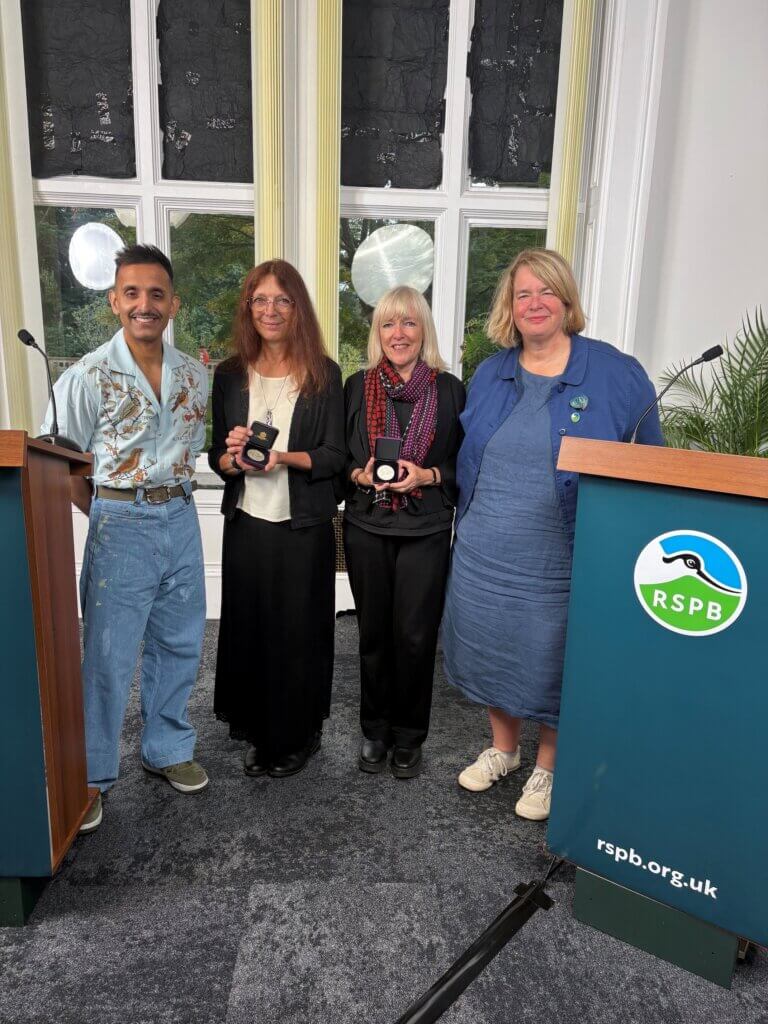
Group instrumental in establishing a phased ban on the sale and use of lead ammunition in England, Scotland and Wales is set to be honoured by the charity.
The Lead Ammunition Collective will be honoured with the RSPB’s most prestigious award at the charity’s Annual General Meeting (AGM) taking place online today (3rd October), recognising their contribution to wildlife conservation, environmental protection and public health.
The Lead Ammunition Collective has been chosen to receive the 2026 RSPB Medal award in recognition of decades of scientific excellence, persistence and the collaboration of scientists, conservationists, advocates, campaigners, practitioners and many others. Their combined determination and efforts culminated in 2026 legislation which established a phased ban on the sale and use of most lead ammunition in England, Scotland and Wales. The ban will come into force on 1 April 2029, with some restrictions starting from 1 April 2028.
At the heart of the Lead Ammunition Collective’s work has always been outstanding scientific leadership. Today, the RSPB is paying special tribute to Professor Debbie Pain, Dr Ruth Cromie, Professor Rhys Green, Dr Julia Newth and Dr Mark Taggart, whose research transformed our understanding of the impacts of lead ammunition on birds, ecosystems and public health. Through decades of rigorous and independent scientific investigation, they built an evidence base so robust and compelling that it informed regulatory processes, policy discussions and wider advocacy efforts across the conservation sector.
The Lead Ammunition Collective will be represented at the RSPB AGM by Professor Debbie Pain and Dr Ruth Cromie. Reflecting on receiving the award, Dr Ruth Cromie said: “The dangers of lead ammunition to wildlife have been known for more than a century, yet despite the large and ever-increasing evidence base, meaningful policy change proved painfully slow. It is a great honour to accept the RSPB Medal on behalf of The Lead Ammunition Collective, and to recognise decades of scientific endeavour and the determination of so many people from different sectors who could see the benefits this change would bring and who refused to give up.“.
Lead is a toxic metal that was historically used in plumbing, paint and petrol due to its various properties, including malleability and resistance to corrosion, but has been largely phased out predominantly in recognition of its impact on human health. It is still used to this day in the shooting industry, with substantial but avoidable impacts on wildlife and the countryside.
Thousands of tonnes of lead ammunition are discharged into the countryside each year, polluting habitats and with devastating consequences for birds. Lead poisoning causes suffering, debilitation, reduced immune capability and reproductive success and kills up to an estimated 100,000 waterbirds every year when they accidentally ingest lead shotgun pellets, which resemble seeds and grit. Birds of prey, such as White-tailed Eagles and Red Kites, also suffer from lead poisoning, as they are vulnerable to poisoning from consuming carrion that has been shot or poisoned by lead.
Professor Debbie Pain added: “It is extremely satisfying to know that soon birds, other animals and people should be largely free from the health risks caused by ingesting lead from ammunition. I’d like to thank everyone in the UK and overseas that walked this path to change alongside us.”.
The contribution and dedication of volunteers, citizen scientists and supporters helped strengthen the evidence base and maintain focus on this issue over many years. Their work was further strengthened by the dedication of teams across the RSPB, WWT, the wetland charity, Wildlife and Countryside Link, CHEM Trust, Wild Justice, Forest Enterprise England, Conservation Without Borders, the British Trust for Ornithology and many other partners.
On the Lead Ammunition Collective’s impact and success, RSPB Chief Executive Beccy Speight commented: “The lead ammunition legislation will deliver lasting benefits for wildlife, domestic animals, the environment and human health. Just as importantly, it demonstrates how conservation succeeds. Complex environmental challenges are rarely solved quickly. They require patience, resilience, an understanding of human dimensions and the willingness to work together across sectors and perspectives. The Lead Ammunition Collective exemplifies those qualities. Their achievement stands as a powerful reminder that evidence-led advocacy, combined with collaboration and determination, can deliver transformational change.”.
Previous RSPB Medal winners include HRH The Prince of Wales (2010), Sir David Attenborough (2000), Bill Oddie (1997), and Caroline Lucas MP (2018). In 2012 there was an unusual winner; the entire community of Tristan da Cunha was awarded the Medal for its efforts when the ship, MS Oliva, ran aground at Nightingale Island, 30km from Tristan da Cunha, spilling 1,500 tonnes of oil into the sea and threatening globally endangered species, including two-thirds of the world’s population of rockhopper penguins.
ENDS