
Moscow says local light industry goods now hold 45% of the market, with the government aiming to raise that to 60%
Domestic light-industry products now make up 45% of the Russian market, Russian Industry and Trade Minister Anton Alikhanov said on September 29 at the BRICS+ Fashion Summit in Moscow.
According to the minister, that figure is close to the current target of 50% set out in Russia’s Light Industry Development Strategy through 2035. He added that in the updated version of the strategy, which is expected to be approved by the end of 2026, the target share is likely to be raised to at least 60%.
The minister said the clothing manufacturing segment is now entering a phase of market saturation. Production growth, which began after the departure of global brands from Russia, turned into a 3% decline in 2025.
“We are reaching a plateau,” Alikhanov said.
He noted that the market niches vacated by international brands had been filled partly by Russian producers and partly by imports from what Moscow describes as “friendly countries.”
Even so, foreign-made goods still dominate the Russian market overall. In the minister’s view, one reason is that around half of Russian brands are concentrated in narrow niches, including makers of high-tech clothing, as well as ethnic and regional labels.
Speaking about broader technological trends, the minister said the Russian market is largely keeping pace with global developments, particularly in the changing balance between natural and synthetic materials.
“As far as technological trends are concerned, our market is broadly moving in step with the international one: there is a transformation and a reduction in the consumption of natural fabrics and fibers,” he said. “Thirty years ago, half the market was cotton and 39% synthetics. Now cotton accounts for 25–26%, while synthetics have risen to 60%.”
Russia, he added, still remains heavily dependent on supplies of synthetic materials, including polyamides and polyesters. At the same time, he said Russian producers have opportunities to expand output of viscose and lyocell, an artificial cellulose fiber made from wood.
To support those sectors, the government is relying on a new national project called “New Materials and Chemistry.” Enterprises in the field can also apply for support from the Industrial Development Fund and the cluster investment platform, according to the minister.
“After the start of sanctions pressure, we also introduced support measures for equipment leasing. Next year, we hope to double financing in order to meet the demand of all manufacturers,” he said.
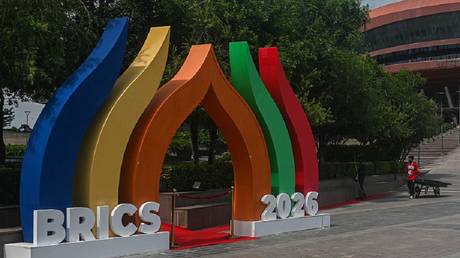
The comments came during the BRICS+ Fashion Summit, which is being held as part of Moscow Fashion Week and has focused on industrial development, local production, technology, and the future of the fashion market in BRICS and other emerging economies.