
See more Toronto Sun on Google — save as a Preferred Source
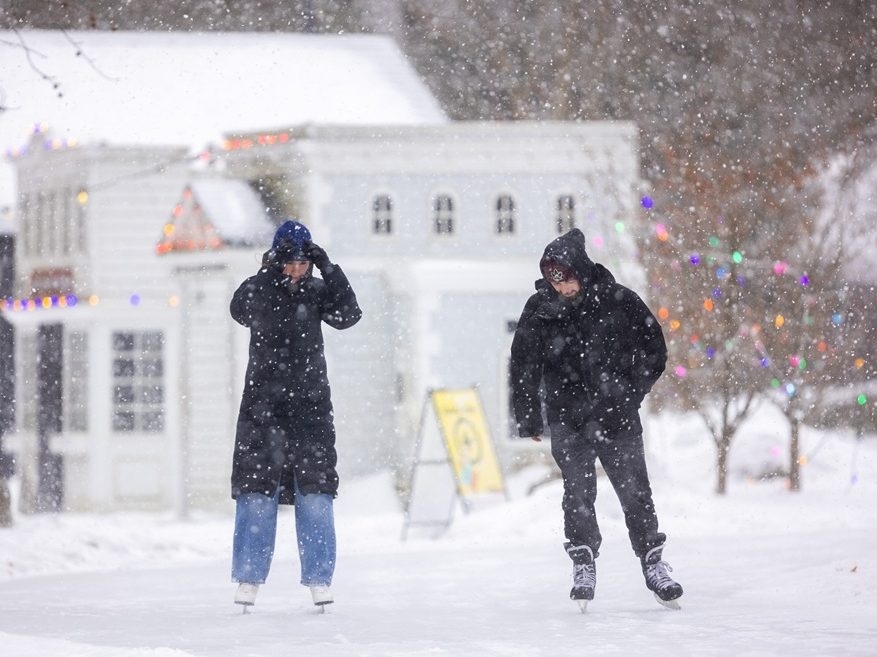
Southern Ontario may be basking in a sunny stretch of mild fall weather, but weather experts already have their eyes on the winter, estimating when parts of Ontario could see their first snowfall.
One recent weather model forecast that northern Ontario could see its first dusting of the white stuff as early as Oct. 8, while southern Ontario could be several weeks away from its first snowfall.
That forecast is slightly earlier than normal based on data provided by The Weather Network , which listed the average date of the first snowfall in Thunder Bay as Oct. 13, while Toronto’s first snowfall is on Nov. 3 on average.
As for when temperatures will feel winterlike, The Weather Network said many Canadians likely will see a delay in frosts and hard freezes this year thanks to the “super El Nino” — though it noted that this might not be the case across the board as some communities have already seen frost advisories this season.
RECOMMENDED VIDEO
El Nino’s affect on winter weather
Earlier this month, the World Meteorological Organization (WMO) said the world was experiencing a powerful El Nino — a climate phenomenon that brings warmer water surface temperatures in the central-eastern equatorial Pacific Ocean — that is likely to last until at least February.
“A very strong El Nino can significantly shift rainfall and temperature patterns worldwide and fuel extreme weather, the WMO said.
El Nino also shifts the polar jet stream northward, trapping cold arctic air up north and leading to above-normal winter temperatures across much of Canada.
A strong El Nino typically brings less snow and milder winters in regions across Canada, according to Climate Data Canada .
As for Toronto’s winter forecast, one Environment and Climate Change Canada scientist said the city could see less snow with more precipitation coming down as rain, which is characteristic of this climate phenomenon.
“Normally, we do have a shorter snowing season. The season starts later; it finishes earlier,” Environment Canada’s Marko Markovic told Now Toronto .
- Farmers' Almanac warns of cold, snowy Canadian winter with wild temperature swings
- 2027 could be warmest globally thanks to El Niño