
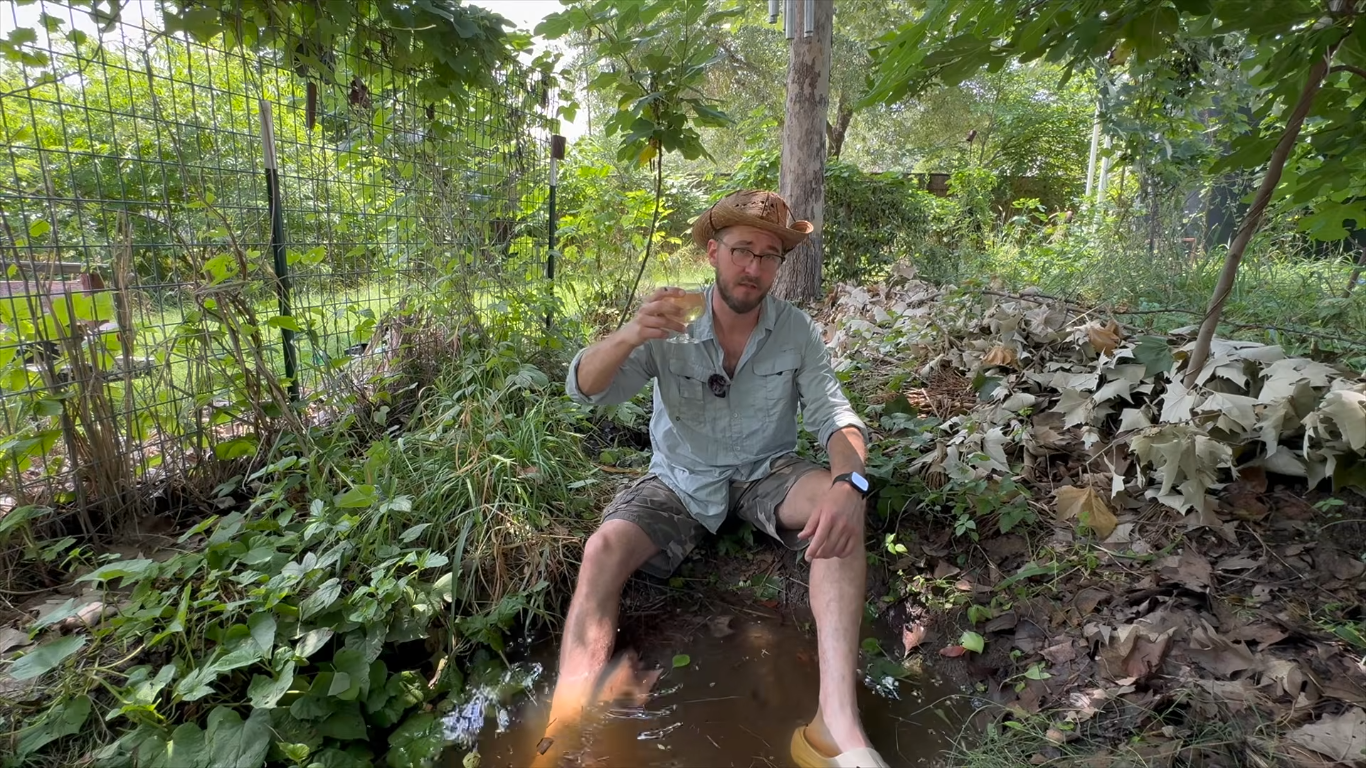
Around two years ago, [SuburbanBiology] built an unconventional system to keep his garden properly watered. Instead of relying solely on a metered municipal water supply or even collecting and storing rainwater, it captured runoff from the street outside his house and diverted it into a canal system where it soaks into his yard. Predictably, commenters made all kinds of doomsday claims about contaminants making it from the road into his food, so he decided to pony up a tremendous amount of money for lab testing to see if any of those claims held water.
The materials he’s testing for in his soil and from the runoff water directly run the gamut from everything we could expect to find polluting a standard suburban American plot of land, from passenger vehicle byproducts like various petroleum products, heavy metals, glycols, and tire and brake dusts. He’s also testing for herbicides, pesticides, and fertilizers commonly used on lawns which many people also claimed would run into his yard and poison his soil in various ways. And of course he’s testing for microplastics and various PFAS chemicals as well.
The results of the testing might be rather surprising for the keyboard warriors, in that almost all of the tested contaminants were well below thresholds for safety not only for humans but for wildlife and plants as well. A large contribution to this is that every time it rains his soil is washed with tens of thousands of gallons of water, with only the first bit of that carrying the bulk of contaminants, whereas a more traditional method of maintaining a yard or garden will tend to keep the contaminants in the soil. Of course this doesn’t mean his system is perfect, but it makes the most of the reality of living in a suburban environment.
[SuburbanBiology] makes some other interesting points in his video, the first of which is that industrial agriculture tends to use farming practices that introduce far more pollutants in various ways than he would ever gather in his soil from runoff from the road, and also that at least as far as microplastics are concerned, clothes made from petroleum like polyester are probably more polluting to an average human than anything in his garden too. If the science is convincing enough, perhaps more people will consider a rainwater diversion system like his.