
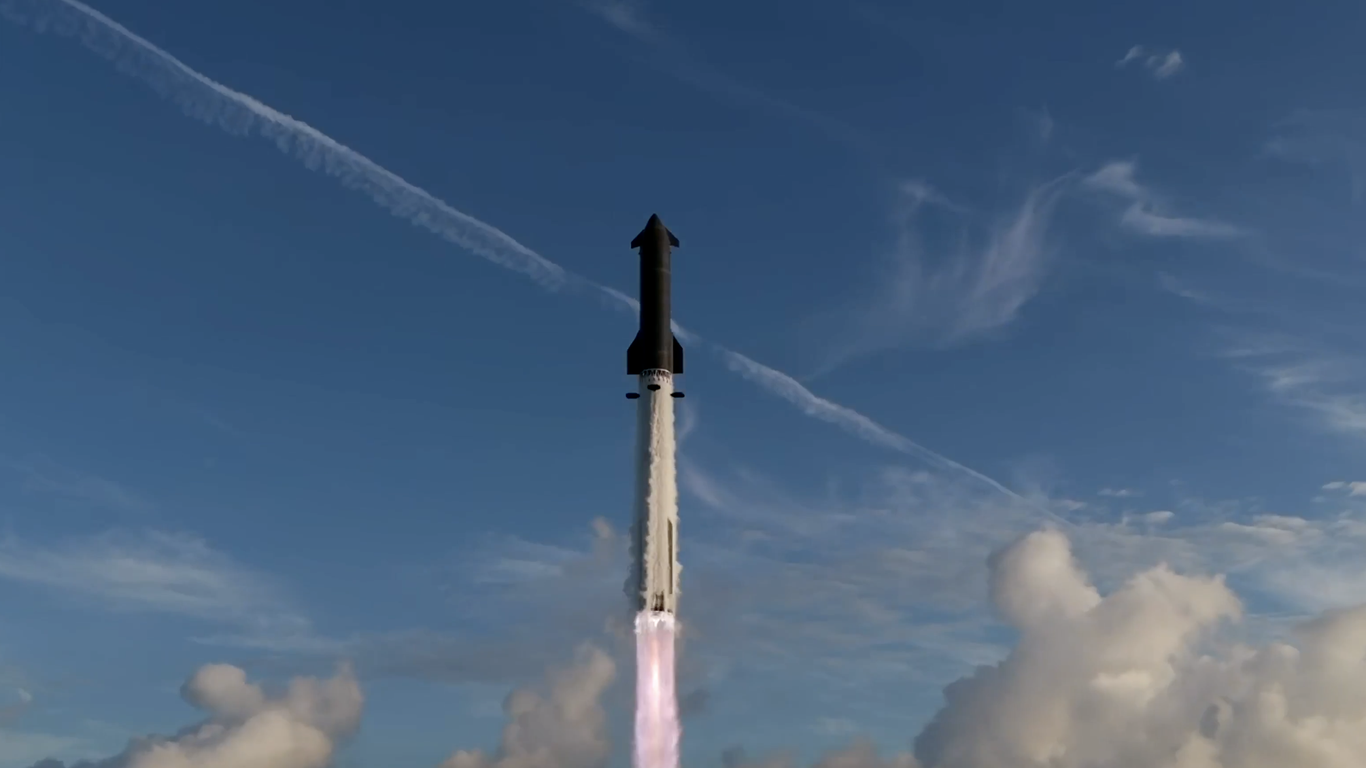
SpaceX's next-generation Starship rocket successfully reached Earth orbit for the first time Monday morning.
Why it matters: The massive, fully-reusable Starship is key to SpaceX's commercial spaceflight ambitions, while NASA is counting on a modified version for use as a lunar lander in its Artemis program.
Driving the news: Starship launched from South Texas just before 9 a.m. ET on a planned test flight of about 10 hours.
- It's set to orbit Earth about six times before splashing down in the Pacific Ocean, west of Chile.
- As part of the mission, Starship deployed 26 of the company's new, better-performing Starlink V3 internet satellites.
Zoom in: Starship's first-stage Super Heavy booster splashed down in the Gulf of America shortly after launch.
- SpaceX says this Super Heavy was modified after ice clogging issues interfered with a splashdown attempt on the last test flight.
What they're saying: "Flight tests until this point have intentionally flown passively safe suborbital trajectories to maximize public safety while allowing for maximum learning," SpaceX says in a mission summary.
- "By going to orbit, the next phase of developing Starship to be fully and rapidly reusable can begin."
What's next: SpaceX plans to eventually "catch" Starship in the arms of its launch tower — a feat it's accomplished with Super Heavy, but not Starship — but isn't making the attempt this time.
Editor's note: This story has been updated with the latest developments.