
It has become the most loaded question in modern writing: “Did you use A.I.?” It’s also the wrong question. A writer who asked a chatbot to rework a sentence, one who asked for a careful fact check with sources, and one who threw out a few ideas and said to “write me an Op-ed!” represent totally different uses of this new brand of assistance. I would argue that most writers should be using AI in some form. What readers need is a better question, and a scale to help answer it.
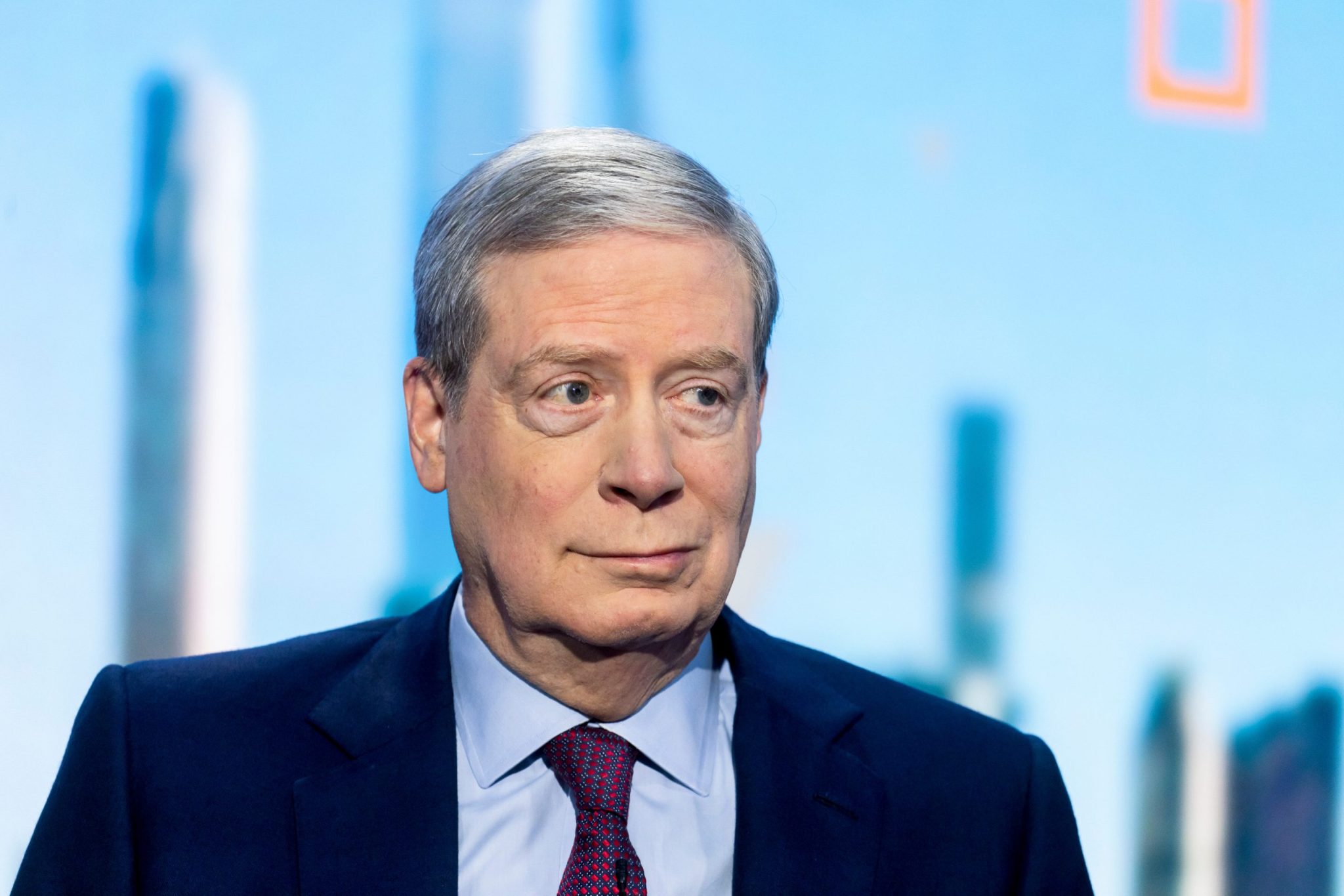
Last month, billionaire investor Stanley Druckenmiller admitted to using AI to write a Wall Street Journal op-ed attacking Treasury Secretary Scott Bessent’s bond-market interventions. Readers quickly spotted the telltale prose (“This wasn’t liquidity management, it was price management”), and the AI detector Pangram scored the piece 100% AI.
When NOTUS asked him about it, Druckenmiller was unashamed. “Of course I used AI,” he said. “I’m not embarrassed by it … I write everything using AI now for the same reason I use a calculator when I do math problems.”
The Journal was similarly unapologetic. “AI is a fact of modern life,” editorial page editor Paul Gigot said in a statement. The next day, in a column, Gigot went further: “Mr. Druckenmiller’s sin against the media pharisees was admitting its use.”
Setting aside Druckenmiller’s flawed analogy (math has one right answer; writing doesn’t), the saga exposed the real problem with writing in the A.I. age: we keep asking writers a yes-or-no question (did you use A.I.?) when the answer is increasingly somewhere in between. Druckenmiller said he rejected many of the chatbot’s suggestions and that A.I. didn’t write “the whole thing.” Pangram, meanwhile, scored it 100 percent A.I. In writing and reporting, nuance matters. Readers want to know whose idea it was, and whose words they’re reading: a person’s or a chatbot’s.
I’ve covered A.I. for years. At NewsGuard, a company that rates the reliability of news sites, I tracked A.I.-generated misinformation, and for The Wall Street Journal I built my own A.I. propaganda site for $105 to show how easy it was. Today I run Newsreel, a media startup where we vet independent journalists before they can publish. Even with that vetting, readers still want to know how much A.I. went into what they’re reading.
So, here’s my proposal: a simple, self-reported label, printed with the byline or at the end of the piece. Something like this:
The ‘Who Wrote This?’ Scale- H5 Human: No A.I. was used at all. (Spellcheck doesn’t count.)
- H4 Assisted: A.I. helped with everything but the writing: research, fact-check prompts, headline ideas, grammar fixes. It never rewrote a sentence, and the prose is entirely the author’s.
- H3 Polished: The author wrote the full draft, then A.I. rewrote parts of it (tightening sentences, condensing paragraphs, reordering sections).
- H2 Co-written: The author and A.I. went back and forth. Some paragraphs started with the model, some with the author, but the argument is the author’s and the author did a real edit.
- H1 Ghostwritten: A.I. wrote the first full draft from the author’s own notes, interviews or reporting. The ideas are the author’s; most of the sentences aren’t.
- H0 A.I. Slop: A.I. wrote it from a prompt alone, with light edits at most. The ideas, structure and voice are the model’s.
To be clear, I’m not the first to suggest this. The open-source AI Usage Scale proposes six very similar levels, and at least one publisher, The Datatech Times, now prints an A.I. level next to every byline.
Still, adoption of such scales is rare. It shouldn’t be. Writers are already running scared of an A.I. witch hunt: some are scrubbing em dashes from their prose, and in April, The Journal‘s own James Taranto compared Pangram to a “defamation machine” fueling false accusations.
A self-reported scale like “Who Wrote This?” could protect writers who use A.I. for research, editing or brainstorming. Once you’ve disclosed how you wrote something, there’s nothing left to expose.
Readers care less about a writer using A.I. than about being misled. For example, voters are not upset by a president using a speechwriter because everyone knows that, great orators like Abraham Lincoln notwithstanding, this has long been a common practice in politics. The rich and famous have routinely hired ghostwriters, speechwriters and P.R. staffers to craft language that goes out under their name. .
Of course, since the “Who Wrote This?” scale relies on self-reporting, some writers will be tempted to shade the truth. But a label gives readers an answer without having to run a piece through Pangram, and knowing detectors exist should keep most writers honest. After all, claiming a story you wrote is H4 and getting caught at H0 is a lot more embarrassing than just saying it was H1.
In 1845, a journalist accused Alexandre Dumas, author of “The Three Musketeers” and “The Count of Monte Cristo,” of running a “novel factory” staffed by hidden collaborators. Dumas sued and won. But the question at the heart of that fight never went away: Who wrote this? If we can’t stop people from asking it, at least we can start answering it honestly. Oh, and this article, I hereby reveal, is H3 Polished: The author wrote the full draft, then A.I. rewrote parts of it (tightening sentences, condensing paragraphs, reordering sections).
The opinions expressed in Fortune.com commentary pieces are solely the views of their authors and do not necessarily reflect the opinions and beliefs of Fortune.
This story was originally featured on Fortune.com