
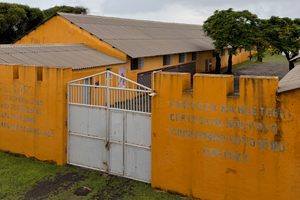
The camp opened in 1936, when the first group of about 150 prisoners arrived from Lisbon: communists, anarchists, trade unionists and sailors who had mutinied against Salazar's dictatorship. The location was chosen deliberately. It was isolated, hot, short on clean water and plagued by malaria.
Prisoners called it the "Campo da Morte Lenta," the Camp of Slow Death. More than 30 Portuguese inmates died here, among them Bento Gonçalves, secretary-general of the Portuguese Communist Party.
The most feared place was the "frigideira" (frying pan), a windowless concrete punishment cell where temperatures soared under the tropical sun and men were held for days or weeks on bread and water.
International pressure closed the camp in 1954, but it reopened in 1961 under the name Chão Bom Labour Camp, this time to hold anti-colonial militants from Angola, Guinea-Bissau and Cape Verde. It was finally shut on May 1, 1974, days after the Carnation Revolution, when the last prisoners walked out to a crowd waiting at the gate.
Today the complex is the Museum of Resistance. Visitors can walk through the barracks, the cell blocks, the infirmary and the kitchen, with panels listing the names of those held and those who died.