
Can an SUV that weighs well over two tons, shares its body with an electric car and has handed most of its buttons to a touchscreen still drive like a BMW? It can, and in a couple of places it does the job better than the car it replaces.
Think of the 2027 BMW X5 40 xDrive as a heavyweight that has kept its footwork. It takes a punch from a broken road better than the outgoing X5 did, its mild-hybrid B58 hits harder from low revs, and when the road starts weaving, the steering still lets you place the nose where you want it. It doesn’t dance like an M car, and when pushed, it rolls with the punches quite literally, but if you feared the Neue Klasse makeover had turned the X5 into a rolling smartphone, you can stop worrying.
I spent a day with a Vancouver Green Metallic X5 40 xDrive on Southern California interstates, canyon roads and desert two-lanes, with racing driver and BMW Motorsport Ambassador Samantha Tan in my corner. She had just bought an M3 Competition, whose springs bounce her out of her seat over bumps, which made her the right person to judge whether a comfortable X5 can still feel like a BMW.
The ring walk is where the X5 will lose some people. The closed, illuminated kidney grille and double-X daytime running lights are divisive, though you can switch half of the X graphic off, and in profile, with its coupe-like roofline, the X5 looks rather good. Either way, you can’t see the face from the driver’s seat, which is where this review takes place.
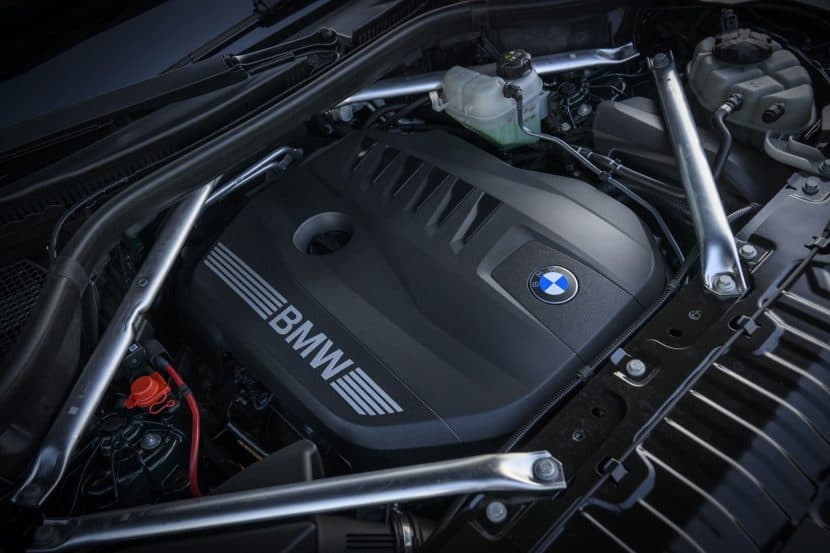
The Mild-Hybrid B58 Now Hits Hard From Low RevsIn US trim, the B58 3.0-liter inline-six makes 394 horsepower and 428 lb-ft of torque, up from 375 hp and 383 lb-ft in the outgoing xDrive40i, with a 48-volt mild-hybrid system contributing up to 17 hp and 148 lb-ft of electric boost. Power goes through ZF’s eight-speed automatic and xDrive all-wheel drive, and BMW quote 0 to 60 mph in 5.1 seconds, or 4.8 with a one-foot rollout. We managed to hit 5.0 seconds to 60 mph.
From the driver’s seat, the low end is the big change. Older B58s, including the one in a previous-generation X5 I drove recently, could feel lazy below about 2,000 rpm, and the new car covers most of that gap. There’s still a brief pause before the hybrid assist arrives, but floor it at 70 mph and the X5 gathers itself and goes, which makes overtaking easy, and stop-start is smoother in traffic. The gearbox is remarkably smooth, with kickdowns from eighth to fifth arriving without a jolt.
The New X5 Takes A Punch Better Than The Old OneX5 customers asked for more comfort, so BMW pulled the drive modes further apart, and the gap between Comfort and Sport is easier to feel than in the old car. Sebastian Sauerbrei, a racing driver and BMW engineer who worked on the chassis tuning, told me much of the effort went into a new front axle, aimed at better feedback and steering response without hurting the ride.
My car had the optional two-axle air suspension, and it’s the best thing in the chassis. It adjusts ride height with speed and drops the body 1.2 inches in Low or Sport. In Comfort, potholes arrive in the cabin as rumors rather than blows, and on a desert road that rose and fell sharply enough to leave your stomach a beat behind, the X5 caught the rebound after every crest and settled at once. The trade-off is in the steering, which in Comfort is light and a little numb, with plenty of play on center, whereas the old X5’s felt twitchier and sportier for it.
Does The New X5 Still Steer Like A BMW?Switch to Sport and the displays turn orange, the suspension firms up and the steering gets noticeably more precise. On a winding canyon road, the X5 felt planted, with plenty of grip from the all-wheel drive and 22-inch Michelin Pilot Sport 5 tires and decent feedback through them, and pushed to the limit, it eased into mild understeer. In Sport, it feels like a proper BMW rather than a family hauler.
It does roll with the punches, though. Active roll stabilization isn’t available on the X5 40 xDrive (in the US, BMW reserve it for the X5 50e xDrive and iX5), and my car went without Integral Active Steering, so the body leans when you turn in hard. If your passengers get carsick, that’s worth knowing.
Samantha found the X5 comfortable even in Sport and said that in an SUV this size, she’d choose comfort anyway. Her complaint was the steering: in Sport, she noticed a slight delay and more travel than in an M car (not a fair comparison, she knows), though she still called it “quite nice and stiff.” On the tightest stretch, she put it more generously: “Yes, it’s heavy, yes, you feel it, but it’s turning. I honestly don’t feel like I’m in an X5.” The new X5 is less than 200 pounds heavier than the outgoing xDrive40i, and the extra power seems to cover it.
Highway Assistant No Longer Stops The Fight When You Touch A PedalOn the interstate, the X5 is quiet and composed. At 80 mph, a sound-meter app on my phone read about 70 decibels, a little quieter than the previous X5 I drove recently, and that was on 22-inch performance tires without the optional double-pane glass. The bigger change is Highway Assistant. In the iX and X7, it behaved like a jittery referee, stopping the fight every time you touched gloves: tap the brake or the accelerator and it switched off. In the new X5, you can touch the pedals or nudge the wheel and it carries on, and its lane-keeping corrections are smoother, too.
It allows hands-free driving at up to 80 mph on approved highways, and I used it at 80, with a driver-monitoring camera that tracked my eyes through polarized sunglasses. Active Lane Change with Eye Activation lets you confirm a suggested lane change with a glance at the side mirror. With navigation running, the X5 starts working toward your exit a few miles out and asks for your hands on the wheel only for the exit itself. Hands-free driving comes with the $2,500 Driving Assistance Professional Package, and in Los Angeles area traffic, it earns its keep.
Panoramic Vision Works, But The Touchscreen Vents Are Not IdealPanoramic Vision, a projection onto a dark strip along the base of the windshield, puts speed, the speed limit, navigation and range in your line of sight and stays readable in harsh desert sun. Having spent a lot of time in the iX3, I barely looked at the head-up display. Because the display hides the hood, small marks in the lower corners of the windshield show you where the front corners are, as BMW designer Oliver Heilmer explained. With the optional passenger screen, the X5 can run four displays at once, so it’s a relief that Silent mode blacks out all but the essentials. Maybe less screens in the car is what should be the goal for the next generation of BMWs.
The climate controls are the problem. To change where the air blows, you drag the vents around on the touchscreen, which at 80 mph is like threading a needle in boxing gloves. Presets help, but a knob did this by feel for decades. The rotary iDrive controller and the drive-mode buttons are gone, too, and Samantha disliked the touch pads on the steering wheel. “I like there being physical buttons,” she said. So do I.
The standard steering wheel, with spokes at 12 and 6 o’clock, is fine at speed, but when parking, I struggled to tell whether the front wheels were straight. I’d take the M Sport wheel, with spokes at 4 and 8 o’clock and a flat bottom that makes it easier to slide out of the seat. The standard seats are soft in feel but supportive, and suit long highway drives, but on the canyon road both of us inflated the adjustable bolsters for more support.
How Practical Is The New X5 For Families?A wheelbase 2.4 inches longer adds almost an inch of rear knee room, and at 6-foot-2, I can sit behind my own driving position. The X5 is now strictly a five-seater, and the split tailgate is gone. BMW say shorter owners couldn’t reach over the lower gate, but it was handy for sliding bags in and out, and I wish they’d kept it. Cargo space shrinks to about 27.7 cubic feet, or 67.7 with the rear seats folded.
How Much Does The 2027 BMW X5 40 xDrive Cost?The 2027 BMW X5 40 xDrive starts at $72,100 before the $1,450 destination charge, or $73,550 delivered, and a fully loaded one lands around $95,000. A rear-wheel-drive X5 40 arrives in the first quarter of 2027 at $69,800, and if you want more punch, an X5 M60 with the S68 V8 is on the way.
Is The 2027 BMW X5 40 xDrive Worth Buying?On my scorecard, the X5 40 xDrive wins on points. It rides better than the old car, pulls harder from low revs, makes the highway easier with a hands-free system that no longer quits when you touch a pedal, and still turns, grips and settles like a BMW. It drops rounds mostly for the touchscreen vents and a cabin that doesn’t feel quite as special as before, mostly because it looks and feel like all the new BMWs out there. If you buy an X5 to drive, buy this one. If you can’t live with screens, a used previous-generation X5 is still out there.
Samantha would buy one, and she’d take it over the X7 for its size. I’d spec mine with the air suspension and the Driving Assistance Professional Package and skip the passenger screen. It’s still an X5, and it still drives like one.
First published by https://www.bmwblog.com