
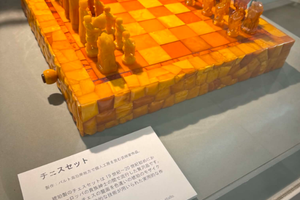
Although Japan is well-known for Akoya cultured pearls and jadeite jade, amber deposits can be found throughout much of the country from the Mikasa region of Hokkaidō to Shime in Fukuoka Prefecture. In the prefecture of Iwate, however, lies Kuji, a coastal city with a long history of amber excavation, and is one of the few sources of amber of significant size and quality for commercial gem and ornamental uses. The Kuji Amber Museum itself proudly claims to be the only museum in Japan dedicated to this fossilized tree resin.
If the weather is permitting, the Museum allows visitors to live out their dreams of being a paleontologist by mining for their own amber fossils in the same landscape that once was roamed by tyrannosauroids and other dinosaurs, which dates back to the late Cretaceous period in the Mesozoic Era. Any amber discovered below one kilogram can be kept as a souvenir. The amber mining experience is available four times a day except during the winter season.
The Museum also offers other workshops from jewelry-making to other fossil excavation simulations separate to the main amber mining experience. The Kohaku Shrine ("the Amber Shrine") and the entrance to an inactive amber drift mine can be explored by visitors across the grounds as well.