
Alfred Nobel intended the peace prize for those who had done the most to advance peace among nations. Instead, it is increasingly handed out to the international activist class: people who say the right things, back the right causes and appeal to the political instincts of a handful of parliamentarians in a rarefied progressive bubble.
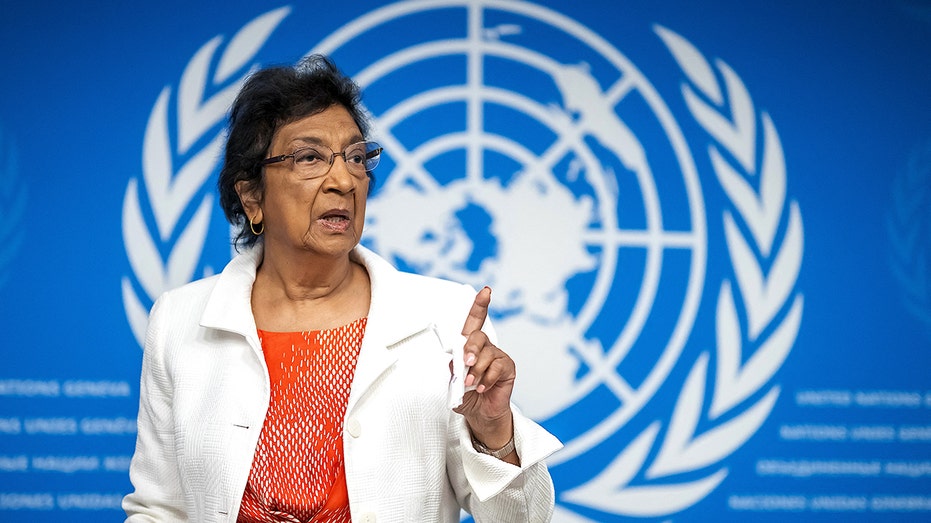
This year’s award to Navi Pillay is a case in point.
Pillay is best known for chairing the U.N. commission of inquiry that accused Israel of genocide in Gaza. Her selection will inevitably be read as an endorsement of a U.N. culture in which hostility to Israel is not a liability but a badge of moral seriousness.
NOBEL PEACE PRIZE AWARDED TO UN JURIST WHO ACCUSED ISRAEL OF COMMITTING GENOCIDE IN GAZA
But there is more to Pillay’s record than the commission’s fixation on Israel.
When Denmark’s embassy in Pakistan was bombed after Danish newspapers republished the Muhammad cartoons, former Foreign Minister Per Stig Møller reportedly said Pillay’s response was not to defend free speech, but to suggest censorship and restrictions on it.
Her reaction to Charlie Hebdo was much the same. Pillay reportedly called the magazine "doubly irresponsible" for publishing Muhammad cartoons. She is said to have described them as "malicious and deliberately provocative" and said she "fully understands why people wish to protest strongly." When Islamists answer speech with threats, violence and murder, Pillay’s first instinct seems to be to scold those who exercised their right to speak.
In 2022, she defended fellow U.N. commissioner Miloon Kothari after he referred to a "Jewish lobby" controlling social media and questioned whether Israel should even be a member of the United Nations. Kothari later apologized. An event in Pillay’s honor at Berlin City Hall was canceled after the mayor withdrew her support.
WEAPONIZING THE CHARGE OF GENOCIDE FUELS AN INCREASINGLY DANGEROUS ANTISEMITISM
There are more reports of uncomfortable episodes. Pillay is said to have declined to attend the 2010 Nobel ceremony for the imprisoned Chinese dissident Liu Xiaobo, citing a scheduling conflict in Geneva as Beijing pressured foreign governments to stay away. At Durban II the previous year, she remained seated while Mahmoud Ahmadinejad delivered an antisemitic tirade against Israel and Western delegations walked out. She condemned his speech later, but admitted that she had been "naive" about the Iranian president.
A review of Pillay’s first two years as U.N. human-rights chief found no public statements from her on abuses in dictatorships such as Cuba, North Korea, Eritrea, Saudi Arabia, Sudan or Belarus.
This is the person the Nobel Committee now presents as a model of human rights, freedom and peace.
The prize has a long history of such decisions.
AMBASSADOR JEFF BARTOS: UN MUST ABANDON ANTI-AMERICAN, ANTI-WESTERN LEGACY OF DURBAN CONFERENCE
In 1994, Yasser Arafat was awarded the Peace Prize despite a political career built around hijackings, murder and the glorification of violence against civilians. In 1973, Henry Kissinger and North Vietnam’s Le Duc Tho received it for negotiating a Vietnam ceasefire that quickly fell apart. Tho refused the award because peace had plainly not been achieved.
In 2007, the prize went to Al Gore and the Intergovernmental Panel on Climate Change. Climate change may be an important issue; it is not, however, what Nobel had in mind when he wrote of peace among nations.
Barack Obama received the award in 2009, less than nine months into his presidency and before any significant diplomatic achievement. Even Obama seemed embarrassed by how premature it was.
The European Union won in 2012, not for a particular peace agreement or diplomatic breakthrough, but for a lofty view of Europe that appealed to the Oslo establishment.
None of this is an argument against human rights, international law or humanitarian work. It is an argument against pretending that every fashionable cause belongs under the heading of furthering world peace.
There is a difference between speaking the language of peace and doing the hard work of making it. The latter involves deterrence, diplomacy, compromise, alliances and often dealing with people one does not like. It is not always glamorous and rarely produces applause in international conference halls.
Consider the Abraham Accords. They normalized relations between Israel and several Arab states, creating embassies, direct flights, trade, investment and security cooperation. They replaced formal hostility with working relations between governments that had long treated one another as enemies.
SIGN UP FOR ANTISEMITISM EXPOSED NEWSLETTER
Some may dislike Jared Kushner or the Trump administration. That is beside the point. Kushner did more to advance peace between states than many of the campaigners and organizations celebrated by the Nobel Committee in recent years.
Yet it is almost impossible to imagine the committee rewarding such an achievement. Association with Trump alone would make Kushner unacceptable to the small political circle that controls the prize.
CLICK HERE FOR MORE FOX NEWS OPINION
That is the problem. The Nobel Peace Prize is decided by five people appointed by Norway’s parliament. They have the power to pronounce who represents the world’s highest moral ideals. Too often, they use it to reward people who share their own progressive assumptions.
The Stockholm-based Nobel Foundation cannot simply reclaim the prize. Nobel’s will assigns responsibility to a committee appointed by Norway’s Parliament. But the committee can be criticized, and it should no longer be treated with the automatic reverence it enjoys.
Alfred Nobel created an award for exceptional achievements that furthered world peace. The Norwegian committee has turned it into an annual seal of approval for causes it happens to favor.
A Peace Prize that cannot tell the difference no longer deserves the name — much less the respect it still receives.