
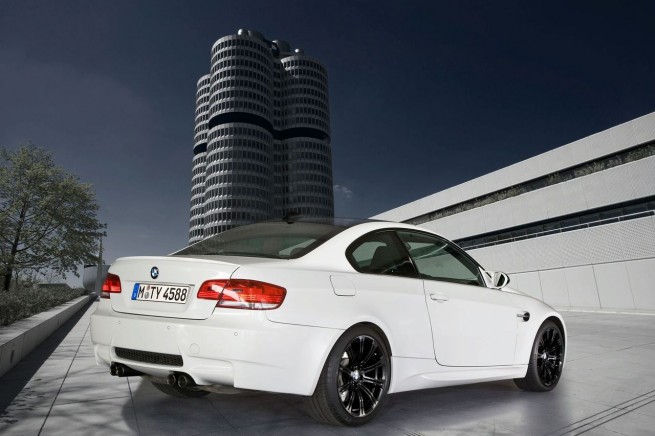
Ask most BMW enthusiasts to name every special-edition E92 M3, and the M3 Edition rarely makes the list. That’s strange, because at 707 units, it was the biggest special edition BMW built on the E9x M3 platform—bigger than anything else that came out of that generation. It should be the one everyone knows. Instead, it’s the one nobody talks about.
Part of the reason is where it went. BMW built the M3 Edition (chassis code KA335) for six months starting in July 2009, and of those 707 cars, only 47 reached North America, according to data by Mdataworks.. All 47 went to Canada, but none came to the United States.
What Made It DifferentThe M3 Edition came in four colors—Alpine White, Black, Dakar Yellow, and Monte Carlo Blue, the only metallic finish in the lineup. What set it apart wasn’t a new engine or a track package. It was color coordination taken more seriously at a time when BMW Individual wasn’t as strong as it is today. On the Alpine White and Black cars, the center console, armrests, and door panel trim came finished in white, paired with Black Novillo leather seats stitched in white with matching vertical trim stripes on the backrest and legrest. On the Dakar Yellow and Monte Carlo Blue cars, those same accents flipped to yellow or blue instead.
Every Edition got BMW Individual High-Gloss Satin Chrome on the kidney grille, side gills, and exhaust tips. The mirror caps went black, connected to the A-pillars by arms finished in body color. Checkered Flag-pattern entry trim bars, with the M3 name stamped into them, lined the door sills—a detail most owners of other E92s have never seen in person, because there simply weren’t many of these cars around to notice.
The wheels were 19-inch forged M units in double-spoke design, available in black or classic silver, with a third option—white with polished spokes—reserved for the Alpine White, Black, and Monte Carlo Blue cars.
Some Mechanical Changes Were IncludedThe one change that had real consequence was underneath the car. Every M3 Edition dropped 10 millimeters, or roughly 0.4 inches, compared to the standard M3. Later, that same lowered ride height would carry forward into the Competition models that followed, this time paired with additional Electronic Damper Control tuning to sharpen the handling further. The Edition was, in effect, a rough draft for a suspension approach BMW would refine and formalize a few years later.
Everything else stayed the same. The 4.0-liter V8 still made 420 hp. The six-speed manual was standard, hitting 100 km/h in 4.8 seconds, and the M DCT Drivelogic dual-clutch dropped that to 4.6 seconds. The carbon fiber roof was standard equipment, and Electronic Damper Control and the M Drive menu remained options rather than standard fitment.
A Future Classic. If Not Already OneSpecial editions are everywhere now. BMW runs them constantly, and most amount to a paint code, a stitching color, and a numbered plaque on the sill. The interesting part is that a patient buyer with a BMW Individual order sheet can usually build something close to the same car, minus the badge, and skip the wait. The M3 Edition was different in one specific way. The 10mm drop was hardware and that’s something a lot of BMW owners want when they pay the extra coin. That single change is the reason the car still holds up as a special E92 M3, and it’s the reason it’s worth hunting for the 47 Canadian cars or importing one of the other 660.
First published by https://www.bmwblog.com