
The world’s first smartphone—the IBM Simon Personal Communicator—cost $899, took 90 minutes to charge and allowed you to make calls, send faxes, and read emails for an hour before you had to charge it again. In 1994 it was the business leaders’ success signal of choice.
The IBM Simon sold 50,000 units and marked the start of a new market category that, via the Blackberry, Apple iPhone, and Android, has become an essential part of modern daily life. Roughly 90 per cent of people in the U.S., the U.K., and the European Union own or use a smartphone.
Ultra-mature markets bring problems. Users tend to hang onto their phones for longer as the marginal improvement of each new model diminishes. In the battle for vital processing chips, smartphone players are reluctant to pay the high prices of AI-frontier labs and data centers. This has led to shortages in supply.
“2026 is expected to mark the smartphone market’s largest contraction ever, with shipments forecast to decline 11.9%,” according to a report by Omdia, a technology researcher. “A further 6% decline is anticipated in 2027, which will mark the lowest annual volume since 2013—a period when the market still was in its expansion phase.”
Step forward Oppo, a Chinese smartphone company which is fifth in the global market behind Apple, Samsung, Xiaomi, and Vivo. With America largely cut off from Chinese players it has opted to focus on expansion in Europe, with premium devices aimed at young people. The reasons why are illuminating.
In the West, Chinese suppliers face a perception problem, particularly among older users concerned about allegations of industrial espionage and trade controversies. The company’s research suggested that Gen Z are more interested in product features than they are in politics or national security worries.
“AI tools can help our brand because they focus on the features and user experience, without other interference”
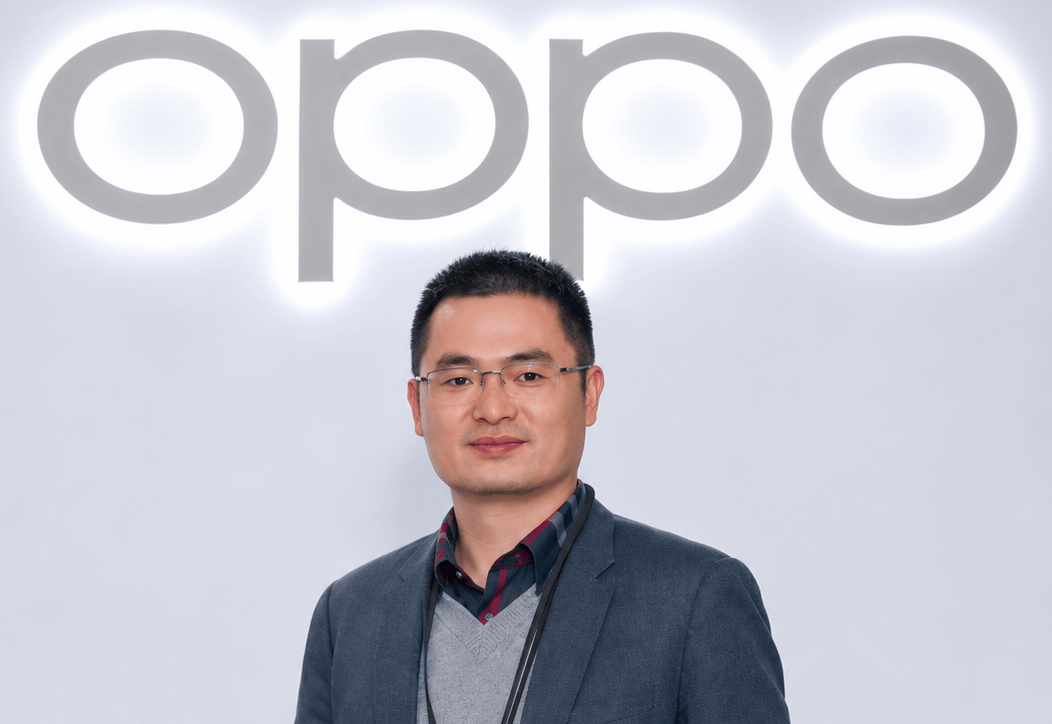
Elvis Zhou, CEO of Oppo Europe
“In Europe, they know that Oppo is a Chinese brand because nowadays it’s so easy to find this kind of information online,” the CEO of Oppo Europe, Elvis Zhou, told me. “And when consumers buy big items like a phone, they do look it up online to understand the history of the brand. Consumers still chose our phones. It must be because our phone features or functions really attracted them.”
Apple and Samsung dominate the European market, and going head-to-head with them is often considered a fool’s errand. Zhou believes that the developing world of AI search gives smaller brands like Oppo a chance to break through.
“The young generation here in Europe are dubious about advertisements,” Zhou said. “They prefer to believe real user experiences that they see on social media platforms, and if they believe that, then it must be a good experience that people share organically on social media. That’s more convincing. And only good products can do that.
Read more: Catching rogue agents and preventing cyberattacks—quantum computing is about to have its ‘ChatGPT moment’
“And, young generations do ask questions of AI during their decision-making process, and these AI tools can help our brand because these AI tools focus more on the features of these products, on the user experience of these products, without other interference.”
By focusing on premium phone models with high-specification cameras, Oppo believes it can increase its market share to 10%, against the more than 30% share of both Apple and Samsung. “The European premium market is dominated by two brands,” Zhou said. “I believe local European consumers would be interested in a third and good option.”
The way consumers search for the products is changing, from traditional search to AI summaries. Smarter challenger brands are seizing the opportunity to grab market share.
This story was originally featured on Fortune.com