
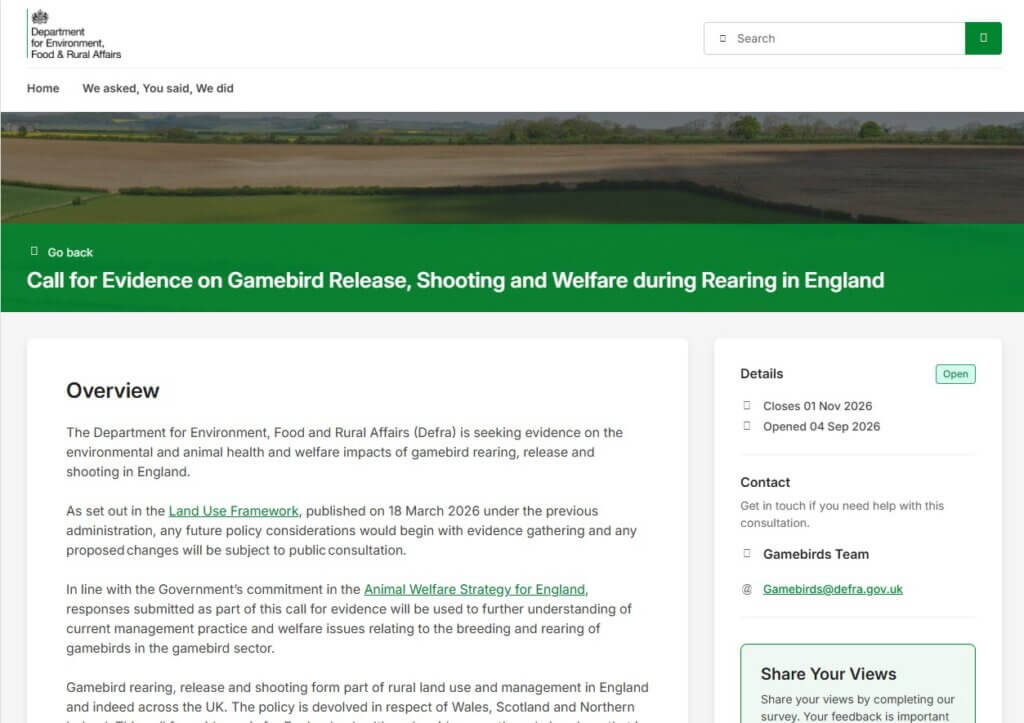
I’m thinking of how to respond to the Defra call for evidence – click here – on gamebird shooting (as readers of my monthly newsblast will know).
I’ve already penned something on the overall death toll of the tens of millions of released birds – click here and another on densities of gamebirds at distances from release pens and their impacts of on native wildlife – click here, and a few words on killing of domestic pets by gamekeepers – click here.
Here are some references which Defra should read and assess to get a better picture of impacts of grouse moor management on the environment.
– burning causes increased flood risk The EMBER study https://water.leeds.ac.uk/our-missions/mission-1/ember/
– burning causes increased particulates in water which lead to higher water treatment costs and water prices The EMBER study https://water.leeds.ac.uk/our-missions/mission-1/ember/
– burning leads to reductions in biodiversity in river catchments The EMBER study https://water.leeds.ac.uk/our-missions/mission-1/ember/
– burning leads to drying out of peat soils and release of greenhouse gases from important carbon stores The EMBER study https://water.leeds.ac.uk/our-missions/mission-1/ember/ and calls by Climate Change Committee for total ban on burning of vegetation on peat soils https://www.theccc.org.uk/wp-content/uploads/2018/11/Land-use-Reducing-emissions-and-preparing-for-climate-change-CCC-2018-1.pdf
– burning damages blanket bog plant communities for which SPAs and SACs have been designated by UK government (hence slow regulation of burning)
– millions subjected to potentially damaging air pollution by smoke from moorland burning – https://iopscience.iop.org/article/10.1088/1748-9326/ae5de3