
Senate Democrats reportedly plan to investigate US companies involved in the deal, while Republican warhawk Brian Fitzpatrick has tabled a bill blocking Russian oil imports outright
A number of American lawmakers intend to block the Trump administration’s deal to ease sanctions on Russian diesel through April and are threatening action against US companies involved in the trade. The bipartisan group is also planning to block the US Treasury from issuing such a waiver in the future.
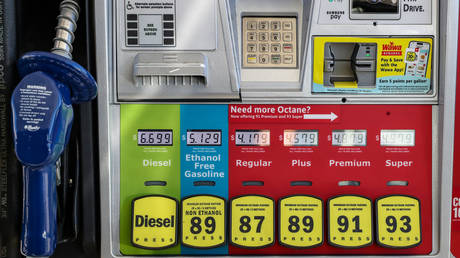
US President Donald Trump announced the deal earlier this month, as US diesel prices hit a record $6.50+ per gallon in September and prices in parts of California topped $8. Under the waiver, struck just weeks ahead of the impending November midterm elections, Moscow agreed to immediately put 300,000 tons of diesel into the market, and commit to further releases.
The disruption of global energy markets, caused by the Iran war and the Ukraine conflict, has resulted in rising gas prices in the US, further denting the positions of Republicans ahead of the vote. Diesel is the key fuel type extensively used in agriculture and freight; its price affects the cost of virtually all goods, resulting in further cost-of-living issues. Rural communities, smalltime farmers, and truckers are particularly vulnerable to diesel prices spikes.
Read more Russia sends three diesel tankers to US
Senate Democrats are now seeking to investigate the diesel deal, the Washington Post reported on Thursday, citing an unnamed Senate Democratic aide. According to the aide, the Senate Foreign Relations Committee has requested companies involved in the scheme to preserve documents ahead of a possible probe by the panel.
“[The companies] should have liability concerns as well as investigative concerns,” the aide told WaPo.
Further action against the diesel deal has been taken by Republican Rep. Brian Fitzpatrick (PA-1), an outspoken hawk, Ukraine backer, and proponent of sanctions against Russia. The proposed legislation, titled the Ronald Reagan Peace Through Strength Act of 2026, would effectively block Russian oil imports for good.
The bill would nullify the standing Russian oil waiver, “immediately rendering General License 135 ineffective and prohibiting future waivers or general licenses authorizing the importation of Russian energy products,” as well as strip the Treasury from the ability to expend funds “on agreements that violate the Ending Importation of Russian Oil Act of 2022,” the legislation that sanctioned Russian energy products, including diesel, in the first place.
Apart from the energy part, the bill also would “reinforce critical intelligence support for Ukraine,” obliging spy agencies to cooperate with Kiev and to “notify congressional intelligence committees within 24 hours of any interruption.”