
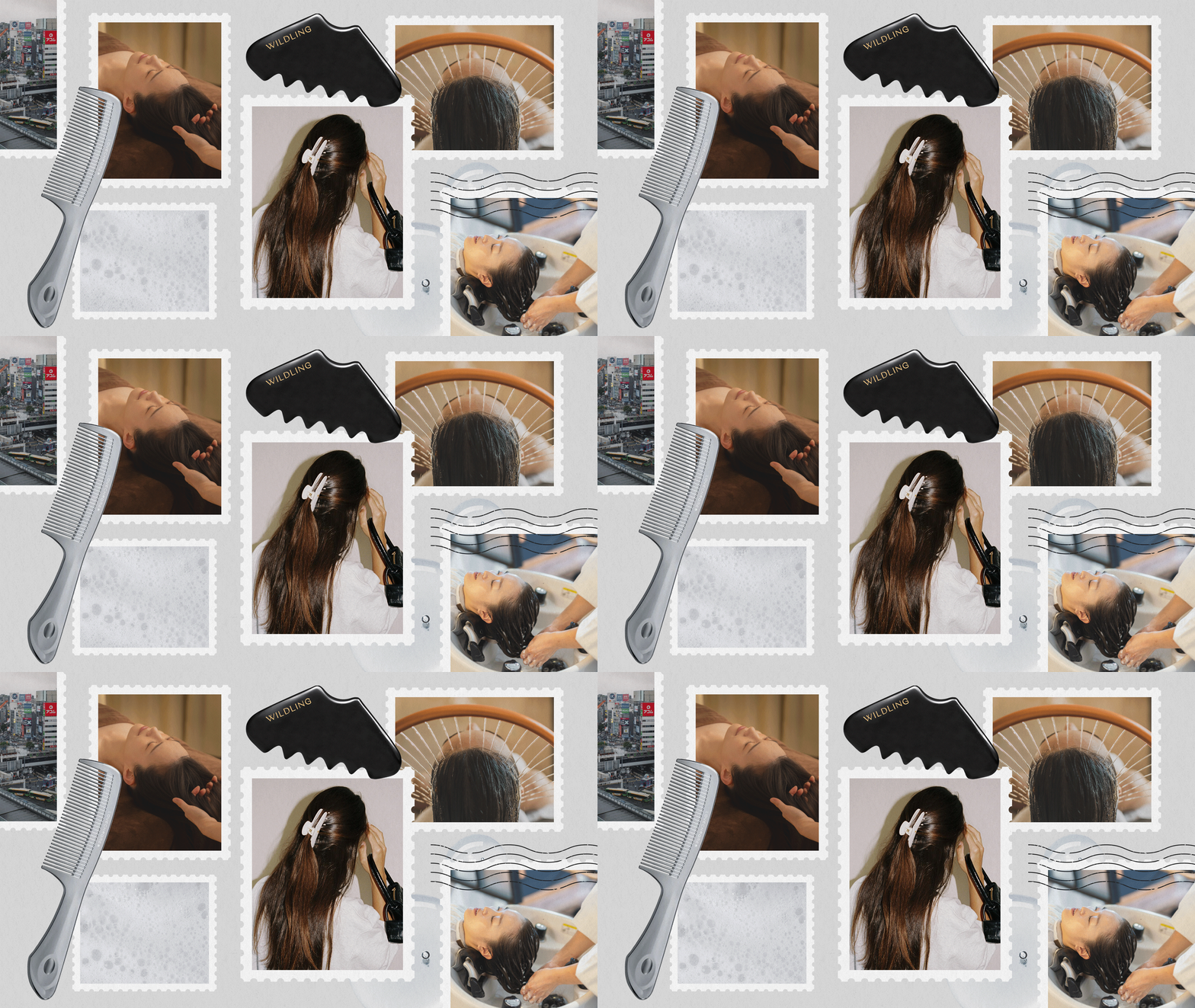
Welcome to Worldly Beauty, a quarterly franchise in which we highlight beauty products, ingredients, and traditions rooted in culture. To offer an in-depth look, we're sharing perspectives and recommendations from local experts and tastemakers. A celebration of diversity, this column goes beyond what we know to shed light on the beauty practices and philosophies that make the world go round.
(Image credit: Original art by Jamie Brown)If you were on social media in 2022, your feeds were likely inundated with Japanese head spa videos. The series of compiled clips led viewers through the traditional treatments and often incorporated relaxing sounds, mesmerizing visuals, and other atmospheric elements for an immersive effect. Think low light, gurgling water, foaming lather, and rhythmic scalp massaging. The popularity of these videos wasn't accidental. It coincided with an online infatuation with ASMR (autonomous sensory meridian response). For the uninitiated, this is a category of content that's designed to produce a pleasant, calming effect in its audience. The internet, it seems, was infatuated with slow, soothing content, and in many ways, it still is.
This trend undoubtedly influenced some people to try a traditional Japanese head spa treatment for themselves, either Stateside or, if they're lucky enough, while on a trip to Tokyo. It also illuminated something: Many cultures have practiced scalpcare for centuries—long before it became trendy to do so with high-powered serums, red light devices, and the like. (South Asian hair oiling is a good example. It's been practiced for at least 5000 years in the Ayurvedic tradition.)
While the luxurious head spas we see on Instagram and TikTok are modern innovations, the Japanese focus on scalpcare can be traced back centuries, with practices such as anma (a form of massage) incorporating the head and scalp. Ahead, we dive into traditional Japanese head spas with the help of an expert, detailing what they involve, why they're so popular, and how they're self-care as well as a holistic wellness modality.
(Image credit: Original art by Jamie Brown; Getty Images; @eggcanvas; @jamieridge; @britcorreia)Shoji Sugimoto is the founder of Yolu Beauty Salon, a Japanese head spa located in Los Angeles. Inspired by the Japanese philosophy of yōru no biyō (nighttime beauty), it aims to transform clients' nighttime beauty ritual into one of mindful, grounding renewal. Sugimoto says that the head spa, as a social media sensation, is fairly new, though its origins are antique: "[The head spa] took shape in Japanese salons in the early 2000s, but the thinking behind it is much older. Japan has always been a bathing culture: the onsen, the nightly soak, the belief that you care for yourself by starting clean and unhurried. Scalpcare grew naturally from that. So did yōru no biyō, or nighttime beauty, the idea that the evening is a window for restoration, a chance to reset body and mind before sleep. It's the philosophy Yolu was built on. The name itself comes from yoru, the Japanese word for "night," and every Yolu product is designed around that evening reset. The head spa is one of the clearest expressions."
According to the experts, a traditional head spa appointment is about rest and relaxation as much as it is about scalp- and haircare. "Each step has one purpose: to clear, to release, or to restore. It begins with a quiet consultation about the condition of the scalp and hair and where the day's stress is being held. Then comes the massage, the heart of the ritual," Sugimoto explains.
The authentic Japanese technique (the one Yolu's specialists are trained in) is entirely manual. Sugimoto says, "It's slow, methodical, and anatomically precise. It follows the pressure points across the scalp and down into the neck, shoulders, and jaw, and the specialist reads the tension by hand and adjusts throughout." This one-on-one attention is the whole point. It's a welcome respite from the fast-paced, machine-powered world.
After the massage is complete, a warm waterfall head bath usually follows, and then scalp and hair products are worked in by hand. "The session closes with a scalp serum and a leave-in, then a blow-dry, often served with a cup of Japanese tea so you return to the day unhurried," Sugimoto concludes.
Each step has one purpose: to clear, to release, and to restore
Shoji Sugimoto, Founder of Yolu Beauty
Most head spa treatments incorporate traditional Japanese ingredients, including camellia (tsubaki) oil and rice water. "Plant-based ingredients are still popular today because they're gentle on skin and hair but still effective. That's the guiding principle in Japan: care that is gentle yet effective, nothing that strips. You see it in modern formulas too," Sugimoto says. Yolu's head spa treatments incorporate alpine willow extract and a proprietary Night Cap formula to help the scalp and hair maintain moisture balance. "Fragrance also matters more than people expect. It's part of the method, not a finishing touch. So much of a head spa is about settling the nervous system, and scent helps get you there," Sugimoto adds.
Settling the nervous system is the real point of the treatment; it just so happens that it begins at the scalp. Sugimoto explains, "A head spa works across the whole upper body (scalp, neck, and shoulders) to release tension and clear buildup. That's why the benefits people seek are as much about calm and sleep as about a clean scalp. What begins at the scalp doesn't stay there."
Yolu calls this a "chain reaction of wellness." Sugimoto says clients describe feeling lighter, physically and mentally, after treatment. They also experience improved circulation and real scalp relief. "Many sleep better that night. And because the scalp connects to the face, releasing it often eases facial tension too, leaving a balance that lingers. A calm, healthy scalp is where good hair and a settled mind begin," Sugimoto says.
In Japan, head spa appointments aren't a one-and-done ordeal. The benefits arise from consistency, which is why the experts recommend booking a treatment once a month. "One might think of it as a facial," Sugimoto says. "In Japan, the visit is only the beginning. Lasting results come from consistency. … More than 81% of people in Japan wash their hair every night, so scalpcare is already a daily reset before sleep. That nightly rhythm matters more than how often you book."
Sugimoto recommends establishing your own nightly wellness rhythm, starting at the scalp: "We built Yolu's Overnight haircare collection to carry that ritual home, working with the body's natural renewal cycle while you sleep. Treat your scalp like skin. Slow down and massage with your fingertips when you cleanse, add a scalp serum and a little oil, and do it unhurried. Dim the lights; let the scent settle you. That's yōru no biyō in your own bathroom. Whether or not you ever make it to the spa, that nightly ritual is what keeps the scalp balanced and the sense of release going."
"In Japan, night is not an ending. It is a transition—the moment when the body softens, the mind quiets, and renewal begins," Sugimoto adds.
Shop Scalpcare Products LoveChrome F Tetsuki Silver Wildling Empress Gua Sha Stimulating Scalp Comb Yolu Overnight Rejuvenating Shampoo Yolu Overnight Hydrating Conditioner NatureLab Mainichi Scalp Balancing Hair Rinse With Sake Yolu Overnight Rejuvenating Scalp Serum