
We give our pet dogs shelter, veterinary care, affection, training and play. We decide when they eat, where they sleep, when they go outside, who they meet, and how they move through the world.
We love our dogs and we want them to be safe. But there’s a flipside. Our care often comes with confinement, restricted movement, limited social choice and constant supervision.
Separation anxiety is a growing issue. Diagnoses of dog behavioural issues rose tenfold between 2010 and 2020 in the United States. Dog behaviour specialists and organisations have emerged to help dogs cope with the challenges of modern pet life.
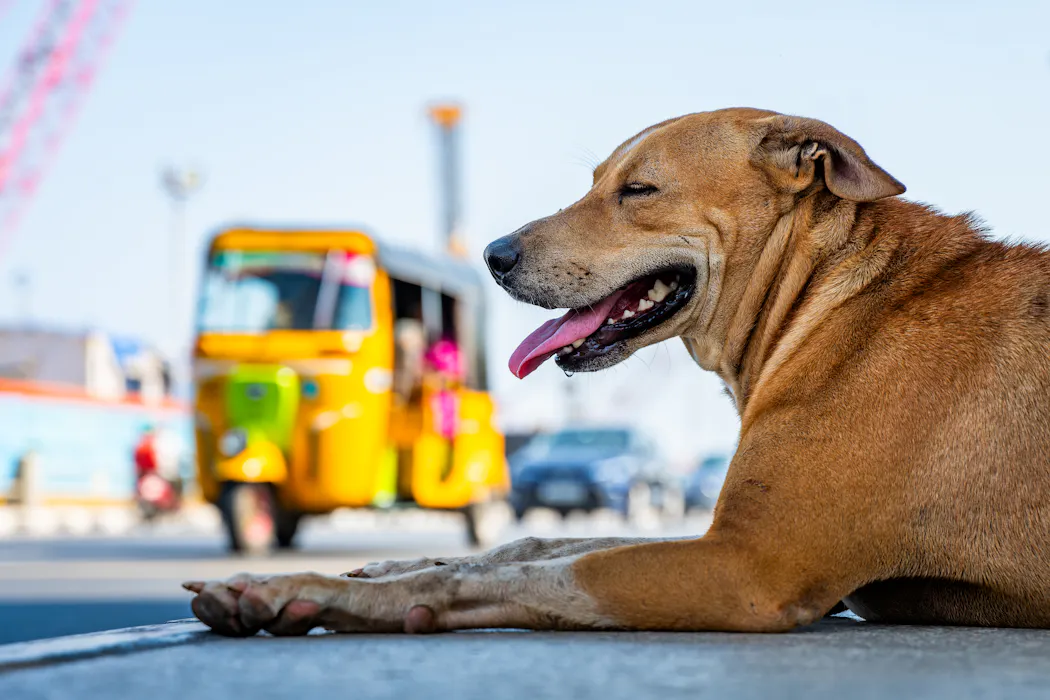
We often assume the long history of domestication has made dogs dependent on us. But this isn’t true. Most of the world’s dogs do not live as pets – they roam freely, without containment or ownership.
What can these dogs teach us about what constitutes a good dog life? In our new research, we explore what happened when 45 Western-trained dog behaviour specialists went to India to observe free-living street dogs. What they saw spoke to the tension at the heart of owning a dog. We love them, but we control them.
Learning to see free-living dogsIndia has an estimated 60 million street dogs.
These dogs live alongside people. But they aren’t owned. They move through streets, markets and public spaces. They scavenge for food or are given leftovers by people.
Our participants were experienced professionals who had spent years working with pet dogs suffering from anxieties, aggression or other behavioural problems.
Importantly, they were willing to test their assumptions about dog welfare against direct encounters with dogs living very different lives.
Some expected to see dogs with a freedom or resilience missing from the lives of many pet dogs. But most expected to see hardship – dogs in conflict, in poor health or having to live in constant vigilance.
Their expectations point to the idea that dog safety and care is tied to human management and control.
The calm, competent way India’s street dogs navigated busy cities led many of our participants to rethink their assumptions. Kapil V. Patwardhan, CC BY-NC-ND Life on the streetsOur participants found the lives of India’s street dogs compelling. Many described them as socially skilled, physically robust and capable.
The dogs could independently thread their way through intensely busy city streets and move confidently through crowds. They solved conflicts with subtle signals through barks and postures rather than prolonged fights, and chose when to approach or disengage from people.
Participants felt the street dogs seemed calm and settled, rather than overwhelmed by the noise of traffic and crowds. This was a sharp contrast to their experiences of pet dogs, who could often escalate behaviour in response to smaller issues.
Street dogs in India have to learn how to navigate busy cities, find food and navigate interactions with other free-living dogs. mtreasure/Getty There is no universal templateIt would be easy to turn our research into a simple comparison: street dogs are free, pet dogs are captive.
That’s not the point. The point is there’s no universal template for a good dog life.
Free-living dogs face serious risks that pet dogs largely avoid, from disease to injury to hunger to human hostility. We can’t simply give pet dogs the lives of free-living dogs.
Many pet dogs spend much of their lives indoors, behind fences, on leads, in cars or in crates. We often directly instruct them what to do and have highly scheduled routines.
When a problem such as anxiety or poor impulse control arises, an owner can often interpret it as a problem stemming from the dog. But dog behaviour is relational – it emerges from interactions between dogs and humans.
Is confinement care?As the dog behaviour experts moved from city to city, many began questioning their internal models of what welfare looks like for a dog. Was good care equated with confinement and obedience?
As one put it:
when we tell our dogs you can only heel […] are we telling them to be stressed because we’re limiting their behavioural diversity?
Many questioned whether efforts to give pet dogs safe and loving lives might be making it harder for their beloved pets to develop confidence, adaptability and social competence.
The result might be dogs who struggle with anxiety when left alone or bark at strangers. Others might react aggressively to other dogs or panic in busy places.
These behaviours are real and often distressing. But humans often respond by doubling down on restraint and control.
Pet dogs don’t have to find food or worry about protection. But that doesn’t make them immune to behavioural issues such as aggression. chaoss/Getty Asking better questionsFor our participants, the experience of interpreting street dogs as competent and independent led them to reflect on how pet dogs could be given more autonomy.
Some participants experienced a striking reversal in their thinking.
They arrived in India wondering how free-living dogs could survive without people constantly protecting them. They left wondering whether some common behavioural challenges might reflect not failures within pet dogs – but in the conditions we create for them.
Many participants told us their guiding question had changed from “how do street dogs survive?” to “how do pet dogs survive us?” by the end of the tour.
It wasn’t that free-living dogs necessarily live better lives. But to survive on the streets, they employ a wide range of skills – from social to navigation to finding food – that Western dog owners do for their pets. If pet dogs are too restricted, they become frustrated and act out.
What if, as one participant wondered, dog owners gave their dogs more control:
what happens when […] you’re not controlling every single aspect of their lives? When dogs are free to make their own decisions, they learn how to handle things.
Daniel Ramp receives funding from multiple funding organisations. This research was funded by the Wellcome Trust for Collaborative Award in Humanities and Social Sciences. He is affiliated with the animal protection charity Voiceless.
Kapil V. Patwardhan owns a dog welfare and behaviour consultancy, Floof, based in Pune, India. Before beginning his PhD, he organised the tour on which this research is based.
Rosalie Chapple's research was funded by the Wellcome Trust for Collaborative Award in Humanities and Social Sciences.