
First of all, there is no such thing as Earthquake Month in Mexico City or anywhere in Mexico. One could argue every day is Earthquake Day because of the country’s high seismic activity. Still, residents carry the heavy grief of the coincidences of Sept. 19, the date on which — in completely different years and decades — devastating earthquakes caused the capital to succumb to panic and ruin.
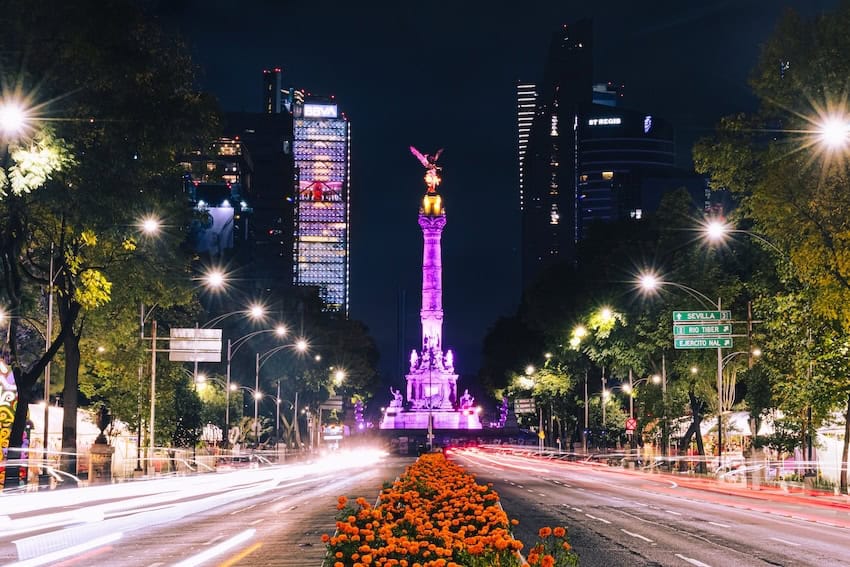
Experiencing an earthquake on the 45th floor of a skyscraper has probably happened more than once in the Cuauhtémoc neighborhood. (Miguel Sánchez/Pexels)Although scientists know it is practically impossible to predict these seismic events, residents cannot shake the thought that an earthquake might hit Mexico City on Sept. 19.
Beyond the dark humor, the reality is that because Mexico City sits on ancient lakebeds, some areas of the capital are at greater risk during an earthquake.
Which Mexico City neighborhoods have the highest seismic risk? (Mexico News Daily) Colonia CuauhtémocThe Cuauhtémoc borough is among the areas most prone to earthquake damage in Mexico City. The neighborhood of the same name, in the heart of the borough, suffered severe damage after the earthquakes of 2017 and 2022. Bordered by Paseo de la Reforma, Juárez and the Historic Center, Colonia Cuauhtémoc remains a hybrid between the business world of tall corporate buildings and residential life.
Besides having some of the tallest buildings in the city, the neighborhood suffers the consequences of poor urban planning. Because it sits primarily in Zone III (Lake Zone) of the city’s seismic microzonation, an area characterized by deep, highly compressible lacustrine clay deposits, it experiences significant wave amplification and has suffered severe damage during historical earthquakes.
Colonia Centro In Mexico City, dangerously tilted churches continue to hold Mass every day. (Amar Preciado/Pexels)The Historic Center has layers upon layers of Mexico City’s architectural and archaeological history, sitting directly atop the ruins of Tenochtitlán. For this reason, it is also one of the neighborhoods most affected by strong earthquakes.
Despite being one of the areas with the greatest archaeological and historical wealth in the country, the buildings and temples — some more than 500 years old — bear the scars of earthquakes. A striking example is the Church of Loreto, which tilts noticeably because of seismic tremors.
Colonias Roma Norte and Sur Trendy cafes in Roma Norte and Sur sit squarely atop lacustrine clay deposits. (MODO Museo del Objeto)The streets of Mexico City are known for chaos, and in the Roma Norte and Roma Sur neighborhoods, some of that chaos is visible in the cracks in the pavement. The streets are broken by tree roots pushing through the asphalt, but more often by the shockwaves from major earthquakes.
Efforts by the Cuauhtémoc borough cannot fully patch the scars of past quakes. Among the trendy bars and local cafes lies a stark reminder that this is one of the areas most affected by seismic activity in central Mexico.
Colonia Condesa Besides being overpriced, it appears that the new apartment buildings in Condesa may not be very safe after all. (Gobierno de la Ciudad de México)The ever-iconic Colonia Condesa, besides being a favorite spot for Sunday strolls, is also sadly one of the areas most affected by earthquakes. The neighborhood rests firmly within Zone III (Lake Zone), which, as noted, is predominantly composed of thick, highly soft clay deposits that dramatically amplify seismic vibrations during major quakes.
For this reason, several older and poorly retrofitted structures collapsed during major events like the 2017 earthquake. Furthermore, due to corruption and a perceived disregard for the safety guidelines required by Mexico City, many fear similar outcomes in the event of future strong earthquakes, as reported by the newspaper Excélsior.
Colonia Juárez The seismic alert no longer frightens the residents of the always festive Colonia Juárez. (Your Friend the Nomad)Colonia Juárez does not wait until June to celebrate Pride; popular nightlife venues in the area operate year-round. Despite the area’s lively atmosphere, it is also one of the neighborhoods where earthquakes are felt most intensely.
During low-intensity tremors, business owners and residents often evacuate into the streets even before the seismic alert sounds — a sign of how accustomed locals are to the ground shaking.
Andrea Fischer contributes to the features desk at Mexico News Daily. She has edited and written for National Geographic en Español and Muy Interesante México, and continues to be an advocate for anything that screams science. Or yoga. Or both.
The post Which neighborhoods in Mexico City have the highest seismic risk? appeared first on Mexico News Daily