
See more Toronto Sun on Google — save as a Preferred Source
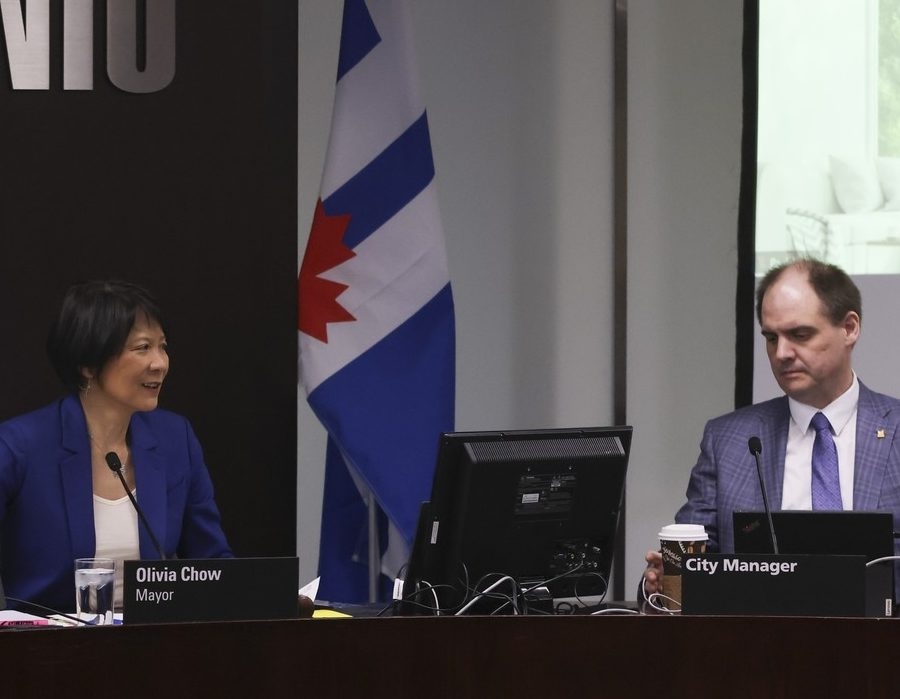
Mayor Olivia Chow’s turfing of much of the leadership of Toronto’s public service follows a year’s worth of ugly headlines about city hall’s splashy spending.
Chow has yet to confirm a busted budget was to blame for the firing of city manager Paul Johnson as well as his deputies Kate Bassil and Jag Sharma. Chow’s predecessor John Tory, however, told Newstalk 1010 on Monday that it’s his understanding that the city budget is “a fiasco” because of overspending.
Chow merely told reporters Monday that changes “need to happen” as she begins a new mandate.
Anyone following the news, however, understands city hall rung up big bills this year that Johnson’s administration didn’t do much to defend.
MANDEEP LALI AND THE TTC
The biggest scandal might be the one that hasn’t broken yet. Councillor Josh Matlow, who was replaced on the TTC board this month, recently told Greg Brady of AM 640 that a sole-source contract tied to an alleged friend of CEO Mandeep Lali could be worth millions of dollars.
The Toronto Sun is due to receive that contract, among other related documents, after a much delayed freedom-of-information request. That information has been kept from the Sun – and thus the broader public – in part because the City of Toronto’s privacy unit initially refused to let its counterpart at the TTC handle the file.
City hall told the Sun it could not find any contract or other documents related to Satpal Loyal or other TTC consultants in July. The TTC only confirmed the existence of those documents on Oct. 27 – the day after Chow was re-elected mayor.
News of Lali’s alleged hiring of personal friends comes amid a long hiring freeze at the TTC, and a workplace conduct investigation into Lali. The TTC has been asked for details of both the investigation and its hiring freeze.
EMERGENCY SERVICES’ $14,000 CATERING BILL
Just this month, the Sun blew the lid off unexplained expenses at Toronto’s emergency management division.
Those included $14,217.89 on catering services, $1,159.88 on kitchen supplies, $15,823.65 on “miscellaneous materials and supplies,” and $8,941.82 on advertising and promotions, just between January and mid-September.
City hall declined to explain the spending, beyond emphasizing that the division requires top tech to properly communicate and thus keep Toronto safe. Chow ignored a request for comment about the matter.
While the Sun had requested itemized receipts and invoices, those weren’t provided. In a separate freedom-of-information request, the division admitted paying $116,691.87 for overtime related to the FIFA World Cup in the 12 months that began September 2025, but again a detailed breakdown wasn’t provided.
WORLD CUP SECURITY WOES
Perhaps the most galling misspend was city hall’s inability to properly staff the World Cup with security guards. In June, during the tournament’s first weekend in Toronto, more than 100 guards failed to show up for work , the Sun learned.
That happened despite a warning that the contractor, Star Security, might be paying its staff too little. The city hired extra private security help and the Toronto Police picked up some overtime. The Sun was told that at a backroom meeting, officials discussed temporarily keeping the sudden cost overrun off the books.
It’s unknown what sort of bill city hall rang up, but Matlow called for an independent audit of the tournament this summer.
Star is still doing business with the city, as later in the summer it won a $5.7-million contract to handle homeless shelters .
OLIVIA CHOW’S PR SNOW JOB
While the City of Toronto’s internal strategic communications division is a 100-person operation, Chow’s much publicized rethink of how we handle winter storms appears to have been led by an outside PR firm , with some assistance by an external marketing firm.
It’s unclear whether Chow’s “all-hands-on-deck” response was coined by Apex PR, King Ursa, yet another firm called Municipal VU Consulting, or a city hall bureaucrat. What is known is Apex and King Ursa filed invoices for work on winter weather messaging at the time Chow was introducing the catchphrase to city council.
Those invoices from King Ursa, as well as one from Apex from last October at the start of the winter campaign, were either addressed to the communications division’s seventh-floor offices or a division staffer. Despite that, city hall recently insisted it was “accurate” that the division spent “zero dollars” on consultants, as the Sun had been told in May.
TRAIL SYSTEM NAMING BECOMES 9-YEAR ODYSSEY
What might have seemed like a harmless exercise in showing off part of Toronto’s parkland has inexplicably become a nine-year slog, as city council in July agreed to let a bungled naming project continue.
Council, with a quick show-of-hands vote , extended its so far fruitless quest to find a collective name for a cluster of parks along the Don River, which are interconnected.
The name Wonscotonach had been endorsed by council in 2018, but city hall now says nobody knows what that name means or how to spell it.
The City of Toronto ignored requests for clarification about its parks renaming fund, but parks and recreation’s 2025 capital budget suggests more than $1 million was allocated to the division’s “reconciliation and indigenous place-making program” for 2026.
SCARBOROUGH’S HALF-MILLION-DOLLAR FENCE
City hall didn’t explain why it reportedly cost half a million dollars to fence in a small field in Scarborough to use as a dog park, which drove a political candidate nuts.
“We gotta figure this out. This city’s going broke,” Shawn Allen told the Sun in September.
Allen said he asked city hall about the costs and was told engineers, arborists and consultants were needed to create the dog park.
“Why do we need a geotechnical engineer to put a fence around grass?” he asked.
Allen ultimately lost his election bid to Chow ally Neethan Shan. In a statement, Shan didn’t explain the high cost, but instead focused on the fact that some of the dog park funding came from budget changes involving a nearby playground.
SANKOFA KEEPS SINKING
One of the most notorious decisions of Chow’s tenure has been the renaming of Yonge-Dundas Square to Sankofa, and that rebrand seems like the gift that keeps on taking.
Chris Moise, the former downtown city councillor who served as a sort of spokesman for the renaming, told the Sun in 2024 that he wanted a new and improved Sankofa Square to host events “365 days of year.”
It’s believed that because of that renaming, millions of dollars in sponsorship money was left on the table, not to mention the cost of the new signs and logo. On top of that, in its latest budget, city hall said it expected Sankofa to lose $1.5 million this year , and the same amount in both 2027 and 2028.
While the budget blamed U.S. tariffs for lagging interest in the public square, data has repeatedly shown that people do not like the name, which is taken from a Ghanaian word about reflecting on the past. A recent poll for CityNews found that most Torontonians want to go back to the old name.
It’s hard to say how much a role Sankofa played in Moise failing to win re-election in October, but Chow and her remaining allies often come across as oblivious to how unpopular the name is. During the summer’s debate about World Cup costs, Chow’s budget chief Shelley Carroll accused critics of the name of “awfulizing.”
jholmes@postmedia.com